MONDAY, June 26 (HealthDay News) -- Eating dairy products, especially low-fat ones, could help lower your blood pressure, a new study suggests.
Scientists aren't clear where the beneficial effect comes from, but they said low-fat dairy might be a crucial component of a healthy diet.
"If you like to eat dairy products, you may be better off watching the fat content," said Dr. Luc Djousse, lead author of the study and associate epidemiologist at Brigham and Women's Hospital, in Boston. "Low-fat dairy products may be better than full dairy products, where the saturated fat especially is high," Djousse said.
For the new study, the investigators looked at a possible link between dairy consumption and blood pressure among 4,797 participants of the Family Heart Study, sponsored by the U.S. National Heart, Lung, and Blood Institute.
The researchers divided participants into four groups based on the amount of dairy consumed. Those consuming the most dairy said they ate more than three servings per day, while those consuming the least averaged less than half a serving per day. Dairy included, cheese, yogurt and milk.
Systolic blood pressure was 2.6 millimeters of mercury (mm Hg) lower, on average, for people eating the highest amount of dairy, compared with those eating the least amount of dairy.
Systolic blood pressure is the first (higher) number in a blood-pressure reading, and it indicates the pressure in the arteries when the heart beats.
But when saturated fat content was taken into account, the beneficial effect on blood pressure was only seen among those who ate lower amounts of saturated fat. In this group, participants who ate the most dairy had a systolic blood pressure that was 3.5 mm Hg lower than those who ate the least dairy.
Among participants who ate lower amounts of saturated fat, those who also ate the most dairy had 54 percent lower odds of high blood pressure than those eating the least amount of dairy.
The study was not able to identify those people who ate low-fat dairy, but it had data on total fat, polyunsaturated fat, and saturated fat.
Samantha Heller, senior clinical nutritionist at New York University Medical Center in New York City, said: "The association [in the study] was mainly among people with less saturated fat. We know this is a bad fat, and eat as little as possible."
The findings appear in the August issue of the journal Hypertension.
About one in three Americans suffers from high blood pressure, which is a major risk factor for stroke, heart attack as well as kidney and heart failure.
Drugs can treat the condition, as can lifestyle changes such as diet. The Dietary Approaches to Stop Hypertension (DASH) diet, which is low in salt and rich in fruits, vegetables and low-fat dairy products, has been shown to significantly lower blood pressure.
But the secrets to the success of the DASH diet have remained elusive.
"There was such a combination of factors that we don't know whether the effect of DASH came from low sodium, low cholesterol or fruit and vegetables," explained Djousse, who's also an assistant professor of medicine at Harvard Medical School. "It has been hard to tell which part of that, or a combination of all, that were producing the effects," Djousse said.
It's not clear where the benefit is coming from or even if it's cause-and-effect. It's unlikely to be calcium, Djousse said, although potassium and magnesium, which are also plentiful in the DASH diet, might be responsible. "Our study showed that dietary potassium and magnesium were associated with a lower odds of high blood pressure," Djousse said.
The bottom line?
"It would help to eat dairy products as long as you keep the saturated fats in check," Djousse said.
More information
Visit the American Heart Association for more on high blood pressure.
Sunday, July 30, 2006


Did Pain Add Power to Great Works of Art?
WEDNESDAY, Nov. 23 (HealthDay News) -- The notion of the "suffering artist" has long been a potent one, and a new examination of masterpieces from the past suggests it may not be far off the mark.
A California pathologist believes illness, environmental poisons and drug use may have colored the creations of Michelangelo, Raphael and Vincent Van Gogh and left their impression on the work of Renaissance sculptor Benvenuto Cellini.
"Their inspiration may have been shaped by their human condition," concludes Dr. Paul L. Wolf, a professor of clinical pathology at the University of California, San Diego, and author of an article on the subject in the November issue of Archives of Pathology & Laboratory Medicine.
People living centuries ago were plagued by ailments that might be easily treated or even cured today. Syphilis was one of the most widespread illnesses to plague people of the Renaissance, including one of its most renowned sculptors, Benvenuto Cellini (1500-1571). His enormous bronze masterwork, Perseus With the Head of Medusa, stands in Florence's Uffizi Gallery today.
To Wolf, the sculpture's scale and grandiose subject matter -- the mythological Perseus single-handedly slaying the snake-headed monster -- is in keeping with the megalomania that often accompanies syphilis.
"When syphilis gets into the brain, it causes a condition called paresis," a mental condition characterized by megalomania, he said.
In fact, Cellini's overbearing personality may have gotten him into trouble: According to his diary, business associates tried to kill him with a high dose of mercury slipped into his salad dressing at lunch.
Luckily for the sculptor, the mercury didn't kill him, although it did make him very sick. The element was one of the few "medicines" thought to cure syphilis, however. In Cellini's recounting of the tale, it did just that -- his symptoms disappeared.
The California pathologist next turns his eye to perhaps the leading light of the Renaissance, Michelangelo Buonarroti (1475-1564), whose Sistine Chapel fresco Creation of Adam depicts God and his angels giving the "spark of life" to the first man.
A "nimbus," or cloud, surrounds the heavenly grouping. Various experts have speculated the cloud is drawn in the shape of either the human brain (signifying intellect) or the heart (the Renaissance home of the soul).
"Michelangelo was good at anatomy, and performed over 1,000 dissections," Wolf pointed out, so he would certainly have understood the structure of these two organs.
A visual comment on Michelangelo's own health appears in a painting by his contemporary and friend, Raphael (1483-1520). Raphael includes a portrait of a pensive, seated Michelangelo in his masterwork now in the Vatican, The School of Athens (1510-11).
According to Wolf, a close-up look at the figure's knee reveals the ravages of gout, an arthritic condition caused by a build-up of uric acid.
"His right knee is extremely swollen," Wolf said. Many experts believe Michelangelo -- like many of his contemporaries -- contracted gout via lead poisoning, a condition known as saturnine gout. "Remember, wine in those days came in containers with a high lead content [in the glaze], and the acidity of wines would leach out this lead," Wolf explained.
Even centuries later, artists still had few options to relieve their physical pain. And perhaps no one better personifies the tortured, suffering artist than Vincent Van Gogh (1878-1909), who experts now believe was plagued by bipolar mental illness and epilepsy and was also addicted to the hallucinogenic liqueur absinthe.
Van Gogh scholars have long noted that the painter's canvases show a preference for the color yellow, and Wolf believes the painter's illnesses may have influenced that predilection.
"There are two possible explanations," Wolf said.
First, Van Gogh's portrait of his last physician, Dr. Paul Gauchet, clearly shows the doctor holding the plant from which 19th-century chemists derived the drug digitalis, which Gauchet probably prescribed to the artist to control his epileptic seizures.
A yellow or greenish haze around objects is a characteristic symptom of digitalis overdose, Wolf pointed out. "Look at his wonderful painting at the Museum of Modern Art in New York, Starry Night," he said. "There are yellow circles around the stars, and people with digitalis overdose often see a yellow corona around stars."
An alternate, darker explanation is Van Gogh's possible addiction to absinthe, widely used by Belle Epoque Parisians. "One of the effects of absinthe's active ingredient, thujone, is to cause yellow vision," Wolf said.
Not everyone agrees with Wolf's theories of art imitating life, however.
Dr. Philip Mackowiak is vice chairman of the department of medicine at the University of Maryland School of Medicine in Baltimore, and has also written numerous papers on historical clinical pathology. He stressed that "it's very hard to go back in time, with limited records, and make a diagnosis."
He found fault with some of Wolf's theories.
Mackowiak pointed out that the article mentions a "vesicular [blistered] rash" in connection with Cellini's syphilis. "Syphilis is a great imitator and can appear as just about anything, but it does not cause a vesicular rash," he said. In fact, such a rash "would actually be a good diagnostic marker in excluding syphilis."
Mackowiak also said there's no convincing evidence -- outside of folklore -- that high doses of mercury can rid the body of syphilitic infection.
The arguments for Van Gogh's love of yellow is "more plausible," he added, but noted that they were not fully convincing. Digitalis overdose is often accompanied by serious illness, such a gastrointestinal upset, he pointed out.
"Would that necessarily make you more attracted to yellow? Or would it make yellows and greens more repelling?" he said. "You could have a Pavlovian conditioning against yellows."
He also believes the interpretation of Michelangelo's "gouty" knee in The School of Athens is questionable.
"It looks normal to me," he said.
More information
For more on the history of medicine, head to the National Library of Medicine's History of Medicine branch.
A California pathologist believes illness, environmental poisons and drug use may have colored the creations of Michelangelo, Raphael and Vincent Van Gogh and left their impression on the work of Renaissance sculptor Benvenuto Cellini.
"Their inspiration may have been shaped by their human condition," concludes Dr. Paul L. Wolf, a professor of clinical pathology at the University of California, San Diego, and author of an article on the subject in the November issue of Archives of Pathology & Laboratory Medicine.
People living centuries ago were plagued by ailments that might be easily treated or even cured today. Syphilis was one of the most widespread illnesses to plague people of the Renaissance, including one of its most renowned sculptors, Benvenuto Cellini (1500-1571). His enormous bronze masterwork, Perseus With the Head of Medusa, stands in Florence's Uffizi Gallery today.
To Wolf, the sculpture's scale and grandiose subject matter -- the mythological Perseus single-handedly slaying the snake-headed monster -- is in keeping with the megalomania that often accompanies syphilis.
"When syphilis gets into the brain, it causes a condition called paresis," a mental condition characterized by megalomania, he said.
In fact, Cellini's overbearing personality may have gotten him into trouble: According to his diary, business associates tried to kill him with a high dose of mercury slipped into his salad dressing at lunch.
Luckily for the sculptor, the mercury didn't kill him, although it did make him very sick. The element was one of the few "medicines" thought to cure syphilis, however. In Cellini's recounting of the tale, it did just that -- his symptoms disappeared.
The California pathologist next turns his eye to perhaps the leading light of the Renaissance, Michelangelo Buonarroti (1475-1564), whose Sistine Chapel fresco Creation of Adam depicts God and his angels giving the "spark of life" to the first man.
A "nimbus," or cloud, surrounds the heavenly grouping. Various experts have speculated the cloud is drawn in the shape of either the human brain (signifying intellect) or the heart (the Renaissance home of the soul).
"Michelangelo was good at anatomy, and performed over 1,000 dissections," Wolf pointed out, so he would certainly have understood the structure of these two organs.
A visual comment on Michelangelo's own health appears in a painting by his contemporary and friend, Raphael (1483-1520). Raphael includes a portrait of a pensive, seated Michelangelo in his masterwork now in the Vatican, The School of Athens (1510-11).
According to Wolf, a close-up look at the figure's knee reveals the ravages of gout, an arthritic condition caused by a build-up of uric acid.
"His right knee is extremely swollen," Wolf said. Many experts believe Michelangelo -- like many of his contemporaries -- contracted gout via lead poisoning, a condition known as saturnine gout. "Remember, wine in those days came in containers with a high lead content [in the glaze], and the acidity of wines would leach out this lead," Wolf explained.
Even centuries later, artists still had few options to relieve their physical pain. And perhaps no one better personifies the tortured, suffering artist than Vincent Van Gogh (1878-1909), who experts now believe was plagued by bipolar mental illness and epilepsy and was also addicted to the hallucinogenic liqueur absinthe.
Van Gogh scholars have long noted that the painter's canvases show a preference for the color yellow, and Wolf believes the painter's illnesses may have influenced that predilection.
"There are two possible explanations," Wolf said.
First, Van Gogh's portrait of his last physician, Dr. Paul Gauchet, clearly shows the doctor holding the plant from which 19th-century chemists derived the drug digitalis, which Gauchet probably prescribed to the artist to control his epileptic seizures.
A yellow or greenish haze around objects is a characteristic symptom of digitalis overdose, Wolf pointed out. "Look at his wonderful painting at the Museum of Modern Art in New York, Starry Night," he said. "There are yellow circles around the stars, and people with digitalis overdose often see a yellow corona around stars."
An alternate, darker explanation is Van Gogh's possible addiction to absinthe, widely used by Belle Epoque Parisians. "One of the effects of absinthe's active ingredient, thujone, is to cause yellow vision," Wolf said.
Not everyone agrees with Wolf's theories of art imitating life, however.
Dr. Philip Mackowiak is vice chairman of the department of medicine at the University of Maryland School of Medicine in Baltimore, and has also written numerous papers on historical clinical pathology. He stressed that "it's very hard to go back in time, with limited records, and make a diagnosis."
He found fault with some of Wolf's theories.
Mackowiak pointed out that the article mentions a "vesicular [blistered] rash" in connection with Cellini's syphilis. "Syphilis is a great imitator and can appear as just about anything, but it does not cause a vesicular rash," he said. In fact, such a rash "would actually be a good diagnostic marker in excluding syphilis."
Mackowiak also said there's no convincing evidence -- outside of folklore -- that high doses of mercury can rid the body of syphilitic infection.
The arguments for Van Gogh's love of yellow is "more plausible," he added, but noted that they were not fully convincing. Digitalis overdose is often accompanied by serious illness, such a gastrointestinal upset, he pointed out.
"Would that necessarily make you more attracted to yellow? Or would it make yellows and greens more repelling?" he said. "You could have a Pavlovian conditioning against yellows."
He also believes the interpretation of Michelangelo's "gouty" knee in The School of Athens is questionable.
"It looks normal to me," he said.
More information
For more on the history of medicine, head to the National Library of Medicine's History of Medicine branch.
Health Highlights: July 11, 2006
Here are some of the latest health and medical news developments, compiled by the editors of HealthDay:
Experts Say Tobacco Will Kill 1 Billion This Century
Tobacco will be the biggest killer of this century, taking a billion people worldwide -- 10 times the toll it took in the 20th century -- if current trends continue, public health officials said Monday.
"In all of world history, this is the largest train wreck not waiting to happen," John Seffrin, chief executive officer of the American Cancer Society, said at an International Union Against Cancer conference in Washington, D.C., the Associated Press reported.
Two new reference guides, the newly revised Tobacco Atlas and the new Cancer Atlas, show that tobacco is responsible for one in five cancer deaths, or 1.4 million deaths a year. Adding in cardiovascular and pulmonary diseases related to tobacco use brings the yearly global death toll to nearly 5 million. That number is expected to increase as population rises, the experts said.
The guides project that 1.25 billion people smoke cigarettes and that more than half will die from the habit. Reducing tobacco use would have the single largest effect on worldwide cancer rates, health officials said.
-----
Tests Find Higher Levels of Mercury in Tuna Imports
Lab tests by a company that has been used by the U.S. government show that imported canned tuna often has mercury levels higher than the federal limit.
Defenders of Wildlife, a conservation group, found the highest mercury levels in tuna from Ecuador and Mexico -- countries known for setting nets where they see dolphins to catch large tuna swimming below. That practice results in the capture of larger, more mature fish, which have higher mercury levels, the Associated Press reported Monday.
The group tested 164 cans of tuna from Ecuador, Mexico, Costa Rica, Thailand, Malaysia, the Philippines and the United States. Tests were done by New Age/Landmark laboratory, of Benton Harbor, Mich., AP said. Analysis of the samples found that the average mercury content of U.S. tuna was generally lower than imported tuna and that tuna from Asia had the lowest average levels of mercury. Latin American tuna had the highest mercury levels.
The lab also found high levels of mercury in light tuna, which the U.S. Food and Drug Administration considers to be low in mercury. The FDA says it's safe to eat two meals a week of fish and shellfish low in mercury, such as canned light tuna, shrimp, salmon, pollock and catfish. The agency urges people to limit albacore, or "white," tuna to one meal per week because it contains higher levels of mercury, AP reported.
-----
Researchers Grow Sperm From Stem Cells
Women may one day concieve babies on their own, after British researchers turned stem cells from an embryo into sperm capable of producing offspring.
A Newcastle University team led by Professor Karim Nayernia used embryo cells to produce seven baby mice -- six of which lived to adulthood. The animals were either too small or too large, and they died prematurely, however.
Nayernia said that the advance could help men with certain types of infertility to become fertile or to remain fertile for longer. It might even one day enable a lesbian couple to have children that, at the genetic level, are truly their own, London's Daily Telegraph reported Monday.
In the long term, Nayernia said, cloning methods could be used to turn a skin cell from a man into sperm and it might even be possible to do the same using a cell from a woman. The findings were published in the current issue of the journal Developmental Cell.
-----
Medicare Drug Insurers Don't Offer Accurate Information: Report
Telephone call centers operated by insurers offering prescription drug coverage through the new Medicare drug plan provided complete and accurate answers only a third of the time, says a U.S. Government Accountability Office (GAO) report released Monday.
GAO investigators made 900 calls to 10 of the largest drug plan insurers and found that overall accuracy and completeness rate ranged from 20 percent to 60 percent, the Associated Press reported.
Only one insurer's call center provided proper, full answers more than 50 percent of the time.
There are 43 million people eligible for Medicare drug coverage and many of them rely on insurers' call centers for information about what plan best suits them, the AP reported.
The GAO investigators did find that most of their calls were answered with minimal delay and that the majority of operators were courteous and many offered helpful suggestions. However, operators were unable to answer 15 percent of the questions asked by the GAO investigators and operators at the same call centers sometimes provided inconsistent answers.
The results show that Medicare beneficiaries face challenges in obtaining the information they require in order to make informed choices, the GAO report noted. Officials with the agency that oversee the drug program said the GAO report was based on "inaccurate, incomplete and subjective methods," the AP reported.
-----
Company Seeks Approval to Test Needle-Free Bird Flu Vaccine
A British company called PowderMed has applied for approval to conduct the first trial in Britain of a needle-free bird flu vaccine.
The Oxford-based company has asked for permission to test its H5N1 vaccine on 75 volunteers at a hospital in London, The Times of London, reported.
The vaccine would be administered using a needle-free system. Helium is used to propel particles coated in the section of DNA needed to make haemagglutinin protein (the H5 in H5N1) into the skin. This trial is designed to determine the correct dose to produce an immune response to protect against H5N1.
The company would be able to create a new vaccine in about 10 weeks, which is much quicker than traditional vaccines developed in chicken eggs, said John Beadle, PowderMed's chief medical officer, told The Times.
This new H5 vaccine could be licensed within the next two years, he said.
-----
Class I Recall for External Defibrillators
An alert to emergency services personnel and risk managers about a Class I recall of Welch Allyn PIC 50 Automated External Defibrillators - catalog #97108X- was announced Monday by the U.S. Food and Drug Administration.
The devices, manufactured from March 2002 through October 2004, have an electrical contact problem that may result in failure to provide a defibrillation shock. This could result in delay or failure to resuscitate a patient, the FDA said.
The device's failure to provide a defibrillation shock may be accompanied by various error messages on the display panel, such as the "Defib Comm" error message.
A Class I recall is the most serious type of recall and involves situations in which there is a reasonable probability that use of the recalled product will cause serious injury or death.
People with questions about the recall can contact the company at (800) 462-0777 or (847) 520-0300.
Last reviewed: 07/11/2006 Last updated: 07/11/2006
Experts Say Tobacco Will Kill 1 Billion This Century
Tobacco will be the biggest killer of this century, taking a billion people worldwide -- 10 times the toll it took in the 20th century -- if current trends continue, public health officials said Monday.
"In all of world history, this is the largest train wreck not waiting to happen," John Seffrin, chief executive officer of the American Cancer Society, said at an International Union Against Cancer conference in Washington, D.C., the Associated Press reported.
Two new reference guides, the newly revised Tobacco Atlas and the new Cancer Atlas, show that tobacco is responsible for one in five cancer deaths, or 1.4 million deaths a year. Adding in cardiovascular and pulmonary diseases related to tobacco use brings the yearly global death toll to nearly 5 million. That number is expected to increase as population rises, the experts said.
The guides project that 1.25 billion people smoke cigarettes and that more than half will die from the habit. Reducing tobacco use would have the single largest effect on worldwide cancer rates, health officials said.
-----
Tests Find Higher Levels of Mercury in Tuna Imports
Lab tests by a company that has been used by the U.S. government show that imported canned tuna often has mercury levels higher than the federal limit.
Defenders of Wildlife, a conservation group, found the highest mercury levels in tuna from Ecuador and Mexico -- countries known for setting nets where they see dolphins to catch large tuna swimming below. That practice results in the capture of larger, more mature fish, which have higher mercury levels, the Associated Press reported Monday.
The group tested 164 cans of tuna from Ecuador, Mexico, Costa Rica, Thailand, Malaysia, the Philippines and the United States. Tests were done by New Age/Landmark laboratory, of Benton Harbor, Mich., AP said. Analysis of the samples found that the average mercury content of U.S. tuna was generally lower than imported tuna and that tuna from Asia had the lowest average levels of mercury. Latin American tuna had the highest mercury levels.
The lab also found high levels of mercury in light tuna, which the U.S. Food and Drug Administration considers to be low in mercury. The FDA says it's safe to eat two meals a week of fish and shellfish low in mercury, such as canned light tuna, shrimp, salmon, pollock and catfish. The agency urges people to limit albacore, or "white," tuna to one meal per week because it contains higher levels of mercury, AP reported.
-----
Researchers Grow Sperm From Stem Cells
Women may one day concieve babies on their own, after British researchers turned stem cells from an embryo into sperm capable of producing offspring.
A Newcastle University team led by Professor Karim Nayernia used embryo cells to produce seven baby mice -- six of which lived to adulthood. The animals were either too small or too large, and they died prematurely, however.
Nayernia said that the advance could help men with certain types of infertility to become fertile or to remain fertile for longer. It might even one day enable a lesbian couple to have children that, at the genetic level, are truly their own, London's Daily Telegraph reported Monday.
In the long term, Nayernia said, cloning methods could be used to turn a skin cell from a man into sperm and it might even be possible to do the same using a cell from a woman. The findings were published in the current issue of the journal Developmental Cell.
-----
Medicare Drug Insurers Don't Offer Accurate Information: Report
Telephone call centers operated by insurers offering prescription drug coverage through the new Medicare drug plan provided complete and accurate answers only a third of the time, says a U.S. Government Accountability Office (GAO) report released Monday.
GAO investigators made 900 calls to 10 of the largest drug plan insurers and found that overall accuracy and completeness rate ranged from 20 percent to 60 percent, the Associated Press reported.
Only one insurer's call center provided proper, full answers more than 50 percent of the time.
There are 43 million people eligible for Medicare drug coverage and many of them rely on insurers' call centers for information about what plan best suits them, the AP reported.
The GAO investigators did find that most of their calls were answered with minimal delay and that the majority of operators were courteous and many offered helpful suggestions. However, operators were unable to answer 15 percent of the questions asked by the GAO investigators and operators at the same call centers sometimes provided inconsistent answers.
The results show that Medicare beneficiaries face challenges in obtaining the information they require in order to make informed choices, the GAO report noted. Officials with the agency that oversee the drug program said the GAO report was based on "inaccurate, incomplete and subjective methods," the AP reported.
-----
Company Seeks Approval to Test Needle-Free Bird Flu Vaccine
A British company called PowderMed has applied for approval to conduct the first trial in Britain of a needle-free bird flu vaccine.
The Oxford-based company has asked for permission to test its H5N1 vaccine on 75 volunteers at a hospital in London, The Times of London, reported.
The vaccine would be administered using a needle-free system. Helium is used to propel particles coated in the section of DNA needed to make haemagglutinin protein (the H5 in H5N1) into the skin. This trial is designed to determine the correct dose to produce an immune response to protect against H5N1.
The company would be able to create a new vaccine in about 10 weeks, which is much quicker than traditional vaccines developed in chicken eggs, said John Beadle, PowderMed's chief medical officer, told The Times.
This new H5 vaccine could be licensed within the next two years, he said.
-----
Class I Recall for External Defibrillators
An alert to emergency services personnel and risk managers about a Class I recall of Welch Allyn PIC 50 Automated External Defibrillators - catalog #97108X- was announced Monday by the U.S. Food and Drug Administration.
The devices, manufactured from March 2002 through October 2004, have an electrical contact problem that may result in failure to provide a defibrillation shock. This could result in delay or failure to resuscitate a patient, the FDA said.
The device's failure to provide a defibrillation shock may be accompanied by various error messages on the display panel, such as the "Defib Comm" error message.
A Class I recall is the most serious type of recall and involves situations in which there is a reasonable probability that use of the recalled product will cause serious injury or death.
People with questions about the recall can contact the company at (800) 462-0777 or (847) 520-0300.
Last reviewed: 07/11/2006 Last updated: 07/11/2006
New Research Finds Mercury Fillings Are Safe
TUESDAY, April 18 (HealthDay News) -- Two new studies that found amalgam fillings to be safe are sure to revive the debate over whether or not "silver" fillings can harm other parts of the body.
While the latest research did report higher levels of mercury in children's urine after they received amalgam fillings, there were no statistically significant ill effects on the children's kidney function or their neurological capacities.
"We saw no observable differences in neuropsychological or kidney outcomes. I think the findings should be fairly reassuring," said the lead author of one of the studies, David Bellinger, a professor of neurology and environmental health at Harvard Medical School and a senior research associate at Children's Hospital in Boston.
However, he added, "We can't reject the hypothesis that there is a sensitive subgroup that may confer a little more vulnerability [to mercury in fillings]."
Amalgam fillings are actually composed of more mercury than silver -- they're about 50 percent mercury. Dental experts contend that when mercury is bound to the other metals it's encapsulated and doesn't pose a health risk. Consumer groups, however, contend that mercury, a known neurotoxin, does leak out in the form of mercury vapor and then gets into the bloodstream.
Results of the latest studies appear in the April 19 issue of the Journal of the American Medical Association.
Bellinger's study included 534 children between the ages of 6 and 10 at the start of the study. The children were from either the Boston area or from Maine. None of the children had amalgam fillings before the study.
On average, the children needed 15 tooth surfaces restored. That doesn't mean an average of 15 cavities -- one tooth can have multiple surfaces that need restoration.
The youngsters were randomized into two treatment groups. Half received amalgam fillings, and the other half received resin composite fillings.
The researchers then followed the children for five years, and periodically tested their IQs and their kidney function.
After five years, they found no statistically significant differences in the two groups. There was, however, a slight decrease in IQ score in the amalgam group.
The second study was done on 507 children from Lisbon, Portugal, between the ages of 8 and 10. As in the first study, the children were randomized to receive either amalgam fillings or resin fillings. In the amalgam group, an average of 18.7 tooth surfaces were restored and an average of 21.3 surfaces were restored in the resin composite group.
The study lasted seven years and the researchers periodically measured memory, attention and concentration, motor skills and nerve conduction velocities.
These researchers also found no statistically significant differences between the two groups.
"These are two well-done studies designed by scientists that have no particular axe to grind," said Dr. Rod Mackert, a professor of dental materials at the Medical College of Georgia and a spokesman for the American Dental Association. "They have carefully looked at this issue and shown there is no effect on the target organs of concern in children. We can be confident that amalgam doesn't cause adverse health effects."
Not everyone agrees that these studies are the final word on amalgam's safety, however.
In an editorial in the same issue of the journal, Dr. Herbert Needleman, from the University of Pittsburgh School of Medicine, pointed out that since it's well known that mercury is toxic at doses much higher than those in fillings, it's not unreasonable to suspect that in lower doses it could still have some adverse effects. He said that dentists and dental assistants have motor function and cognitive deficits that correlate with the number of fillings they've put in, and that some studies have suggested that mercury may be a risk factor for multiple sclerosis and Alzheimer's.
"Although the studies by Bellinger et al and by DeRouen et al provide important new data on the health effects of mercury containing dental amalgam in children, there are, as the authors clearly delineate, limits to the inferences that can be drawn from these data," he wrote.
Needleman said the length of the studies may have been too short to pick up more subtle neurological deficits.
Charlie Brown, national counsel for Consumers for Dental Choice, a group that favors banning mercury-containing fillings altogether, said the studies have significant limitations, and don't prove that amalgam fillings are safe. For example, he pointed out that the study done on the children in Lisbon didn't control for mercury in the children's diet. Since they're close to the ocean, it's likely that fish -- which often contain mercury -- were a large part of their diet.
Brown also expressed concern that the researchers on the Portuguese studies already had their minds made up that amalgam was safe before they began the study. He said the lead researcher had already testified for the American Dental Association on the safety of amalgam fillings. "This was a handpicked group. They were already advocates for mercury fillings," he said.
Brown said the use of amalgam fillings is all about convenience and money, and said that "modern dentists don't use mercury fillings."
Mackert, however, said that studies have shown that amalgam tends to last longer and is more durable than resin composite fillings.
The U.S. Food and Drug Administration recently announced that they will hold hearings to assess the safety and potential neurotoxicity of dental amalgam. Those hearings are scheduled for September 2006.
More information
To learn more about amalgam fillings, visit the U.S. Centers for Disease Control and Prevention.
While the latest research did report higher levels of mercury in children's urine after they received amalgam fillings, there were no statistically significant ill effects on the children's kidney function or their neurological capacities.
"We saw no observable differences in neuropsychological or kidney outcomes. I think the findings should be fairly reassuring," said the lead author of one of the studies, David Bellinger, a professor of neurology and environmental health at Harvard Medical School and a senior research associate at Children's Hospital in Boston.
However, he added, "We can't reject the hypothesis that there is a sensitive subgroup that may confer a little more vulnerability [to mercury in fillings]."
Amalgam fillings are actually composed of more mercury than silver -- they're about 50 percent mercury. Dental experts contend that when mercury is bound to the other metals it's encapsulated and doesn't pose a health risk. Consumer groups, however, contend that mercury, a known neurotoxin, does leak out in the form of mercury vapor and then gets into the bloodstream.
Results of the latest studies appear in the April 19 issue of the Journal of the American Medical Association.
Bellinger's study included 534 children between the ages of 6 and 10 at the start of the study. The children were from either the Boston area or from Maine. None of the children had amalgam fillings before the study.
On average, the children needed 15 tooth surfaces restored. That doesn't mean an average of 15 cavities -- one tooth can have multiple surfaces that need restoration.
The youngsters were randomized into two treatment groups. Half received amalgam fillings, and the other half received resin composite fillings.
The researchers then followed the children for five years, and periodically tested their IQs and their kidney function.
After five years, they found no statistically significant differences in the two groups. There was, however, a slight decrease in IQ score in the amalgam group.
The second study was done on 507 children from Lisbon, Portugal, between the ages of 8 and 10. As in the first study, the children were randomized to receive either amalgam fillings or resin fillings. In the amalgam group, an average of 18.7 tooth surfaces were restored and an average of 21.3 surfaces were restored in the resin composite group.
The study lasted seven years and the researchers periodically measured memory, attention and concentration, motor skills and nerve conduction velocities.
These researchers also found no statistically significant differences between the two groups.
"These are two well-done studies designed by scientists that have no particular axe to grind," said Dr. Rod Mackert, a professor of dental materials at the Medical College of Georgia and a spokesman for the American Dental Association. "They have carefully looked at this issue and shown there is no effect on the target organs of concern in children. We can be confident that amalgam doesn't cause adverse health effects."
Not everyone agrees that these studies are the final word on amalgam's safety, however.
In an editorial in the same issue of the journal, Dr. Herbert Needleman, from the University of Pittsburgh School of Medicine, pointed out that since it's well known that mercury is toxic at doses much higher than those in fillings, it's not unreasonable to suspect that in lower doses it could still have some adverse effects. He said that dentists and dental assistants have motor function and cognitive deficits that correlate with the number of fillings they've put in, and that some studies have suggested that mercury may be a risk factor for multiple sclerosis and Alzheimer's.
"Although the studies by Bellinger et al and by DeRouen et al provide important new data on the health effects of mercury containing dental amalgam in children, there are, as the authors clearly delineate, limits to the inferences that can be drawn from these data," he wrote.
Needleman said the length of the studies may have been too short to pick up more subtle neurological deficits.
Charlie Brown, national counsel for Consumers for Dental Choice, a group that favors banning mercury-containing fillings altogether, said the studies have significant limitations, and don't prove that amalgam fillings are safe. For example, he pointed out that the study done on the children in Lisbon didn't control for mercury in the children's diet. Since they're close to the ocean, it's likely that fish -- which often contain mercury -- were a large part of their diet.
Brown also expressed concern that the researchers on the Portuguese studies already had their minds made up that amalgam was safe before they began the study. He said the lead researcher had already testified for the American Dental Association on the safety of amalgam fillings. "This was a handpicked group. They were already advocates for mercury fillings," he said.
Brown said the use of amalgam fillings is all about convenience and money, and said that "modern dentists don't use mercury fillings."
Mackert, however, said that studies have shown that amalgam tends to last longer and is more durable than resin composite fillings.
The U.S. Food and Drug Administration recently announced that they will hold hearings to assess the safety and potential neurotoxicity of dental amalgam. Those hearings are scheduled for September 2006.
More information
To learn more about amalgam fillings, visit the U.S. Centers for Disease Control and Prevention.
Tuesday, July 25, 2006
No guarantees
"I never promise any medical cures because you can't," he said. Instead, he presents both sides of the issue on his Web site and provides patient referrals. "If people come in asking about amalgams, I'll tell them," he said. "If they're there for basic dentistry, I don't say anything." Linda Brocato of Prospect Heights went to several dentists before she made the difficult decision to have her 16 silver fillings removed.
Her problems began in 1980, when she looked in the mirror one morning and noticed her right eye was drooping. Seven years and dozens of health issues later, the former social worker was crippled, diagnosed with multiple sclerosis. It wasn't until Brocato heard about the Minneapolis-based group Dental Amalgam Mercury Syndrome (DAMS), however, that she began to believe she had mercury poisoning.
Two weeks after she had her last amalgams replaced, Brocato said her slurred speech began to disappear and her strength and balance improved. She knows the symptoms of MS come and go, which could explain her improved health, but she is convinced that removing the silver fillings made a big difference. "I have five pages of improvements," said Brocato, 56, who is still in a wheelchair but no longer takes medication for MS.
She is now one of the Illinois coordinators for DAMS. "I don't know how people can say there isn't evidence." Mercury-free options for teeth A major debate surrounding silver (mercury) amalgam fillings is whether they cause the teeth to crack, creating the need for root canals and other major surgery. Lincoln Park dentist Gerilyn Alfe believes they do, just one reason she has embraced mercury-free alternatives to amalgams for the last decade. "I don't think ripping metal fillings out of everyone's mouth is a good practice," said Alfe of Chicago Smile Spa. "But if they're starting to deteriorate or fracture, I will replace them with bonded, tooth-colored aesthetic fillings."
The use of silver fillings has dropped nearly 40 percent since 1979, thanks in part to better oral care that decreased the overall frequency and size of cavities. Better diagnostics allow dentists to find cavities earlier, when they are much smaller and easier to restore with alternative materials, including porcelain inlays or onlays, and tooth-colored fillings, or composites. Porcelain inlays or onlays are ceramic or glasslike fillings and crowns. They are popular because "they are bonded to the tooth structure, extremely strong and many people can expect 15 to 20 years service with it," said Peter Dawson Boulder of Aesthetic Dentistry of Atlanta.
The American Dental Association, which says it doesn't promote the use of one restorative material over another, says porcelain is highly resistant to wear but can rapidly wear opposing teeth if its surface becomes rough. They may fracture under "heavy biting loads." And it's important to find a dentist with good technique because the strength depends greatly on the quality of the bond to the underlying tooth structure.
Tooth-colored fillings, another common option, are made from durable plastics called composite resins. First introduced in the 1960s, they've undergone continual improvements in durability, color stability and esthetics. Tooth-colored fillings are actually bonded to teeth; silver/amalgam fillings are not bonded to teeth. "The technique behind bonding actually strengthens a tooth because the bonding locks in so tightly to the inside walls of the tooth through tiny micro pores," said Chris Kammer of the Center for Cosmetic Dentistry in Middleton, Wis., a mercury-free practice. But composites aren't for every tooth.
They work best in small restorations and low-stress areas and might not be effective with a large cavity or for the chewing surface of a back tooth. They also cost more because they take longer to place. Unsightly amalgams are still considered the most durable and the best choice for large restorations. But amalgam is metal and X-rays cannot penetrate through it, said Dr. Parviz Azar-Mehr, a Prosthodonist and Professor of Clinical Dentistry at the University of Southern California. That means X-rays might not pick up decay under the amalgam filling, and "it can lead to even worse problems than the original cavity the amalgam was meant to treat," said Azar-Mehr, who recommends that silver fillings more than 15 years old be replaced with crowns or tooth-colored fillings.
By Julie Deardorff
Her problems began in 1980, when she looked in the mirror one morning and noticed her right eye was drooping. Seven years and dozens of health issues later, the former social worker was crippled, diagnosed with multiple sclerosis. It wasn't until Brocato heard about the Minneapolis-based group Dental Amalgam Mercury Syndrome (DAMS), however, that she began to believe she had mercury poisoning.
Two weeks after she had her last amalgams replaced, Brocato said her slurred speech began to disappear and her strength and balance improved. She knows the symptoms of MS come and go, which could explain her improved health, but she is convinced that removing the silver fillings made a big difference. "I have five pages of improvements," said Brocato, 56, who is still in a wheelchair but no longer takes medication for MS.
She is now one of the Illinois coordinators for DAMS. "I don't know how people can say there isn't evidence." Mercury-free options for teeth A major debate surrounding silver (mercury) amalgam fillings is whether they cause the teeth to crack, creating the need for root canals and other major surgery. Lincoln Park dentist Gerilyn Alfe believes they do, just one reason she has embraced mercury-free alternatives to amalgams for the last decade. "I don't think ripping metal fillings out of everyone's mouth is a good practice," said Alfe of Chicago Smile Spa. "But if they're starting to deteriorate or fracture, I will replace them with bonded, tooth-colored aesthetic fillings."
The use of silver fillings has dropped nearly 40 percent since 1979, thanks in part to better oral care that decreased the overall frequency and size of cavities. Better diagnostics allow dentists to find cavities earlier, when they are much smaller and easier to restore with alternative materials, including porcelain inlays or onlays, and tooth-colored fillings, or composites. Porcelain inlays or onlays are ceramic or glasslike fillings and crowns. They are popular because "they are bonded to the tooth structure, extremely strong and many people can expect 15 to 20 years service with it," said Peter Dawson Boulder of Aesthetic Dentistry of Atlanta.
The American Dental Association, which says it doesn't promote the use of one restorative material over another, says porcelain is highly resistant to wear but can rapidly wear opposing teeth if its surface becomes rough. They may fracture under "heavy biting loads." And it's important to find a dentist with good technique because the strength depends greatly on the quality of the bond to the underlying tooth structure.
Tooth-colored fillings, another common option, are made from durable plastics called composite resins. First introduced in the 1960s, they've undergone continual improvements in durability, color stability and esthetics. Tooth-colored fillings are actually bonded to teeth; silver/amalgam fillings are not bonded to teeth. "The technique behind bonding actually strengthens a tooth because the bonding locks in so tightly to the inside walls of the tooth through tiny micro pores," said Chris Kammer of the Center for Cosmetic Dentistry in Middleton, Wis., a mercury-free practice. But composites aren't for every tooth.
They work best in small restorations and low-stress areas and might not be effective with a large cavity or for the chewing surface of a back tooth. They also cost more because they take longer to place. Unsightly amalgams are still considered the most durable and the best choice for large restorations. But amalgam is metal and X-rays cannot penetrate through it, said Dr. Parviz Azar-Mehr, a Prosthodonist and Professor of Clinical Dentistry at the University of Southern California. That means X-rays might not pick up decay under the amalgam filling, and "it can lead to even worse problems than the original cavity the amalgam was meant to treat," said Azar-Mehr, who recommends that silver fillings more than 15 years old be replaced with crowns or tooth-colored fillings.
By Julie Deardorff
Money and ethics
Some dental insurance companies don't cover the more expensive alternatives to amalgam. And because science doesn't definitively link the silver fillings to health problems, the ADA considers it unethical for dentists to tell patients that removing amalgams can improve health. "Amalgam has the longest history, the most data and the largest number of studies supporting it. Yet time after time, we have to come back and address it," said Dr. Fred Eichmiller, director of the ADA Foundation's Paffenbarger Resource Center, where alternatives to amalgams have been invented.
Critics argue that the issue also is environmental. Mercury is emitted into the air when bodies with mercury fillings are cremated. It gets into the water when fillings are removed and leftover material is not disposed of properly. "Amalgams don't need to be used in the 21st Century," said Downers Grove dentist Janet Stopka, who uses composite, porcelain and gold. For consumers, the decision whether to replace amalgams can be a difficult one.
Urine, hair and feces can all be tested for mercury levels and chelating agents can pull mercury out of the organs. But the results don't necessarily tell whether there is enough mercury present to pose a health risk and an official diagnosis of "mercury poisoning" can be tentative. Swapping out old fillings can be expensive; each replacement can cost $75 to $200. And there are no guaranteed benefits. Nevertheless, Dawn Quast, a dental hygienist for Dr. John Rothchild in Hoffman Estates, decided to have four small fillings replaced after she witnessed both small and profound improvements in Rothchild's patients who had amalgams replaced.
"I had a migraine the night I had the last silver one removed and haven't had one since [in 12 years]," Quast said. Rothchild, a mercury-free dentist, said he doesn't push people into having silver fillings removed.
By Julie Deardorff
Critics argue that the issue also is environmental. Mercury is emitted into the air when bodies with mercury fillings are cremated. It gets into the water when fillings are removed and leftover material is not disposed of properly. "Amalgams don't need to be used in the 21st Century," said Downers Grove dentist Janet Stopka, who uses composite, porcelain and gold. For consumers, the decision whether to replace amalgams can be a difficult one.
Urine, hair and feces can all be tested for mercury levels and chelating agents can pull mercury out of the organs. But the results don't necessarily tell whether there is enough mercury present to pose a health risk and an official diagnosis of "mercury poisoning" can be tentative. Swapping out old fillings can be expensive; each replacement can cost $75 to $200. And there are no guaranteed benefits. Nevertheless, Dawn Quast, a dental hygienist for Dr. John Rothchild in Hoffman Estates, decided to have four small fillings replaced after she witnessed both small and profound improvements in Rothchild's patients who had amalgams replaced.
"I had a migraine the night I had the last silver one removed and haven't had one since [in 12 years]," Quast said. Rothchild, a mercury-free dentist, said he doesn't push people into having silver fillings removed.
By Julie Deardorff
A long-running controversy
The debate over silver amalgam dates at least to 1845, when the now-defunct American Academy of Dental Surgeons asked its members to sign a pledge never to use it. Though amalgam use has been declining since the 1970s because more eye-pleasing options are available and cavities are smaller, federal lawmakers have introduced a bipartisan bill to ban silver/mercury fillings for children and pregnant and nursing women and to phase them out completely in three years. In California, dentists are required by state law to post a warning that dental amalgams "cause exposure to mercury, a chemical known to the state of California to cause birth defects or other reproductive harm." "The ADA is wrong that the issue is `safety.' The issue is `risk,'" said Charlie Brown, national counsel for Consumers for Dental Choice and Coalition for Mercury-Free Dentistry.
He has filed a petition asking the Federal Trade Commission to investigate the ADA and the Connecticut State Dental Association for what the groups claims is making false, deceptive and unsubstantiated claims in promoting silver/mercury amalgam. "On this point scientists agree: Mercury is a virulent neurotoxin that can permanently harm the developing brain of a child or fetus.
Yet a recent Zogby poll shows three in five people don't know that `silver' fillings have mercury," said Brown, who pointed out that silver fillings are in fact mainly mercury. The ADA staunchly defends the safety of amalgam, still used in about 30 percent of restorations. Amalgam, made by mixing elemental liquid mercury with an alloy powder composed of silver, tin, copper and sometimes smaller amounts of other metals, hardens quickly and tolerates saliva. This makes it useful for treating squirmy young children or special-needs patients who have a hard time sitting still.
By Julie Deardorff
He has filed a petition asking the Federal Trade Commission to investigate the ADA and the Connecticut State Dental Association for what the groups claims is making false, deceptive and unsubstantiated claims in promoting silver/mercury amalgam. "On this point scientists agree: Mercury is a virulent neurotoxin that can permanently harm the developing brain of a child or fetus.
Yet a recent Zogby poll shows three in five people don't know that `silver' fillings have mercury," said Brown, who pointed out that silver fillings are in fact mainly mercury. The ADA staunchly defends the safety of amalgam, still used in about 30 percent of restorations. Amalgam, made by mixing elemental liquid mercury with an alloy powder composed of silver, tin, copper and sometimes smaller amounts of other metals, hardens quickly and tolerates saliva. This makes it useful for treating squirmy young children or special-needs patients who have a hard time sitting still.
By Julie Deardorff
The mercury in 'silver' fillings would be hazardous waste in a river -- yet it's sitting in your mouth!
A professional musician from Arlington Heights suffers from mysterious rashes and lip blisters. A dental hygienist in Hoffman Estates battles migraines. And a social worker in Prospect Heights is diagnosed with multiple sclerosis. All three tried treating their ailments using a controversial method: by having dentists remove and replace their so-called "silver" amalgam tooth fillings, which contain about 50 percent mercury.
And all three swear they experienced life-changing health improvements. Their personal testimonies are part of what makes dental amalgam, the silver lining for hundreds of millions of American mouths, one of the most divisive issues in dentistry. Though it's one of the oldest materials in oral health care--used by people of all ages for the last 150 years--anti-mercury groups are pushing the startling message that mercury residing in the mouth can leach into the body and cause illness. "I thought my career was over," said Arlington Heights' Matt Comerford, now a trumpet player with the Lyric Opera who was suffering from painful sores along his gums. He began investigating the metals in his mouth and eventually had nine silver fillings replaced with a mercury-free alter-native material.
"Within a week [of having the amalgams replaced], everything healed," Comerford said. Amalgam, most dentists admit, is crude and ugly, but they say it's a valuable option because it's strong, durable and relatively cheap. And studies have shown that there is insufficient evidence to link it to health problems (with the exception of allergic reactions), according to the American Dental Association and several federal agencies, including the Centers for Disease Control and Prevention. Regardless, anti-mercury groups are appalled by the notion that the toxic element, which is considered a hazardous waste by the Environmental Protection Agency, is safe when it's packed inside a tooth.
They argue that although it was once thought to be inert inside the mouth, studies now show that mercury can be emitted in minute amounts of vapor and absorbed by the patient through inhalation and ingestion. At Doctor's Data, a Chicago lab that specializes in trace-metals analysis, clinicians have found that the amount of mercury in a person's stool is highly correlated to the number of amalgams in the mouth. "What stool testing drives home is that parts of the amalgams don't stay in the teeth and we're swallowing mercury," said Dean Bass, a chemist at Doctor's Data and a scientist at Argonne National Laboratories. "But it doesn't necessarily tell you how much mercury the body absorbs."
By Julie Deardorff
And all three swear they experienced life-changing health improvements. Their personal testimonies are part of what makes dental amalgam, the silver lining for hundreds of millions of American mouths, one of the most divisive issues in dentistry. Though it's one of the oldest materials in oral health care--used by people of all ages for the last 150 years--anti-mercury groups are pushing the startling message that mercury residing in the mouth can leach into the body and cause illness. "I thought my career was over," said Arlington Heights' Matt Comerford, now a trumpet player with the Lyric Opera who was suffering from painful sores along his gums. He began investigating the metals in his mouth and eventually had nine silver fillings replaced with a mercury-free alter-native material.
"Within a week [of having the amalgams replaced], everything healed," Comerford said. Amalgam, most dentists admit, is crude and ugly, but they say it's a valuable option because it's strong, durable and relatively cheap. And studies have shown that there is insufficient evidence to link it to health problems (with the exception of allergic reactions), according to the American Dental Association and several federal agencies, including the Centers for Disease Control and Prevention. Regardless, anti-mercury groups are appalled by the notion that the toxic element, which is considered a hazardous waste by the Environmental Protection Agency, is safe when it's packed inside a tooth.
They argue that although it was once thought to be inert inside the mouth, studies now show that mercury can be emitted in minute amounts of vapor and absorbed by the patient through inhalation and ingestion. At Doctor's Data, a Chicago lab that specializes in trace-metals analysis, clinicians have found that the amount of mercury in a person's stool is highly correlated to the number of amalgams in the mouth. "What stool testing drives home is that parts of the amalgams don't stay in the teeth and we're swallowing mercury," said Dean Bass, a chemist at Doctor's Data and a scientist at Argonne National Laboratories. "But it doesn't necessarily tell you how much mercury the body absorbs."
By Julie Deardorff
Sunday, July 23, 2006
Health Tip: My Teeth Are Discolored
(HealthDay News) -- Stains on the teeth are often caused by foods and drinks, according to the Chicago Dental Society. Red wine, coffee and tea can discolor teeth, as can foods such as blueberries, and smoking cigarettes.
The best prevention is to brush and floss regularly -- especially after eating or drinking something known to stain teeth. Whitening toothpastes may help by exfoliating the teeth and removing food particles that cause stains.
Foods and drinks aren't the only culprits, however. Radiation and chemotherapy treatments also may cause tooth discoloration, as can medications to prevent malaria, some antibiotics, and some acne and rheumatoid arthritis treatments.
Taken long-term, some high blood pressure medications, antihistamines and antidepressants could stain your teeth. If you think medications may be causing tooth discoloration, talk to your doctor about possible alternatives.
The best prevention is to brush and floss regularly -- especially after eating or drinking something known to stain teeth. Whitening toothpastes may help by exfoliating the teeth and removing food particles that cause stains.
Foods and drinks aren't the only culprits, however. Radiation and chemotherapy treatments also may cause tooth discoloration, as can medications to prevent malaria, some antibiotics, and some acne and rheumatoid arthritis treatments.
Taken long-term, some high blood pressure medications, antihistamines and antidepressants could stain your teeth. If you think medications may be causing tooth discoloration, talk to your doctor about possible alternatives.
Health Tip: Pay Attention to Your Child's Teeth
(HealthDay News) -- Proper dental care from the start is essential for your baby, as improper care of baby teeth can lead to permanent trouble.
Here are some tips on how to care for your child's teeth, courtesy of the American Academy of Family Physicians:
Beginning at birth, gently run a damp cloth along your baby's gums after each feeding.
Once a baby tooth appears, brush it twice a day with a soft, baby toothbrush and a pea-sized amount of baby toothpaste. This should be done up to age 4.
Once two teeth come in that touch each other, begin to floss your child's teeth each day.
Your baby should have her first dentist appointment within six months of her first tooth, or by her first birthday.
Avoid giving your baby sugary or sticky foods, and don't send her to bed with a bottle of juice, milk or formula. The sugars in these beverages will stick to her teeth and can cause decay.
Last reviewed: 04/11/2006 Last updated: 04/11/2006
Here are some tips on how to care for your child's teeth, courtesy of the American Academy of Family Physicians:
Beginning at birth, gently run a damp cloth along your baby's gums after each feeding.
Once a baby tooth appears, brush it twice a day with a soft, baby toothbrush and a pea-sized amount of baby toothpaste. This should be done up to age 4.
Once two teeth come in that touch each other, begin to floss your child's teeth each day.
Your baby should have her first dentist appointment within six months of her first tooth, or by her first birthday.
Avoid giving your baby sugary or sticky foods, and don't send her to bed with a bottle of juice, milk or formula. The sugars in these beverages will stick to her teeth and can cause decay.
Last reviewed: 04/11/2006 Last updated: 04/11/2006
Popular Drinks Eat Away at Tooth Enamel
THURSDAY, March 9 (HealthDay News) -- Worried about sugary drinks rotting your teeth?
A new study suggests the acid in popular refreshments can cause dental damage, too.
Just one day's worth of soaking in Gatorade, Red Bull or Coke ate into the hard enamel surface of teeth, according to a study by University of Iowa researchers.
"This isn't so much about sugar as it is about acid," said Dr. John Luther, associate executive director of the division of dental practice at the American Dental Association. "I don't think the public has thought about acidity; they tend to think in terms of sugar."
But another expert said the study's design was "too simplistic" and not reflective of daily exposure to liquids by teeth.
Dr. Paul Casamassimo, a professor and chairman of the department of pediatric dentistry at Ohio State University, said that "when most drinks -- sports drinks, orange juice, carbonated beverages -- are used the way they are supposed to be, it's not a problem."
Most experts agree that the acid in many popular beverages can etch into the thin layer of enamel that covers and protects the exposed areas of teeth. It can also damage the cementum -- the hard layer of calcified tissue that covers the unexposed root area of the tooth.
"If it erodes far enough it could lead to real tooth sensitivity," Luther said. "If the enamel is gone, then the dentin, which is underneath, becomes more sensitive. Acid eliminates that hard outer covering."
In its study, the University of Iowa researchers tested the acid erosion potential of five popular drinks -- apple juice, Coke, Diet Coke, Gatorade and Red Bull. To do so, they immersed four extracted teeth in each of these drinks for 25 hours, replenishing the liquids with a fresh supply of the beverage once every five hours.
They then examined the rate of acidic enamel and cementum erosion under a microscope.
The sports drink Gatorade was the worst offender, etching into enamel to an average depth of 131 micrometers, the researchers found. Next up was the energy drink Red Bull (100 micrometers), followed by Coke (92 micrometers), Diet Coke (61 micrometers) and apple juice (57 micrometers). Results were similar when the researchers compared acid-linked damage to cementum.
The findings were to be presented Thursday at the American Association for Dental Research annual meeting, in Orlando, Fla.
Luther said he was "happy with the range of acidity" covered by the study, and said the findings "really point to the fact that more study is needed." He said he was also intrigued by the fact that high-acidity sugary drinks tended to result in more acidic damage than similar, non-sugared beverages (i.e., regular Coke vs. Diet Coke). The reasons for that remain unclear, he said.
For his part, Casamassimo (who has conducted research sponsored by the company that makes Gatorade) said the long-term exposures employed in the Iowa study don't reflect the way teeth interact with beverages in the real world.
According to Casamassimo, the Iowa study "is basically that elementary-school science project where you put a tooth in Coca-Cola for a period of time and it dissolves," he said. If that scenario did mirror real-life conditions, "most people would have no teeth left by the time they reached adulthood. That's not the case, of course."
In a statement, the American Beverage Association, which represents the industry, agreed with Casamassimo. The Iowa study, "does not reflect real-world situations, and fails to incorporate many factors," the group said. "A more credible study would examine live subjects and more realistic, everyday behaviors."
Casamassimo said his own epidemiological study of 300 Ohio State athletes found no connection between particular drinks or foods and dental erosion.
Luther acknowledged that acidic drinks can damage teeth, but he stressed that "it's the duration of exposure that's important."
"The problem is not only that these drinks are acidic and contain sugar, the problem is that children reach for these drinks and sip on them all day long," Luther said. "Their teeth are being bathed in it."
Casamassimo agreed. "I'm a pediatric dentist and when we see someone who's on a sippy cup all day, that's an eating disorder just like bulimia -- it's in the same category in terms of its effects on teeth," he said. "Or the older kid who sips Mountain Dew with a screw-top cap all day at school."
Luther recommends that if a child does have a soft drink with a meal, "that drink should be confined to the meal, and the child should brush and floss [afterwards]."
Of course, that's not always easy, especially when it comes to largely unsupervised older children.
"Parents really need to try and be aware of what their kids are doing, and too often they aren't," said Luther, who advises that parents make sure their kids get regular dental care. "In my own practice, I've seen severe damage to multiple teeth by children who have habits such as consuming up to 10 soft drinks per day. They do it out of sight."
The dental news came on the heels of a new report released Wednesday that showed sales of Pepsi, Coke and other brands of "pop" are slipping for the first time in 20 years.
However, as reported by The New York Times, the data from Beverage Digest also showed that consumers were abandoning the fizzy drinks for bottled water, sports drinks like Gatorade and Powerade, and energy drinks like Red Bull and Full Throttle.
More information
For more on how what you eat and drink affects your smile, visit the American Dental Association.Last reviewed: 03/09/2006 Last updated: 03/09/2006
A new study suggests the acid in popular refreshments can cause dental damage, too.
Just one day's worth of soaking in Gatorade, Red Bull or Coke ate into the hard enamel surface of teeth, according to a study by University of Iowa researchers.
"This isn't so much about sugar as it is about acid," said Dr. John Luther, associate executive director of the division of dental practice at the American Dental Association. "I don't think the public has thought about acidity; they tend to think in terms of sugar."
But another expert said the study's design was "too simplistic" and not reflective of daily exposure to liquids by teeth.
Dr. Paul Casamassimo, a professor and chairman of the department of pediatric dentistry at Ohio State University, said that "when most drinks -- sports drinks, orange juice, carbonated beverages -- are used the way they are supposed to be, it's not a problem."
Most experts agree that the acid in many popular beverages can etch into the thin layer of enamel that covers and protects the exposed areas of teeth. It can also damage the cementum -- the hard layer of calcified tissue that covers the unexposed root area of the tooth.
"If it erodes far enough it could lead to real tooth sensitivity," Luther said. "If the enamel is gone, then the dentin, which is underneath, becomes more sensitive. Acid eliminates that hard outer covering."
In its study, the University of Iowa researchers tested the acid erosion potential of five popular drinks -- apple juice, Coke, Diet Coke, Gatorade and Red Bull. To do so, they immersed four extracted teeth in each of these drinks for 25 hours, replenishing the liquids with a fresh supply of the beverage once every five hours.
They then examined the rate of acidic enamel and cementum erosion under a microscope.
The sports drink Gatorade was the worst offender, etching into enamel to an average depth of 131 micrometers, the researchers found. Next up was the energy drink Red Bull (100 micrometers), followed by Coke (92 micrometers), Diet Coke (61 micrometers) and apple juice (57 micrometers). Results were similar when the researchers compared acid-linked damage to cementum.
The findings were to be presented Thursday at the American Association for Dental Research annual meeting, in Orlando, Fla.
Luther said he was "happy with the range of acidity" covered by the study, and said the findings "really point to the fact that more study is needed." He said he was also intrigued by the fact that high-acidity sugary drinks tended to result in more acidic damage than similar, non-sugared beverages (i.e., regular Coke vs. Diet Coke). The reasons for that remain unclear, he said.
For his part, Casamassimo (who has conducted research sponsored by the company that makes Gatorade) said the long-term exposures employed in the Iowa study don't reflect the way teeth interact with beverages in the real world.
According to Casamassimo, the Iowa study "is basically that elementary-school science project where you put a tooth in Coca-Cola for a period of time and it dissolves," he said. If that scenario did mirror real-life conditions, "most people would have no teeth left by the time they reached adulthood. That's not the case, of course."
In a statement, the American Beverage Association, which represents the industry, agreed with Casamassimo. The Iowa study, "does not reflect real-world situations, and fails to incorporate many factors," the group said. "A more credible study would examine live subjects and more realistic, everyday behaviors."
Casamassimo said his own epidemiological study of 300 Ohio State athletes found no connection between particular drinks or foods and dental erosion.
Luther acknowledged that acidic drinks can damage teeth, but he stressed that "it's the duration of exposure that's important."
"The problem is not only that these drinks are acidic and contain sugar, the problem is that children reach for these drinks and sip on them all day long," Luther said. "Their teeth are being bathed in it."
Casamassimo agreed. "I'm a pediatric dentist and when we see someone who's on a sippy cup all day, that's an eating disorder just like bulimia -- it's in the same category in terms of its effects on teeth," he said. "Or the older kid who sips Mountain Dew with a screw-top cap all day at school."
Luther recommends that if a child does have a soft drink with a meal, "that drink should be confined to the meal, and the child should brush and floss [afterwards]."
Of course, that's not always easy, especially when it comes to largely unsupervised older children.
"Parents really need to try and be aware of what their kids are doing, and too often they aren't," said Luther, who advises that parents make sure their kids get regular dental care. "In my own practice, I've seen severe damage to multiple teeth by children who have habits such as consuming up to 10 soft drinks per day. They do it out of sight."
The dental news came on the heels of a new report released Wednesday that showed sales of Pepsi, Coke and other brands of "pop" are slipping for the first time in 20 years.
However, as reported by The New York Times, the data from Beverage Digest also showed that consumers were abandoning the fizzy drinks for bottled water, sports drinks like Gatorade and Powerade, and energy drinks like Red Bull and Full Throttle.
More information
For more on how what you eat and drink affects your smile, visit the American Dental Association.Last reviewed: 03/09/2006 Last updated: 03/09/2006
Tough Love for Tiny Teeth
SUNDAY, Jan. 8 (HealthDay News) -- Baby teeth may not be permanent, but dentists say they require just as much cleaning and care as adult teeth.
The reason: Neglecting them can cause your child pain and create lifetime consequences for their dental health.
About 20 percent of children already have tooth decay by age 3, according to the American Dental Association.
Not only do these kids experience pain from cavities, they run the risk of having their permanent teeth come in incorrectly, said Katie L. Dawson, president of the American Dental Hygienists' Association, and a dental hygienist in Oakland, Calif.
"Baby teeth direct the permanent teeth that are developing underneath," Dawson said. Failure to keep them healthy can lead to expensive orthodontia work later in childhood. "The child also suffers because of the pain in the tooth," she said.
Even before the first tooth appears, parents should get their babies used to having their gums cleaned by running a wet washcloth around in their mouth. Or you can use a finger brush made of terry cloth or soft rubber, Dawson said.
"Bacteria sets up a haven in the mouth, and once those teeth start coming in it's hard to introduce cleaning to a baby," she said. "It's almost like preparing the baby for cleaning."
Once a baby's first tooth erupts, parents need to pay even closer attention -- a fact that comes as a surprise to some parents. "A number of parents aren't aware that they need to take care of baby teeth," Dawson said.
One reason those baby teeth need lots of TLC is because they're more prone to cavities than adult teeth, said Dr. Jonathan D. Shenkin, a pediatric dentist in Bangor, Maine, and an assistant professor of pediatric dentistry at Boston University.
"When teeth erupt into a child's mouth, they're not completely hardened or mineralized," Shenkin said. "They can be more susceptible to decay."
Neglecting their care can leave your child vulnerable to cavities and fillings that last through much of childhood, he explained.
"A lot of these teeth need to stay in their child's mouth up until the age of 12," Shenkin said.
Parents should clean their infant's teeth with a child-sized toothbrush and a little water, according to the American Dental Association. They can begin using a pea-sized amount of toothpaste once the child is 2 years old and is able to spit out the paste and not swallow it.
Flossing should begin as soon as two of the child's teeth begin to touch.
Diet also can help preserve an infant's dental health, Dawson said. "Don't allow your children to go to bed with a bottle containing any beverage other than water," she said. "Even milk, which has sugars. With those sugars, you've got this constant attack on the teeth."
Children should be allowed to start using a toothbrush as soon as they have the manual dexterity to handle the job. "As soon as they can hold a toothbrush in their hand, it's important to show them how to manipulate it in their mouth," Shenkin said.
However, parents shouldn't confuse the ability to work the toothbrush with an ability to brush teeth properly, he added. Parents should go in and brush after the child is done up to age 6, and continue monitoring until age 10.
"It's important that the parent goes in after the child is finished and do a more thorough job," Shenkin advised.
Again, diet also plays a role in protecting the teeth of children as they grow older and begin getting their permanent teeth.
In a study published in 2004 in the Journal of the American Dental Association, Shenkin found that children who don't eat breakfast every day have higher levels of tooth decay, mainly because they tend to snack more. The same held true for children who don't eat five servings of fruits and vegetables a day.
Dentists say parents should limit the breads, pastas and sugary snacks or drinks their children eat.
Shenkin recommends restricting children to 4 to 6 ounces of juice a day. "I'd prefer to have that consumed at a meal where water is also consumed," he said.
Finally, parents should take their children for their first trip to the dentist about six months after their first tooth erupts, Shenkin noted.
But even dentists have trouble following that guideline, he added. "Most dentists want children to sit in their chairs as soon as they can be quiet," he said. "That's around four."
More information
To learn more, visit the American Dental Association.Last reviewed: 01/08/2006 Last updated: 01/08/2006
The reason: Neglecting them can cause your child pain and create lifetime consequences for their dental health.
About 20 percent of children already have tooth decay by age 3, according to the American Dental Association.
Not only do these kids experience pain from cavities, they run the risk of having their permanent teeth come in incorrectly, said Katie L. Dawson, president of the American Dental Hygienists' Association, and a dental hygienist in Oakland, Calif.
"Baby teeth direct the permanent teeth that are developing underneath," Dawson said. Failure to keep them healthy can lead to expensive orthodontia work later in childhood. "The child also suffers because of the pain in the tooth," she said.
Even before the first tooth appears, parents should get their babies used to having their gums cleaned by running a wet washcloth around in their mouth. Or you can use a finger brush made of terry cloth or soft rubber, Dawson said.
"Bacteria sets up a haven in the mouth, and once those teeth start coming in it's hard to introduce cleaning to a baby," she said. "It's almost like preparing the baby for cleaning."
Once a baby's first tooth erupts, parents need to pay even closer attention -- a fact that comes as a surprise to some parents. "A number of parents aren't aware that they need to take care of baby teeth," Dawson said.
One reason those baby teeth need lots of TLC is because they're more prone to cavities than adult teeth, said Dr. Jonathan D. Shenkin, a pediatric dentist in Bangor, Maine, and an assistant professor of pediatric dentistry at Boston University.
"When teeth erupt into a child's mouth, they're not completely hardened or mineralized," Shenkin said. "They can be more susceptible to decay."
Neglecting their care can leave your child vulnerable to cavities and fillings that last through much of childhood, he explained.
"A lot of these teeth need to stay in their child's mouth up until the age of 12," Shenkin said.
Parents should clean their infant's teeth with a child-sized toothbrush and a little water, according to the American Dental Association. They can begin using a pea-sized amount of toothpaste once the child is 2 years old and is able to spit out the paste and not swallow it.
Flossing should begin as soon as two of the child's teeth begin to touch.
Diet also can help preserve an infant's dental health, Dawson said. "Don't allow your children to go to bed with a bottle containing any beverage other than water," she said. "Even milk, which has sugars. With those sugars, you've got this constant attack on the teeth."
Children should be allowed to start using a toothbrush as soon as they have the manual dexterity to handle the job. "As soon as they can hold a toothbrush in their hand, it's important to show them how to manipulate it in their mouth," Shenkin said.
However, parents shouldn't confuse the ability to work the toothbrush with an ability to brush teeth properly, he added. Parents should go in and brush after the child is done up to age 6, and continue monitoring until age 10.
"It's important that the parent goes in after the child is finished and do a more thorough job," Shenkin advised.
Again, diet also plays a role in protecting the teeth of children as they grow older and begin getting their permanent teeth.
In a study published in 2004 in the Journal of the American Dental Association, Shenkin found that children who don't eat breakfast every day have higher levels of tooth decay, mainly because they tend to snack more. The same held true for children who don't eat five servings of fruits and vegetables a day.
Dentists say parents should limit the breads, pastas and sugary snacks or drinks their children eat.
Shenkin recommends restricting children to 4 to 6 ounces of juice a day. "I'd prefer to have that consumed at a meal where water is also consumed," he said.
Finally, parents should take their children for their first trip to the dentist about six months after their first tooth erupts, Shenkin noted.
But even dentists have trouble following that guideline, he added. "Most dentists want children to sit in their chairs as soon as they can be quiet," he said. "That's around four."
More information
To learn more, visit the American Dental Association.Last reviewed: 01/08/2006 Last updated: 01/08/2006
Ancient Wisdom Teeth Reveal Humans' Changing Diet
WEDNESDAY, March 8 (HealthDay News) -- A nearly complete 13,000- to 15,000-year-old skeleton of a woman has the oldest recorded case of impacted wisdom teeth ever documented, say scientists at the Field Museum in Chicago.
The teeth may also point to a key shift in human nutrition.
For years, it was believed that Magdalenian Girl, excavated in France in 1911, was a girl because her wisdom teeth had not erupted. Wisdom teeth usually come in between 18 and 22 years of age.
However, new high-quality digital X-rays revealed that the skeleton had impacted wisdom teeth that had failed to erupt at the normal time. Therefore, Field Museum scientists concluded that Magdalenian Girl was actually a 25- to 35-year-old woman.
The finding is significant because impacted teeth are believed to be the result of dietary changes historically associated with later developments in human cultures. Impacted teeth typically did not occur during the Stone Age due to a coarse diet that required more chewing and higher bite forces. This likely stimulated the growth of the jawbone, creating more room for wisdom teeth to erupt, the scientists explained.
"Finding impacted wisdom teeth 15,000 years ago indicates that the human diet might have already changed, some would say 'deteriorated,' earlier than previously thought," Robert D. Martin, Field Museum provost and primatologist, said in a prepared statement.
Magdalenian Girl will be placed on permanent display as part of Evolving Planet, a new Field Museum exhibit depicting the story of life on Earth. The exhibit opens March 10.
More information
The U.S. National Library of Medicine has more about impacted teeth.
The teeth may also point to a key shift in human nutrition.
For years, it was believed that Magdalenian Girl, excavated in France in 1911, was a girl because her wisdom teeth had not erupted. Wisdom teeth usually come in between 18 and 22 years of age.
However, new high-quality digital X-rays revealed that the skeleton had impacted wisdom teeth that had failed to erupt at the normal time. Therefore, Field Museum scientists concluded that Magdalenian Girl was actually a 25- to 35-year-old woman.
The finding is significant because impacted teeth are believed to be the result of dietary changes historically associated with later developments in human cultures. Impacted teeth typically did not occur during the Stone Age due to a coarse diet that required more chewing and higher bite forces. This likely stimulated the growth of the jawbone, creating more room for wisdom teeth to erupt, the scientists explained.
"Finding impacted wisdom teeth 15,000 years ago indicates that the human diet might have already changed, some would say 'deteriorated,' earlier than previously thought," Robert D. Martin, Field Museum provost and primatologist, said in a prepared statement.
Magdalenian Girl will be placed on permanent display as part of Evolving Planet, a new Field Museum exhibit depicting the story of life on Earth. The exhibit opens March 10.
More information
The U.S. National Library of Medicine has more about impacted teeth.
Friday, July 21, 2006
A Good Checkup for Americans' Oral Health
THURSDAY, Aug. 25 (HealthDay News) -- Americans have something new to smile about.
A government report released Thursday found that their oral health has significantly improved during the past decade.
Among the major findings: improvements since 1994 in the percentage of children and teens who have never had tooth decay in their permanent teeth; increased use of dental sealants (a thin plastic coating applied to the chewing surfaces of back teeth to prevent decay), and increased tooth retention among older adults.
"The good news is that efforts to reduce and prevent cavities and dental disease are paying off. We are seeing an increase in the number of children, teens and adults who have never had a cavity in their permanent teeth," said Dr. William R. Maas, director of the U.S. Centers for Disease Control and Prevention's division of oral health, in a prepared statement.
"This survey represents the oral health of more than 256 million Americans," added Dr. Bruce Pihlstrom, acting director of the division of clinical research and health promotion at the National Institute of Health's National Institute of Dental and Craniofacial Research. "While the findings are encouraging, the report clearly tells us that more effort is needed to improve the oral health of low-income Americans."
Key findings of the report show there was:
A 15 percent decrease in the prevalence of tooth decay in permanent teeth for children and adolescents aged 6 to 19 years. That ranged from a 4 percent decrease for Mexican-American children and adolescents to an 18 percent decrease for white children and adolescents.
A 64 percent increase in the use of dental sealants among children and adolescents, with one in three children having at least one dental sealant on permanent teeth. This increase crossed all racial and ethnic groups and all income levels.
A 20 percent decrease from the previous survey in the number of adults aged 60 and older who had lost all their teeth.
On the not-so-good-news side, the report also showed that:
65 percent of teens 16 to 19 years old have had tooth decay or fillings in their permanent teeth.
Smokers had a greater chance of being toothless. Fourteen percent of current smokers older than 20 had lost all their teeth, compared with only 4.6 percent of people who had never smoked.
About one-third of children and adolescents had enamel fluorosis of their teeth, although most was very mild. Enamel fluorosis happens when the teeth absorb too much fluoride as they develop beneath the gums.
And the report noted that disparities in oral health remain.
For instance, 32 percent of Hispanic children and 27 percent of black children aged 2 to 11 years had untreated decay in their primary (baby) teeth, compared to 18 percent of white children.
Among adults, 16 percent of those with higher incomes had untreated tooth decay, compared to more than one-third of lower-income adults.
In response, the American Dental Association applauded the good news in the report.
But ADA President Dr. Richard Haught, in a prepared statement, added, "The report provides us with another wake-up call that more must be done to improve access to oral health care for lower-income adult Americans, who suffer from twice the untreated tooth decay experienced by their more affluent peers. Minority children also failed to record similar gains as their white counterparts in untreated tooth decay in their primary teeth. Such disparities are unacceptable."
More information
The American Dental Association has complete advice on cleaning your teeth.Last reviewed: 08/25/2005 Last updated: 08/25/2005
A government report released Thursday found that their oral health has significantly improved during the past decade.
Among the major findings: improvements since 1994 in the percentage of children and teens who have never had tooth decay in their permanent teeth; increased use of dental sealants (a thin plastic coating applied to the chewing surfaces of back teeth to prevent decay), and increased tooth retention among older adults.
"The good news is that efforts to reduce and prevent cavities and dental disease are paying off. We are seeing an increase in the number of children, teens and adults who have never had a cavity in their permanent teeth," said Dr. William R. Maas, director of the U.S. Centers for Disease Control and Prevention's division of oral health, in a prepared statement.
"This survey represents the oral health of more than 256 million Americans," added Dr. Bruce Pihlstrom, acting director of the division of clinical research and health promotion at the National Institute of Health's National Institute of Dental and Craniofacial Research. "While the findings are encouraging, the report clearly tells us that more effort is needed to improve the oral health of low-income Americans."
Key findings of the report show there was:
A 15 percent decrease in the prevalence of tooth decay in permanent teeth for children and adolescents aged 6 to 19 years. That ranged from a 4 percent decrease for Mexican-American children and adolescents to an 18 percent decrease for white children and adolescents.
A 64 percent increase in the use of dental sealants among children and adolescents, with one in three children having at least one dental sealant on permanent teeth. This increase crossed all racial and ethnic groups and all income levels.
A 20 percent decrease from the previous survey in the number of adults aged 60 and older who had lost all their teeth.
On the not-so-good-news side, the report also showed that:
65 percent of teens 16 to 19 years old have had tooth decay or fillings in their permanent teeth.
Smokers had a greater chance of being toothless. Fourteen percent of current smokers older than 20 had lost all their teeth, compared with only 4.6 percent of people who had never smoked.
About one-third of children and adolescents had enamel fluorosis of their teeth, although most was very mild. Enamel fluorosis happens when the teeth absorb too much fluoride as they develop beneath the gums.
And the report noted that disparities in oral health remain.
For instance, 32 percent of Hispanic children and 27 percent of black children aged 2 to 11 years had untreated decay in their primary (baby) teeth, compared to 18 percent of white children.
Among adults, 16 percent of those with higher incomes had untreated tooth decay, compared to more than one-third of lower-income adults.
In response, the American Dental Association applauded the good news in the report.
But ADA President Dr. Richard Haught, in a prepared statement, added, "The report provides us with another wake-up call that more must be done to improve access to oral health care for lower-income adult Americans, who suffer from twice the untreated tooth decay experienced by their more affluent peers. Minority children also failed to record similar gains as their white counterparts in untreated tooth decay in their primary teeth. Such disparities are unacceptable."
More information
The American Dental Association has complete advice on cleaning your teeth.Last reviewed: 08/25/2005 Last updated: 08/25/2005
Smoking Boosts Risk for Root Canal
THURSDAY, Feb. 23 (HealthDay News) -- Cigarette smokers have something new to add to their list of reasons to quit: Research shows they are 70 percent more likely to need a root canal than nonsmokers.
"The findings substantiate what most of us already know: smoking is detrimental to your health," study author Elizabeth Krall Kaye, an epidemiologist at the Boston VA Hospital and a professor in the department of health policy and health services at Boston University's School of Dental Medicine, said in a prepared statement.
Cigar and pipe smokers were only at a slightly increased risk for root canal, according to the study, which tracked the dental and physical health of a group of more than 800 men for 30 years.
The men's dental health was checked every three years, along with information about their smoking habits.
"But because root canal is so common -- it's estimated that half of U.S. adults have experienced one by age 50 -- I think people can relate to it more than lung cancer and other smoking-induced conditions. No matter what your age, you may need a root canal and as our research shows, smoking increases your risk," Kaye said.
She discussed the findings Thursday at a media briefing sponsored by the American Dental Association and American Medical Association. The study will appear in the April issue of the Journal of Dental Research.
"The total amount of time smoked and the total time they remained smoke-free was directly related to their risk [of root canal]," Kaye said. "For example, the teeth of a man who smoked for less than four years had a likelihood of treatment that was 20 percent greater than that of nonsmokers, but the risk doubled in men who smoked anywhere between five and 12 years, and was 120 percent greater for men who smoked for more than 12 years. The good news is that after being smoke-free for nine years, the risk returned to the level of men who never smoked."
"While our research doesn't explain why the risk is increased among cigarette smokers, we suspect that the body's reduced infection-fighting capabilities as a result of smoking may contribute," Kaye said.
"Other studies have also suggested that smokers experience more dental cavities, which is a major reason for root canal treatment. Hopefully, future research will be able to identify the mechanisms that explain why cigarette smokers have more root canal treatments."
More information
The American Dental Association has more about root canal.
Last reviewed: 02/23/2006 Last updated: 02/23/2006
"The findings substantiate what most of us already know: smoking is detrimental to your health," study author Elizabeth Krall Kaye, an epidemiologist at the Boston VA Hospital and a professor in the department of health policy and health services at Boston University's School of Dental Medicine, said in a prepared statement.
Cigar and pipe smokers were only at a slightly increased risk for root canal, according to the study, which tracked the dental and physical health of a group of more than 800 men for 30 years.
The men's dental health was checked every three years, along with information about their smoking habits.
"But because root canal is so common -- it's estimated that half of U.S. adults have experienced one by age 50 -- I think people can relate to it more than lung cancer and other smoking-induced conditions. No matter what your age, you may need a root canal and as our research shows, smoking increases your risk," Kaye said.
She discussed the findings Thursday at a media briefing sponsored by the American Dental Association and American Medical Association. The study will appear in the April issue of the Journal of Dental Research.
"The total amount of time smoked and the total time they remained smoke-free was directly related to their risk [of root canal]," Kaye said. "For example, the teeth of a man who smoked for less than four years had a likelihood of treatment that was 20 percent greater than that of nonsmokers, but the risk doubled in men who smoked anywhere between five and 12 years, and was 120 percent greater for men who smoked for more than 12 years. The good news is that after being smoke-free for nine years, the risk returned to the level of men who never smoked."
"While our research doesn't explain why the risk is increased among cigarette smokers, we suspect that the body's reduced infection-fighting capabilities as a result of smoking may contribute," Kaye said.
"Other studies have also suggested that smokers experience more dental cavities, which is a major reason for root canal treatment. Hopefully, future research will be able to identify the mechanisms that explain why cigarette smokers have more root canal treatments."
More information
The American Dental Association has more about root canal.
Last reviewed: 02/23/2006 Last updated: 02/23/2006
Amoxicillin May Damage Infants' Teeth
MONDAY, Oct. 3 (HealthDay News) -- Giving the antibiotic amoxicillin to infants may contribute to problems with the enamel of their permanent teeth, a new study suggests.
However, the study authors and other experts said the finding is preliminary and more research is needed to determine if a cause-and-effect relationship exists.
Amoxicillin is commonly prescribed to children for problems such as ear infections and other bacterial illnesses.
"The changes in the appearance of the teeth in children that we call dental fluorosis appears to be associated with the use of amoxicillin during the first year of life," said lead researcher Dr. Steven M. Levy, the Wright-Bush-Shreeves Professor of Research and director of Dental Public Health at the University of Iowa.
Exposure to fluoride during the first couple years of life is the primary cause of dental fluorosis, Levy said. Dental fluorosis is permanent damage to enamel-forming cells. The damage causes the enamel to become porous, resulting in staining and discoloration. The problems can range from barely noticeable white flecks, to pits and brown stains.
In their study, Levy and his colleagues followed 579 children from birth until they were 32 months old. Every three to four months, the researchers asked about fluoride intake and amoxicillin use.
They found that 75 percent of the children had been given amoxicillin by 12 months, and 91 percent had received the drug by 32 months. Overall, 24 percent of the children had dental fluorosis, Levy's team reported.
The researchers found that the use of amoxicillin appears to increase the risk of developing dental fluorosis. "Even after we adjusted for fluoride intake, it appears there is a greater occurrence of dental fluorosis in those children who had amoxicillin compared with those who did not," Levy said.
The findings appear in the October issue of the Archives of Pediatric and Adolescent Medicine.
The reason for the possible link between amoxicillin and enamel damage is unclear -- and still not proven, Levy said. "We have to be careful because this is only one study that has found this relationship," he noted. However, Levy said these findings should be taken into account when amoxicillin is prescribed to young children.
"This finding definitely does not mean that parents or children should not be taking amoxicillin when appropriately prescribed," Levy said. "It just means that we need to have science considering this as another possible side effect."
One expert said the study hasn't proven a link between amoxicillin and dental problems.
"It's a little early to try to create a link between amoxicillin and fluorosis," said Dr. Paul S. Casamassimo, a professor of pediatric dentistry at Ohio State University College of Dentistry and author of an accompanying editorial in the journal. "At this point, it's a statistical curiosity and not much more should be made of it until further study is done."
Casamassimo thinks the first observations of this possible problem were made by one dentist, and not enough study has been done to determine if this is a real problem. "There are enough questions and areas of potential bias in the reporting by parents that it really needs to be studied more," he said.
More information
The American Academy of Family Physicians can tell you more about caring for your child's teeth.

However, the study authors and other experts said the finding is preliminary and more research is needed to determine if a cause-and-effect relationship exists.
Amoxicillin is commonly prescribed to children for problems such as ear infections and other bacterial illnesses.
"The changes in the appearance of the teeth in children that we call dental fluorosis appears to be associated with the use of amoxicillin during the first year of life," said lead researcher Dr. Steven M. Levy, the Wright-Bush-Shreeves Professor of Research and director of Dental Public Health at the University of Iowa.
Exposure to fluoride during the first couple years of life is the primary cause of dental fluorosis, Levy said. Dental fluorosis is permanent damage to enamel-forming cells. The damage causes the enamel to become porous, resulting in staining and discoloration. The problems can range from barely noticeable white flecks, to pits and brown stains.
In their study, Levy and his colleagues followed 579 children from birth until they were 32 months old. Every three to four months, the researchers asked about fluoride intake and amoxicillin use.
They found that 75 percent of the children had been given amoxicillin by 12 months, and 91 percent had received the drug by 32 months. Overall, 24 percent of the children had dental fluorosis, Levy's team reported.
The researchers found that the use of amoxicillin appears to increase the risk of developing dental fluorosis. "Even after we adjusted for fluoride intake, it appears there is a greater occurrence of dental fluorosis in those children who had amoxicillin compared with those who did not," Levy said.
The findings appear in the October issue of the Archives of Pediatric and Adolescent Medicine.
The reason for the possible link between amoxicillin and enamel damage is unclear -- and still not proven, Levy said. "We have to be careful because this is only one study that has found this relationship," he noted. However, Levy said these findings should be taken into account when amoxicillin is prescribed to young children.
"This finding definitely does not mean that parents or children should not be taking amoxicillin when appropriately prescribed," Levy said. "It just means that we need to have science considering this as another possible side effect."
One expert said the study hasn't proven a link between amoxicillin and dental problems.
"It's a little early to try to create a link between amoxicillin and fluorosis," said Dr. Paul S. Casamassimo, a professor of pediatric dentistry at Ohio State University College of Dentistry and author of an accompanying editorial in the journal. "At this point, it's a statistical curiosity and not much more should be made of it until further study is done."
Casamassimo thinks the first observations of this possible problem were made by one dentist, and not enough study has been done to determine if this is a real problem. "There are enough questions and areas of potential bias in the reporting by parents that it really needs to be studied more," he said.
More information
The American Academy of Family Physicians can tell you more about caring for your child's teeth.
Young Smiles Can Fall Prey to Tooth Decay
SATURDAY, March 25 (HealthDay News) -- Add cavities to the growing list of health problems plaguing American kids.
More than 25 percent of preschoolers suffer from tooth decay, a recent federal study found.
"National studies are showing that early decay is on the increase, and that's shocking, actually," said Dr. Mary Hayes, a Chicago dentist and a spokeswoman for the American Dental Association. "It's really a silent epidemic."
The U.S. Centers for Disease Control and Prevention study found that more than 4 million preschoolers are affected by tooth decay, a leap of more than 600,000 children in a decade.
Dental professionals suspect the problem is being spurred by the increased consumption of sugary drinks and snacks, as well as lax tooth cleaning.
"The science now is, we aren't worried about teeth being hard or soft," Hayes said. "The issue more is the bacteria living in your mouth, and how happy they are there."
Plaque, a sticky film of bacteria, constantly forms on teeth from foods containing sugars or starches, according to the American Dental Association. The bacteria in plaque produce acids that attack tooth enamel, and the stickiness of the plaque keeps these acids in contact with your teeth. As the enamel breaks down, a cavity forms.
Parents need to realize that even though baby teeth are destined to be replaced by permanent teeth, they still need to be cared for, Hayes said.
For starters, a decayed baby tooth can cause pain and suffering for years if left untreated.
"Baby teeth are with us longer than people think," Hayes said. "People think if a baby tooth gets decay, that's OK because the tooth is disposable. But the last ones don't leave until kids are about 12."
Tooth decay in baby teeth also tends to predict future tooth decay and orthodontal problems in permanent teeth, according to the American Dental Association.
Care for a child's teeth should start before the first tooth is even in the mouth, experts say. Parents can get infants used to having their teeth cleaned by running a wet washcloth around their mouth before the first tooth erupts.
Once the first tooth emerges, parents must be ready to kick-start dental-health habits that can help their children for a lifetime, said Dr. Kimberly Harms, a dentist in Farmington, Minn.
"Most people don't understand they have to start cleaning those teeth the minute they erupt into the mouth," Harms said. "Bacteria can form on that tooth, plaque can form on that tooth, as soon as that tooth erupts."
Parents can use a gauze pad to clean toddlers' teeth, or rubber brushes that fit over their fingertips. They also should clean and massage gums in areas that remain toothless.
Early tooth decay also can be avoided by never allowing a child to fall asleep with a bottle containing milk, formula, fruit juice or sweetened liquids, according to the American Dental Association. Generally speaking, parents should avoid filling a child's bottle with sweet liquids such as sugar water or soft drinks.
"It's not the amount of sugar a child eats that causes the problem, but the number of exposures," Harms said. "Every time you expose your mouth to that, you get that bacteria active. Children sipping or drinking any drink other than water, every time they sip, it increases the amount of bacteria."
Parents should plan on taking their child to the dentist by the first birthday, to check for early signs of decay, Harms said.
And once all the baby teeth have grown in, flossing should be added to the regular dental health regimen. Harms said new devices like floss-on-a-stick have made flossing a little easier for parents.
"That has made a huge difference in getting kids to floss, because they love getting back in there with that little device," she said.
Once a child is 2 years old, parents can begin using a pea-sized amount of toothpaste on a toothbrush for cleaning. At that age, kids are able to spit out the toothpaste and not swallow it.
However, experts advise parents to continue brushing their child's teeth up to at least age 6 or 7, before handing over the task to the child.
"Most kids under 6 don't have the fine motor skills to brush their teeth," Hayes said. "The brush is in their mouth, but they aren't cleaning anything."
More information
To learn more about kids and dental care, visit the National Library of Medicine.
Last reviewed: 03/25/2006 Last updated: 03/25/2006
More than 25 percent of preschoolers suffer from tooth decay, a recent federal study found.
"National studies are showing that early decay is on the increase, and that's shocking, actually," said Dr. Mary Hayes, a Chicago dentist and a spokeswoman for the American Dental Association. "It's really a silent epidemic."
The U.S. Centers for Disease Control and Prevention study found that more than 4 million preschoolers are affected by tooth decay, a leap of more than 600,000 children in a decade.
Dental professionals suspect the problem is being spurred by the increased consumption of sugary drinks and snacks, as well as lax tooth cleaning.
"The science now is, we aren't worried about teeth being hard or soft," Hayes said. "The issue more is the bacteria living in your mouth, and how happy they are there."
Plaque, a sticky film of bacteria, constantly forms on teeth from foods containing sugars or starches, according to the American Dental Association. The bacteria in plaque produce acids that attack tooth enamel, and the stickiness of the plaque keeps these acids in contact with your teeth. As the enamel breaks down, a cavity forms.
Parents need to realize that even though baby teeth are destined to be replaced by permanent teeth, they still need to be cared for, Hayes said.
For starters, a decayed baby tooth can cause pain and suffering for years if left untreated.
"Baby teeth are with us longer than people think," Hayes said. "People think if a baby tooth gets decay, that's OK because the tooth is disposable. But the last ones don't leave until kids are about 12."
Tooth decay in baby teeth also tends to predict future tooth decay and orthodontal problems in permanent teeth, according to the American Dental Association.
Care for a child's teeth should start before the first tooth is even in the mouth, experts say. Parents can get infants used to having their teeth cleaned by running a wet washcloth around their mouth before the first tooth erupts.
Once the first tooth emerges, parents must be ready to kick-start dental-health habits that can help their children for a lifetime, said Dr. Kimberly Harms, a dentist in Farmington, Minn.
"Most people don't understand they have to start cleaning those teeth the minute they erupt into the mouth," Harms said. "Bacteria can form on that tooth, plaque can form on that tooth, as soon as that tooth erupts."
Parents can use a gauze pad to clean toddlers' teeth, or rubber brushes that fit over their fingertips. They also should clean and massage gums in areas that remain toothless.
Early tooth decay also can be avoided by never allowing a child to fall asleep with a bottle containing milk, formula, fruit juice or sweetened liquids, according to the American Dental Association. Generally speaking, parents should avoid filling a child's bottle with sweet liquids such as sugar water or soft drinks.
"It's not the amount of sugar a child eats that causes the problem, but the number of exposures," Harms said. "Every time you expose your mouth to that, you get that bacteria active. Children sipping or drinking any drink other than water, every time they sip, it increases the amount of bacteria."
Parents should plan on taking their child to the dentist by the first birthday, to check for early signs of decay, Harms said.
And once all the baby teeth have grown in, flossing should be added to the regular dental health regimen. Harms said new devices like floss-on-a-stick have made flossing a little easier for parents.
"That has made a huge difference in getting kids to floss, because they love getting back in there with that little device," she said.
Once a child is 2 years old, parents can begin using a pea-sized amount of toothpaste on a toothbrush for cleaning. At that age, kids are able to spit out the toothpaste and not swallow it.
However, experts advise parents to continue brushing their child's teeth up to at least age 6 or 7, before handing over the task to the child.
"Most kids under 6 don't have the fine motor skills to brush their teeth," Hayes said. "The brush is in their mouth, but they aren't cleaning anything."
More information
To learn more about kids and dental care, visit the National Library of Medicine.
Last reviewed: 03/25/2006 Last updated: 03/25/2006
What’s the Threat of Osteoporosis? Other Consequences.
 Although trabecular bone loses density at a faster clip, compact bone eventually becomes vulnerable, as well. As osteoporosis advances, bones with a high proportion of compact tissue — such as the tibia (shin), humerus (upper arm), and femur (thigh) — are fractured with increasing frequency.
Ribs may be broken from the force of a cough. Although the jawbone may not snap, it is not exempt from bone loss. As the jaw becomes increasingly porous, it provides less support for the teeth anchored into it. The result can be dental problems such as loose teeth and ill-fitting dental plates.
SCHIP Program Boosts Kids' Dental Care
WEDNESDAY, March 8 (HealthDay News) -- The State Children's Health Insurance Program (SCHIP) has helped reduce financial barriers to dental care for American children in low-income families and increased their use of dental services, a new study finds.
Researchers from the U.S. National Center for Health Statistics and the University of North Carolina at Chapel Hill assessed the impact of SCHIP on the use of dental care and unmet dental needs by analyzing six years of data (1997 to 2002) from the annual National Health Interview Survey.
The study included information from 29,000 children, 2 to 17 years old. Some of the children had been interviewed before SCHIP was implemented and other children had been interviewed after the start of the program. This enabled the researchers to assess access to dental care before and after the establishment of SCHIP.
Compared to children with no health insurance, children enrolled in SCHIP were 21.2 percent less likely to report unmet dental needs and 49.5 percent more likely to have visited a dentist in the six months before they were interviewed.
The findings demonstrate that SCHIP, which was introduced in 1997, has had a measurable effect on access to dental care for low-income children, the study authors concluded.
Researchers presented the study Wednesday at the annual meeting of the American Association for Dental Research in Orlando.
More information
The Academy of General Dentistry has more about children's access to dental care.
Researchers from the U.S. National Center for Health Statistics and the University of North Carolina at Chapel Hill assessed the impact of SCHIP on the use of dental care and unmet dental needs by analyzing six years of data (1997 to 2002) from the annual National Health Interview Survey.
The study included information from 29,000 children, 2 to 17 years old. Some of the children had been interviewed before SCHIP was implemented and other children had been interviewed after the start of the program. This enabled the researchers to assess access to dental care before and after the establishment of SCHIP.
Compared to children with no health insurance, children enrolled in SCHIP were 21.2 percent less likely to report unmet dental needs and 49.5 percent more likely to have visited a dentist in the six months before they were interviewed.
The findings demonstrate that SCHIP, which was introduced in 1997, has had a measurable effect on access to dental care for low-income children, the study authors concluded.
Researchers presented the study Wednesday at the annual meeting of the American Association for Dental Research in Orlando.
More information
The Academy of General Dentistry has more about children's access to dental care.
Sunday, July 16, 2006
Teeth - a part of the human body - with technical measurements, illnesses going back a long way may be identified and healed.
As the integration of holistic dentistry is such a key element of biological medicine, the Paracelsus Klinik offers a dental department with twelve treatment rooms, where five dentists work in accordance with holistic methods. They search for the correlation between physical disturbances and the current assessment of the jaw area. With this kind of research, verified with technical measurements, illnesses going back a long way may be identified and healed.
Each tooth, as a part of the human body, is closely connected with the functional system (meridian and lymphatic system) of the entire human being. An infected jaw and each dead, impacted or root-canalled tooth is an irritant in the energy field of the body, causing a disturbance in the respective part of the functional system.Many chronic diseases (neural disease, chronic sinusitis, headache) are caused by problems with the teeth.
The dental department specializes in:
© 2006 by Parcelsus Kinik Lustmühle
Each tooth, as a part of the human body, is closely connected with the functional system (meridian and lymphatic system) of the entire human being. An infected jaw and each dead, impacted or root-canalled tooth is an irritant in the energy field of the body, causing a disturbance in the respective part of the functional system.Many chronic diseases (neural disease, chronic sinusitis, headache) are caused by problems with the teeth.
The dental department specializes in:
- Holistic amalgam diversions with modern and careful methods
- Diagnosis and elimination of toxic materials (mercury, tin, palladium)
- Diagnosis and treatment of dead and impacted teeth
- Periodontics with holistic methods
- Hidden jawbone herds (restostitis)
- Holistic jaw-orthopedic corrections (bionator method)
© 2006 by Parcelsus Kinik Lustmühle
Pischinger primary system
Basic regularization system = name for for the first time a 1953 of A. Pischinger as “system nonspecific” system, which anatomically from the functional unit of the cells of the loose connective tissue, described contrary to the “specific” organ pathology, the capillaries, which exists peripheral nerves and the intercellular substance (basic substance). The transit distance between capillaries and Parenchymzellen forms and affects the metabolic procedures, in particular the peripheral-autonomous basic functions such as electrolyte household, acid Basen household etc. due to the gesamtorganismischen function orientation of the model, its humoralpathologischen dimension and its clear purchase for the process of the inflammation became that for primary system already soon the explanation model of a multiplicity of complementary welfare procedures.
(Source: Pschyrembel dictionary naturopathy)
(Source: Pschyrembel dictionary naturopathy)
Primary system after Pischinger
 Up to the year 1953 there was the “specific organ pathology” in the medicine only. Then the Viennese physician Alfred Pischinger described a “system of the nonspecific one”, today for the first time generally admits as “basic regularization system after Pischinger”.
Here only once a sketch:
It is accepted that with a completely healthy Pischinger primary system the supply of the organ cells functions smoothly. All cinders are removed over the blood and the Lymphe. The nerve supply of the organ cells over the final bypasses of the vegetative nervous system (see sketch) functions perfectly.
Now the appearance of the Toxine of our civilization comes. Toxine are poisons like e.g. bacteria remainders, heavy metals (mercury, lead, palladium), poisons in dwelling areas such as formaldehyde, remainders of antibiotics and much more besides.So that they do not harm the organ cells, they are stored temporarily in the Pischinger primary system (PGS).
That has however its borders! If the PGS is overcrowded with Toxinen, it cannot react to no more to outside attractions. It cannot the organ cell any longer nourish, the supply of nutrients and the removal of cinders is disturbed.
That such humans under all possible nonspecific symptoms suffer (allergies, tiredness, headache, muscular pains, changes in mood), might also to a non--physician be clear.
Friday, July 14, 2006
Mercury and multiple sclerosis.
Title : Mercury and multiple sclerosis. Author : Clausen J Address :Institute for Life Sciences and Chemistry, Roskilde University, Denmark. Source : Acta Neurol Scand, 1993 Jun, 87:6, 461-4Abstract :It has occasionally been claimed that multiple sclerosis (MS) may be due to a chronic mercury intoxication, e.g. from mercury liberated from dental fillings.
Therefore, the present communication compares the mercury content assayed by neutron activation in 8 macroscopically normal areas (frontal lobe) of MS autopsy brains with those of 8control samples. No significant differences could be traced between the two groups concerning total mercury.
However, the lipid-soluble mercury (preferably methyl mercury) expressed per cell unit (DNA) was found significantly decreased in MS. These data may be explained either by awash-out of lipid soluble mercury due to break-down of the blood-brain barrier in MS or to abnormalities in methylation processes probably related to the vitamin B12 metabolism in MSDMSA and the placebo myth...(PD)Title :DMSA administration to patients with alleged mercury poisoning from dental amalgams: a placebo-controlled study.
Author :Sandborgh Englund G; Dahlqvist R; Lindelöf B; Söderman E; Jonzon B; Vesterberg O; Larsson KSAddress :Department of Odontological Toxicology, Karolinska Institute, Huddinge, Sweden. Source :J Dent Res, 1994 Mar, 73:3, 620-8
Abstract :The present investigation was performed to determine the effect of14-day oral administration of meso-2.3-dimercaptosucc inic acid (DMSA)on the urinary mercury excretion and the potential reduction of blood and plasma mercury concentrations, and also to relate these effects to possible decrease of symptoms, allegedly associated with amalgam fillings. Twenty subjects, relating their symptoms to mercury from amalgam fillings, received 20 mg/kg DMSA or placebo for 14 days.
Their symptoms and mood states were recorded during the study and at a check-up 3 months later. Interpretation was based on intra-individual differences. DMSA-treatment resulted in an average increase in urinary mercury excretion by 65% and a decrease in blood mercury levels of 0.04microgram/L/day. At the check-up after 3 months, urinary mercury excretion had returned to the pre-treatment level.
No treatment effect of DMSA was apparent on subjective symptoms and mood state. One statistically significant treatment effect was noted-a decrease in fatigue-inertia in the DMSA-group-but there was no demonstrable correlation with increased urinary excretion or decreased blood concentration of mercury.
Three subjects showed hypersensitive reactions, probably DMSA-specific, at the end of the treatment period. This placebo-controlled study provides no scientific support ford iagnostic or therapeutic administration of DMSA for symptoms allegedly associated with chronic mercury exposition from dental amalgam fillings.
Therefore, the present communication compares the mercury content assayed by neutron activation in 8 macroscopically normal areas (frontal lobe) of MS autopsy brains with those of 8control samples. No significant differences could be traced between the two groups concerning total mercury.
However, the lipid-soluble mercury (preferably methyl mercury) expressed per cell unit (DNA) was found significantly decreased in MS. These data may be explained either by awash-out of lipid soluble mercury due to break-down of the blood-brain barrier in MS or to abnormalities in methylation processes probably related to the vitamin B12 metabolism in MSDMSA and the placebo myth...(PD)Title :DMSA administration to patients with alleged mercury poisoning from dental amalgams: a placebo-controlled study.
Author :Sandborgh Englund G; Dahlqvist R; Lindelöf B; Söderman E; Jonzon B; Vesterberg O; Larsson KSAddress :Department of Odontological Toxicology, Karolinska Institute, Huddinge, Sweden. Source :J Dent Res, 1994 Mar, 73:3, 620-8
Abstract :The present investigation was performed to determine the effect of14-day oral administration of meso-2.3-dimercaptosucc inic acid (DMSA)on the urinary mercury excretion and the potential reduction of blood and plasma mercury concentrations, and also to relate these effects to possible decrease of symptoms, allegedly associated with amalgam fillings. Twenty subjects, relating their symptoms to mercury from amalgam fillings, received 20 mg/kg DMSA or placebo for 14 days.
Their symptoms and mood states were recorded during the study and at a check-up 3 months later. Interpretation was based on intra-individual differences. DMSA-treatment resulted in an average increase in urinary mercury excretion by 65% and a decrease in blood mercury levels of 0.04microgram/L/day. At the check-up after 3 months, urinary mercury excretion had returned to the pre-treatment level.
No treatment effect of DMSA was apparent on subjective symptoms and mood state. One statistically significant treatment effect was noted-a decrease in fatigue-inertia in the DMSA-group-but there was no demonstrable correlation with increased urinary excretion or decreased blood concentration of mercury.
Three subjects showed hypersensitive reactions, probably DMSA-specific, at the end of the treatment period. This placebo-controlled study provides no scientific support ford iagnostic or therapeutic administration of DMSA for symptoms allegedly associated with chronic mercury exposition from dental amalgam fillings.
Mercury determination in nursing home patients with Alzheimer's disease.
Title : Mercury determination in nursing home patients with Alzheimer's disease. Author :Fung YK; Meade AG; Rack EP; Blotcky AJ; Claassen JP; Beatty MW; Durham T Address :Department of Oral Biology, University of Nebraska Medical Center, College of Dentistry, Lincoln 68538-0740, USA. Source : Gen Dent, 1996 Jan-Feb, 44:1, 74-8
Abstract :Trace-element neurotoxicity contributing to the development of Alzheimer's disease (AD) may be an important etiologic factor for thisdisorder. This clinical study was conducted to determine the urine concentrations of mercury (Hg) from patients with AD disorders. Within the confines of a nursing home, all subjects were exposed to the same environment and a diet that excluded seafood. The results of this study do not indicate that subjects with AD have a greater body burden of Hg, according to urinary excretion. This can be further evidence that Hg from Amalgam restorations or diet is not related to etiology and pathogenesis of AD.
Abstract :Trace-element neurotoxicity contributing to the development of Alzheimer's disease (AD) may be an important etiologic factor for thisdisorder. This clinical study was conducted to determine the urine concentrations of mercury (Hg) from patients with AD disorders. Within the confines of a nursing home, all subjects were exposed to the same environment and a diet that excluded seafood. The results of this study do not indicate that subjects with AD have a greater body burden of Hg, according to urinary excretion. This can be further evidence that Hg from Amalgam restorations or diet is not related to etiology and pathogenesis of AD.
Autopsy frozen specimens (control, Alzheimer's disease and multiple sclerosis
METHODS: Autopsy frozen specimens (control, Alzheimer's disease and multiple sclerosis) from seven brain regions, which included frontal cortex, temporal cortex, occipital cortex, put a men, hippocampus, corona radiata and corpus callosum were assayed for the concentrations of selenium using instrumental neutron activation analysis and mercury using radiochemical neutron activation analysis.
RESULTS: We found that the concentrations of mercury and the mercury/selenium molar ratios were significantly lower in the hippocampi of multiple sclerosis patients as compared to aged-matched controls. However, no statistically significant differences were detected for the concentrations of mercury and the mercury/ selenium molar ratios for the remaining six brain regions among these groups.
CONCLUSIONS: Since brain mercury concentrations from deceased subjects with either Alzheimer's disease or multiple sclerosis are not significantly higher than controls, the present study provides no scientific support that mercury plays a significant role in the pathogenesis of these neurologic disorders
RESULTS: We found that the concentrations of mercury and the mercury/selenium molar ratios were significantly lower in the hippocampi of multiple sclerosis patients as compared to aged-matched controls. However, no statistically significant differences were detected for the concentrations of mercury and the mercury/ selenium molar ratios for the remaining six brain regions among these groups.
CONCLUSIONS: Since brain mercury concentrations from deceased subjects with either Alzheimer's disease or multiple sclerosis are not significantly higher than controls, the present study provides no scientific support that mercury plays a significant role in the pathogenesis of these neurologic disorders
mercury in neurodegenerative disorders.
Author :Fung YK; Meade AG; Rack EP; Blotcky AJ Address :Department of Oral Biology, University of Nebraska Medical Center,College of Dentistry, Lincoln 68583-0740, USA. Source : J Toxicol Clin Toxicol, 1997, 35:1, 49-54 Abstract :
BACKGROUND: Trace element neurotoxicity has long been invoked as an etiologic factor for Alzheimer's disease. This study was conducted to determine the concentrations of mercury in seven different brain regions from deceased patients histologically confirmed with Alzheimer's disease or multiple sclerosis as compared to control subjects without known central nervous system and renal disorders. Brain mercury concentrations in all deceased subjects can arise from amalgam restorations, diet, and the working environment.
BACKGROUND: Trace element neurotoxicity has long been invoked as an etiologic factor for Alzheimer's disease. This study was conducted to determine the concentrations of mercury in seven different brain regions from deceased patients histologically confirmed with Alzheimer's disease or multiple sclerosis as compared to control subjects without known central nervous system and renal disorders. Brain mercury concentrations in all deceased subjects can arise from amalgam restorations, diet, and the working environment.
Determination of blood mercury concentrations in Alzheimer's patients.
Author :Fung YK; Meade AG; Rack EP; Blotcky AJ; Claassen JP; Beatty MW; Durham T Address : Department of Oral Biology, University of Nebraska Medical Center, College of Dentistry, Lincoln 68583-0740, USA. Source :J Toxicol Clin Toxicol, 1995, 33:3, 243-7Abstract :Trace element neurotoxicity can be an etiologic factor for Alzheimer’s disease.
This cross sectional clinical study determined blood mercury in patients with diagnosed Alzheimer's disease as compared to control subjects without known central nervous system and renal disorders. Unique within the confines of a nursing home, all subjects were exposed to the same environment and consumed a diet without fish and sea food for a period of three months prior to the study. The results of this study show that blood mercury concentrations detected in subjects with Alzheimer's disease were not statistically different than that of control subjects. Ratios of blood mercury to blood selenium were also determined and no statistical difference was found between these two groups.
This cross sectional clinical study determined blood mercury in patients with diagnosed Alzheimer's disease as compared to control subjects without known central nervous system and renal disorders. Unique within the confines of a nursing home, all subjects were exposed to the same environment and consumed a diet without fish and sea food for a period of three months prior to the study. The results of this study show that blood mercury concentrations detected in subjects with Alzheimer's disease were not statistically different than that of control subjects. Ratios of blood mercury to blood selenium were also determined and no statistical difference was found between these two groups.
Sunday, July 09, 2006
Help detoxify the body
 Lead levels today are 1000 times greater than pre-industrial times.
Toxic metals dangerously compromise our overall health.
Higher IQ and a more efficient immune system are two important reasons to detoxify.
We find ourselves existing in a far more toxic and hostile environment than our bodies were designed to handle. We will function better, and live longer if we lower the overall burden of toxic metals routinely throughout life with some form of detoxification protocol.
Lead levels today are 1000 times greater than pre-industrial time. Mercury is found in our amalgam dental fillings and the fish we eat, cadmium from cigarette smoke and aluminum from cooking. Free metals within our bodies catalyze free radicals and burden our immune system; lead is substituted for zinc within our bodies leading to impaired enzyme function.
This imbalance of toxic versus essential trace minerals dangerously compromises our overall health. The idea is to get these toxic metals out of our bodies while supplying our bodies with essential trace minerals. This way, our immune system will be better able to function in the myriad of healing work it performs night and day.
Saturday, July 08, 2006
BIOLOGICAL DENTISTRY
 New research and new diseases are prompting some dentists to question the wisdom of traditional dental materials and dental procedures. These dentists practice what is called holistic or biological dentistry.
Biological dentists recognize the close connection between dental health and such areas as nutrition, body structure, the cranial system, the immune system and the central nervous system. Most are very concerned about the materials used in dental fillings, the safety of root canals, cavitations and holistic approaches to gum disease. Many are interested in nutritional aspects of dentistry and the alignment of the temporo-mandibular joint.
The purpose of this article is to inform, so that each can make the best dental choices. State dental boards acknowledge this view, but often censure and harrass those who offer holistic dentistry. The future of biological dentistry depends upon your understanding and willingness to insist upon the dental treatment of your choice. Let us discuss several dental topics.
Biological Dentistry involves putting compounds in people's mouths that will not poison them or create a reaction of their immune system.
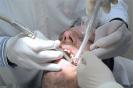 Biological Dentistry involves putting compounds in people's mouths that will not poison them or create a reaction of their immune system. When a dentist puts a silver amalgam filling in your mouth you have a filling that contains 50% mercury. It is really a mercury amalgam. Mercury is the most powerful brain poison (neurotoxin) on the planet. And, according to the research of Dr. Hal Huggins, D.D.S., M.S., there is a 92% chance that your immune system will start to fight the presence of dental mercury circulating the body. In many cases dental mercury will win this fight and create disease.
His book It's All in Your Head is an excellent expose of the dangers of dental mercury. It tells the reader how to have mercury fillings replaced with non-toxic plastic fillings. Another excellent book on the same subject is Silver Dental Fillings - The Toxic Time Bomb, by Sam Ziff.
Mercury from your fillings leaches into every tissue in the body. It travels to the brain and the kidneys and to every organ and system in the body, including the cardiovascular system. It can destroy the immune system. When you have bio-compatible plastics put in your mouth by a biological dentist your tissues and organs will not be poisoned, your nervous system will not be affected, and your immune system will not be destroyed.
After you have your mercury fillings replaced with plastic fillings the metal ions are still in your tissues and they can continue to poison you. You can remove these residual metals from your tissues by doing DMSA chelation.
more informations here: chelation
What has changed? - Much about dentistry and much about how we see dentistry has changed.
 What has changed? - Much about dentistry and much about how we see dentistry has changed. Thirty years ago I was treating teeth that had people attached. Today I am treating people that are appropriately attached to the realization that their oral health is intimately connected to their overall health and well-being. Every tooth is a vital organ with its own innervations, circulation, and special function.
Holistic practitioners have long appreciated the connection of disease in one part of the body intimately affecting all parts. Conventional dentistry and medicine has rediscovered, after about 80 years of denial, the bidirectional role of periodontal disease (bleeding gum tissue and retreating gum tissue and boney support). Thirty years ago I was not taught that regular hygiene visits were so instrumental in preventing heart attacks, strokes, diabetes and premature and low birth-weight babies. That truth is universally accepted now. The role, of home care and of hygiene visits to detect problems early and to coach optimal home-care, has risen from a good idea to one of the most important things we can do for our patients. Who knew hygiene visits could save lives?
A Critical Look at Cavitational Osteopathosis, NICO, and "Biological Dentistry"
A small minority of dentists, who commonly refer to themselves as "biologic dentists,' claim that most facial pains and even pains and diseases located far from the mouth are caused by cavities (cavitations) within the jaw bones. This concept was first proposed in 1976 and called "cavitational osteopathosis" ("CO"). Proponents of this concept alleged that many patients had infected cavities within their jaws and that these cavities were not treatable with antibiotics or detectable on x-rays.
Dentists are able to diagnose abscesses, cysts, and other bone infections with x-rays and typically treat these conditions antibiotic therapy. Because the theory of CO contradicted so much of what was known about bone infections, it was not widely accepted. In addition, the treatment advocated for CO was highly invasive and consisted of drilling into the supposed “cavitations,” scraping the bone and rinsing the wound with antibiotics. Some dentists even rinsed the cavity with colloidal silver and administered intravenous vitamin C. The scientific evidence for both the diagnosis and treatment of CO was extremely weak.
During the the 1980s, CO was renamed neuralgia inducing cavitational osteonecrosis (NICO), and a new theory of its origin was proposed. NICO’s prime promoter is J.E. Bouquot, D.D.S., M.S.D., an oral pathologist who coined the term. Bouquot was associated with the West Virginia University School of Dentistry, but in 1994 he began operating the Maxillofacial Center for Diagnostics and Research (now called the Maxillofacial Center for Education and Research), a private laboratory and consultation service in Morgantown, West Virginia. The center’s mail-in biopsy service is called Head & Neck Diagnostics of America. In 2004, Bouquot became a professor at the University of Texas Health Science Center in Houston, Texas.
Dentists are able to diagnose abscesses, cysts, and other bone infections with x-rays and typically treat these conditions antibiotic therapy. Because the theory of CO contradicted so much of what was known about bone infections, it was not widely accepted. In addition, the treatment advocated for CO was highly invasive and consisted of drilling into the supposed “cavitations,” scraping the bone and rinsing the wound with antibiotics. Some dentists even rinsed the cavity with colloidal silver and administered intravenous vitamin C. The scientific evidence for both the diagnosis and treatment of CO was extremely weak.
During the the 1980s, CO was renamed neuralgia inducing cavitational osteonecrosis (NICO), and a new theory of its origin was proposed. NICO’s prime promoter is J.E. Bouquot, D.D.S., M.S.D., an oral pathologist who coined the term. Bouquot was associated with the West Virginia University School of Dentistry, but in 1994 he began operating the Maxillofacial Center for Diagnostics and Research (now called the Maxillofacial Center for Education and Research), a private laboratory and consultation service in Morgantown, West Virginia. The center’s mail-in biopsy service is called Head & Neck Diagnostics of America. In 2004, Bouquot became a professor at the University of Texas Health Science Center in Houston, Texas.
Wednesday, July 05, 2006
INFERTILITY, BIRTH DEFECTS, AND FETAL DEVELOPMENTAL EFFECTS RELATED TO MERCURY FROM DENTAL FILLINGS VII
Based on animal studies using rats, sheep, and monkeys as well as human studies, mercury from amalgam in the blood of pregnant women crosses the placenta and appears in amniotic fluid and fetal blood, liver, and pituitary gland within 2 days of placement [10,14,15, 34-36,43-47,60,/54]. Studies have found a significant correlation between number of amalgam fillings of the mother and the level of mercury in the fetus, infants, and young children[10,14,15,34-40], and also with the level in mother's milk [10,38-42]. Breast milk has been found to increase the bioavailability of inorganic mercury, which was found to be excreted to milk from blood at a higher level than organic mercury(41,44,61). The main mechanism of transfer was found to be binding to albumin(45). For non-occupationally exposed populations and populations without high fish consumption, these studies found dental amalgams appear to be the main source of mercury in breast milk and the fetus, but significant levels of methyl mercury are also often found in breast milk [43,44,46,54,61]. U.S. ATSDR staff[62] indicate that under normal circumstances mercury in mother's milk should be under 1.7 ug/L, and 3.5 ug/L appears to be an adequate screening level for health risk. They indicate that there is evidence that contaminated breast milk is a source of potential risk to infants. An Italian study indicates that a commonly used mercury tolerance level for human milk is 4 ppb(43).Mercury is often stored in breast milk and the fetus at much higher levels than that in the mother [10,36,38-46,60,61/54]. Milk from mothers with 7 or more fillings was found to have levels of mercury approximately 10 times that of amalgam free mothers. The milk sampled ranged from 0.2 to 57 ug/L. In a population of German women, the concentration of mercury in early breast milk ranged from 0.2 to 20.3 ug/L. After 2 months laction the level had declined and was 0.1 to 11.7 ug/L[64]. A Japanese study found that the average mercury level in samples tested increased 60% between 1980 and 1990[47]. The level of mercury in umbilical cord blood, meconium, and placenta is usually higher than that in mother's blood[43- 47].Meconium(first stool) level appears to be the most reliable indicator of fetal mercury exposure and often has significant levels when there are low levels in mother's blood and cord blood(46c). The level of maternal blood or hair mercury is significantly correlated with mercury level in meconium and in nursing infants , so maternal tests can be easily used as a screen for developmental dangers[43-47,127]. But fetal levels can be significant when there are low levels in maternal blood(46c).
INFERTILITY, BIRTH DEFECTS, AND FETAL DEVELOPMENTAL EFFECTS RELATED TO MERCURY FROM DENTAL FILLINGS VI
The most common source of maternal exposure to mercury vapor, as previously shown, is amalgam fillings, while the most common sources of methyl mercury in people are amalgam(31) and fish. Both have been demonstrated to cause rapid transmittal through the placenta to the fetus [14,15,34-51/52-54]. The fetal mercury content after maternal inhalation of mercury vapor was found to be over 20 times that for maternal exposure to an equivalent dose of inorganic mercury[48-50], and levels of mercury in the brain, heart, and major organs have been found to be higher after equal exposure levels to mercury vapor than for the other mercury forms [8,55]. Some developmental and behavioral effects from mercury vapor have been found at levels considerably below that required for similar effects by methyl mercury [10,38,49,56-58]. The studies reviewed found that mercury vapor and organic mercury have independent and synergistic toxic and developmental effects along with those of other toxic metals such as nickel, palladium, gold, and cadmium, and that additionally conversions occur in the body between the various forms of mercury[16,59]. Extensive immune system tests for populations of patients with chronic autoimmune diseases such as Chronic Fatigue Syndrome or chronic neurological conditions have also demonstrated that a much higher percentage of the patients have autoimmune reactions to inorganic mercury than to organic mercury, and that immune reactivities and symptoms improve in the majority of cases when amalgam fillings are replaced[16,59]
INFERTILITY, BIRTH DEFECTS, AND FETAL DEVELOPMENTAL EFFECTS RELATED TO MERCURY FROM DENTAL FILLINGS V
Another study[29] found daily excretion through feces from 10 to 87 ug. A medical laboratory, BIOSPECTRON SWEDEN AB, that has performed thousands of fecal tests for mercury reports a similar range of daily excretion. Large studies that measured mercury levels in saliva have found that over 90 % of mercury in saliva typically comes from amalgam fillings, and the level of mercury found in saliva has a similar range as the studies for level in feces previously quoted[24,29]. A large study of mercury levels in the U.S. military population found average daily excretion levels in urine for subjects with 20 amalgam surfaces to be appoximately 6.2 ug, assuming 2 liters of urine excreted per day[13]. Significant levels of mercury have also been found in sweat and appear to often be more than 2 ug per day for subjects with approximately 1200 ml of sweat per day. Additionally autopsy studies[12] have found that for those with chronic exposure, daily exposure levels are higher than excretion levels so mercury accumulates in the major body organs including the brain, heart, kidneys, liver, etc. Thus altogether daily exposure levels for those with several fillings appear to often exceed 50 ug/day, with exposure levels of over 100 ug/day not uncommon[24,29]. Studies have also found the majority of such exposure to come from vapor rather than particles, with relatively high absorption rates in the body[25].III. Effects of Mercury Exposure on Fertility and Fetal DevelopmentMany studies have documented health effects occurring to the neurological, immune, hormonal, and reproductive systems due to the high levels of mercury accumulating from chronic occupational exposure. But many recent studies have found reproductive effects including infertility and developmental effects in the fetus and infants at much lower levels than those having significant effects on adults. As compared to adults, the fetus and newborns have been found to be much more susceptable to the effects of low levels of mercury exposure due to low body weight with higher food consumption rate per kilogram of body weight, higher gastrointestinal absorption rate, less effective renal excretion, and a less effective blood-brain barrier[33].
INFERTILITY, BIRTH DEFECTS, AND FETAL DEVELOPMENTAL EFFECTS RELATED TO MERCURY FROM DENTAL FILLINGS IV
 Except for special populations such as occupationally exposed workers and populations with a high level of fish in the diet, the number one source of mercury in most people has been documented to be dental amalgam fillings[13,24-31]. Most of the thousands of people with several amalgam fillings who have been tested were found to have daily exposure levels of mercury vapor exceeding government safety guidelines. The U.S. ATSDR mercury vapor minimum risk level(MRL) is 0.2 micrograms per cubic meter(ug/M3)[32]. Most people with amalgam fillings who have been tested have been found to have much higher levels of mercury in their oral air than this, with some as high as 100 ug/M3[24,25,28-31].For an adult breathing 0.2 ug/day of mercury and breathing approximately 20 cubic meters per day of air[27], the ATSDR MRL gives a guideline level of exposure of approx. 4 micrograms per day. Most of the many thousands tested who have 9 or more amalgam fillings were found to have exposure levels above this level and above U.S. government health guidelines for mercury[11,13,24-31]. While most studies such as Richardson's analysis for Health Canada[27] that are primarily based on urine measurements use conservative estimates of daily mercury exposure from amalgam in the range 3 to 5 ug/day, studies which measure levels of mercury in feces or saliva found considerably higher daily exposure levels. Two studies found daily exctetion in feces betweeen 30 to 190 ug for subjects with between 18 and 82 amalgam surfaces, with an average of 60 ug/day[25,28].
Visit our: Dental Forum
INFERTILITY, BIRTH DEFECTS, AND FETAL DEVELOPMENTAL EFFECTS RELATED TO MERCURY FROM DENTAL FILLINGS III
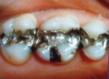 Also while it has been known that the general public is commonly exposed to methylmercury which is the main form of mercury in fish, it has not been commonly understood that there was significant widespread exposure to inorganic mercury. Although it has now been well documented that the major exposure to mercury for most people is from amalgam fillings and that likewise maternal amalgam fillings are a major source of exposure for the fetus and infants, this information has not been widely publicized and appears to be unknown to the majority of doctors, dentists, and the public. This paper clarifies and documents some of these recent findings, and also reviews the fertility and fetal development effects of mercury vapor, which have been documented at even lower levels than for methylmercury in some cases.II. Mechanisms of Mercury Leakage from Amalgam fillings and Levels of Exposure.The average amalgam filling weighs more than ½ gram and is 50% mercury. Mercury is known to have a low vapor pressure and to be continuously vaporized and absorbed by the body. Amalgam has also been shown to act like a battery, setting up galvanic currents in the mouth, resulting in high levels of mercury being deposited through this action in the oral tissues and mucosa, from which it also spreads to other parts of the body[17-23]. Levels commonly found in the oral tissues of those with amalgam fillings were 100 to 1200 times the FDA/EPA action level for health warnings in food, which is 1 part per million (ppm) mercury[4].
Subscribe to:
Posts (Atom)
Dr. Group's Secret to Health Kit$39.94  Dr. Group's Secret to Health Kit offers simple at-home solutions for cleansing internally and externally thereby reducing toxins, restoring the body's natural healing process, and helping you achieve true health and happiness. |
Advanced Body Cleansing Kit$147.75 Advanced Body Cleansing Kit with Livatrex™, Oxy-Powder®, Latero-Flora™ and two bottles of ParaTrex®. |