(HealthDay News) -- There's mounting evidence that brushing, flossing and regular dental checkups may be at the heart of good cardiovascular health.
"People who have chronic infections -- and gum disease is one of the major chronic infections -- are at increased risk later in life for atherosclerosis [hardening of the arteries] and coronary heart disease," said American Heart Association spokesman Dr. Richard Stein, who is also director of preventive cardiology at Beth Israel Medical Center, in New York City.
Stein said he regularly counsels patients worried about their risk for heart attack or stroke to incorporate good periodontal care in their preventive strategies, just as they would include exercise, healthy diets and appropriate medications.
The reason: Chronic periodontal disease -- which is caused by a number of oral bacteria -- appears to set off an inflammatory process that exacerbates and contributes to the build-up of cholesterol-rich plaque on artery walls.
"The presence of a chronic infection in the mouth is very similar to a chronic infection anywhere else in the body, in that it puts stress on our body's response system," explained Dr. Ronald Inge, associate executive director of the division of dental practice at the American Dental Association in Chicago. "The way the body responds [to that stress] is by sending different elements through the bloodstream, and these elements create the plaque."
In fact, one study published earlier this year in the journal Circulation found that patients with high levels of gum disease bacteria were also at high risk for atherosclerosis.
"This demonstrates that the [health of] the mouth isn't isolated from the rest of the body," Inge said.
According to Stein, experts have known about the periodontal-cardiovascular link for about a decade. "It's become a bigger problem in general because we're having fewer cavities due to fluoride and we're living longer," he said. "So, more and more, what's making us lose our teeth is periodontal disease."
But there's lots you can do to keep bacteria from setting up house in your gums. Some tips, according to Inge:
· Get checked. A thorough oral exam will allow a dentist to detect and diagnosis gum disease, gauge its severity, and order appropriate treatment. Treatments include bacterial removal via scaling and root-planing, and the use of antibiotics.
· Brush and floss regularly. The more frequently food is kept away from teeth, the better, since regular cleaning robs oral bacteria of the nutrients they crave.
· Don't snack. Every snack delivers a fresh meal to germs that are hard at work destroying teeth and gums. If snacking is unavoidable, Inge recommends less-sticky foods that won't adhere to tooth structure.
Stein noted that there's one group of adults that may not have to worry about periodontal troubles: those with dentures. "In order to have an infection of your gums, you need to have teeth," he said.
Most Americans would rather keep their teeth, however -- and keep their hearts and arteries healthy. According to Stein, good oral health care may help accomplish both goals.
"Taking care of your teeth is part of general good health and quality of life," he said, "and it may also have a protective role for your heart."
More information
For more on preventing periodontal disease, visit the American Dental Association.
Tuesday, August 29, 2006


C-Sections Linked to Higher Cavity Risk in Babies
(HealthDay News) -- Women with dental cavities who deliver their babies by Caesarean section should pay close attention to their babies' dental health later on, a new study suggests.
Researchers from New York University found that a cavity-causing bacterium that grows on tooth surfaces appeared much earlier in babies delivered by C-section than in those delivered vaginally. The study evaluated 156 mother-infant pairs.
"We are the first to report that there is a link between C-sections and the acquisition of cavity-causing bacteria in the baby," said Dr. Yihong Li, an associate professor of basic science and craniofacial biology at the New York University College of Dentistry.
Li, who is lead author of the study, added that the researchers did not study whether the babies delivered by C-section actually got more cavities later, but only that they had more cavity-causing bacterium earlier.
The study appears in the September issue of the Journal of Dental Research.
The reason for the findings? Li suspects that vaginally delivered infants, because of exposure to a greater variety and intensity of bacteria from their mothers and the surrounding environment at birth, develop more resistance to the cavity-causing germ than do C-section babies, who have less bacterial exposure at birth.
The women in the study were mostly black women from an inner-city area of Birmingham, Ala. In all, 127 of the women had vaginal deliveries and 29 had C-sections. Their mean age was approximately 21 years, and about 75 percent of the women had cavities. Li and her team then started collecting saliva and plaque samples from the babies to evaluate them for bacterium.
The bacterium, Streptococcus mutans, was detected in 55 of the 156 infants, on average at 22.3 months of age. But the C-section infants acquired the germ at 17.1 months of age, compared to 28.8 for the vaginally delivered babies.
Dr. Edmond Hewlett, an associate professor of dentistry at the University of California, Los Angeles School of Dentistry and a consumer advisor for the American Dental Association, called the study sound.
"What's new here is the association between the time of infection with bacteria that cause cavities and the type of delivery," he said. It has been known that the primary route of infection for cavity-causing bacteria is mother to infant, he said.
Even so, the new study findings "shouldn't affect the decision for women to have a C-section," Hewlett added.
The take-home message for mothers, Li said, is this: "If the mother has very poor oral health, she really needs to pay attention to her [baby's oral health] if she delivers C-section."
"Don't share spoons with your baby," Hewlett tells mothers, especially those who have cavities. "Chewing gum with Xylitol in it after eating is a good way to clear the mouth of bacteria."
More information
To learn more about preventing cavities, visit the American Dental Association.
Researchers from New York University found that a cavity-causing bacterium that grows on tooth surfaces appeared much earlier in babies delivered by C-section than in those delivered vaginally. The study evaluated 156 mother-infant pairs.
"We are the first to report that there is a link between C-sections and the acquisition of cavity-causing bacteria in the baby," said Dr. Yihong Li, an associate professor of basic science and craniofacial biology at the New York University College of Dentistry.
Li, who is lead author of the study, added that the researchers did not study whether the babies delivered by C-section actually got more cavities later, but only that they had more cavity-causing bacterium earlier.
The study appears in the September issue of the Journal of Dental Research.
The reason for the findings? Li suspects that vaginally delivered infants, because of exposure to a greater variety and intensity of bacteria from their mothers and the surrounding environment at birth, develop more resistance to the cavity-causing germ than do C-section babies, who have less bacterial exposure at birth.
The women in the study were mostly black women from an inner-city area of Birmingham, Ala. In all, 127 of the women had vaginal deliveries and 29 had C-sections. Their mean age was approximately 21 years, and about 75 percent of the women had cavities. Li and her team then started collecting saliva and plaque samples from the babies to evaluate them for bacterium.
The bacterium, Streptococcus mutans, was detected in 55 of the 156 infants, on average at 22.3 months of age. But the C-section infants acquired the germ at 17.1 months of age, compared to 28.8 for the vaginally delivered babies.
Dr. Edmond Hewlett, an associate professor of dentistry at the University of California, Los Angeles School of Dentistry and a consumer advisor for the American Dental Association, called the study sound.
"What's new here is the association between the time of infection with bacteria that cause cavities and the type of delivery," he said. It has been known that the primary route of infection for cavity-causing bacteria is mother to infant, he said.
Even so, the new study findings "shouldn't affect the decision for women to have a C-section," Hewlett added.
The take-home message for mothers, Li said, is this: "If the mother has very poor oral health, she really needs to pay attention to her [baby's oral health] if she delivers C-section."
"Don't share spoons with your baby," Hewlett tells mothers, especially those who have cavities. "Chewing gum with Xylitol in it after eating is a good way to clear the mouth of bacteria."
More information
To learn more about preventing cavities, visit the American Dental Association.
Health Highlights: Aug. 2, 2006
Here are some of the latest health and medical news developments, compiled by the editors of HealthDay:
Processed Meats Linked to Increased Stomach Cancer Risk
The more processed meat you eat, the greater your risk of stomach cancer, according to a Swedish research review published Wednesday in the Journal of the National Cancer Institute.
Processed meats include bacon, salami, sausage, hot dogs, ham, and smoked or cured meat.
The authors analyzed data collected from more than 4,700 people in 15 studies from 1996 to 2006 and concluded that a 30-gram-per-day increase in consumption of processed meat boosted the risk of developing stomach cancer by between 15 percent and 38 percent, CBC News reported.
The researchers said the findings were most consistent for bacon consumption.
"Our results . . . show very clearly that there is an association between increased consumption of processed meat products and stomach cancer," researcher Susanna Larsson of the Karolinska Institute in Stockholm, said in a prepared statement.
Processed meats are often smoked or salted, or have nitrates added in order to extend their shelf lives. These additives may increase the risk of stomach cancer, but previous research has produced conflicting findings, CBC News reported.
"We hope that further studies will clarify the interaction between the consumption of processed meats and other factors, such as dietary factors and the effects of different bacteria on the incidence of stomach cancer," Larsson said.
-----
Romanian Children with HIV Face Discrimination: Report
Widespread discrimination is a fact of life for many of the more than 7,000 Romanian youngsters infected with HIV, the virus that causes AIDS, says a report released Wednesday by New York-based Human Rights Watch.
It said many of the youngsters don't attend school and don't have access to proper medicines or dental care, the Associated Press reported.
Under Romanian law, children are required to attend school until they are 16 years old. But that law is not enforced for children with HIV.
"Forty percent of the HIV youngsters are not in school. The discrimination against those whose status is known is so great that many face daily harassment by teachers and fellow students. In some cases, they have been expelled from school," said Clarissa Bemondo, a Human Rights Watch researcher for children's rights.
In some cases, dentists refuse to treat children with HIV, the report said. Some HIV-positive kids can't get free medicine because pharmacies won't stock the drug, the AP reported.
While HIV-positive patients in Romania are eligible for a disability allowance, only about 3,000 of the HIV-positive children in the country claim it. Others don't want to because they fear they'll be ostracized if people in their community learn they have HIV, the report said.
-----
Castro Reportedly Stable After Surgery
Cuban President Fidel Castro is in stable condition and recovering from surgery to stop intestinal bleeding, according to Cuban officials who provided little information about his illness.
The Miami Herald reported that a statement attributed to Castro and read on a Tuesday evening news program in Havana suggested that physicians were uncertain about his prognosis.
"I cannot invent good news, because that wouldn't be ethical," the statement said, according to the Herald report. "I wish to say that the situation is stable, but a real evolution of the state of one's health requires the passing of time. The most I could say is that the situation will remain stable for many days before a verdict can be delivered."
The 79-year-old Cuban leader, who temporarily turned the reins of the country over to his brother Raul, underwent surgery to repair what a statement has called a "sharp intestinal crisis with sustained bleeding." The location of the surgery and the reason for it have not been disclosed.
In the statement, Castro apologized to Cubans for not providing more details, saying his health must be treated as "a state secret" because of the threat posed to his government by the United States, the Associated Press reported.
Cuban parliament speaker Ricardo Alarcon dismissed speculation among Cuban exiles in Miami that Castro was dead. The Cuban leader's "final moment is still very far away," Alarcon told the state news service Prensa Latina.
-----
Obese Americans Claim They Eat Well and Exercise, Survey Says
A huge serving of denial may explain why a survey found that more than three-quarters of obese Americans say they have healthy eating habits and about 40 percent say they get vigorous exercise at least three times a week.
The telephone survey of more than 11,000 people was conducted by Thomson Medstat, a Michigan-based health-care research firm.
"There is, perhaps, some denial going on. Or there is a lack of understanding of what does it mean to be eating healthy, and what is vigorous exercise," Dr. David Schutt, the associate medical director at Thomson Medstat, told the Associated Press.
About 3,100 of the survey respondents were obese or morbidly obese, while about 4,200 were overweight. There were about 3,800 normal-weight people and about 200 underweight people.
-----
New Bird Flu Outbreak Suspected in Indonesia
Health experts and Indonesian officials are concerned about a suspected new bird flu outbreak in a village where seven members of one family died of the H5N1 virus in May.
That cluster of deaths caused fears that the virus was mutating into a form that could be easily transmitted from human to human. However, experts later concluded that was not the case.
In this latest outbreak, seven people from the village in the Karo district in Northern Sumatra province have been hospitalized with suspected bird flu, BBC News reported. Officials are waiting for test results to confirm that it is bird flu.
An health ministry official said this outbreak involves two clusters -- one with two sisters and another with three family members and two of the family's neighbors, BBC News reported.
Indonesia has recorded more bird flu deaths so far this year than any other country. Health experts have criticized the Indonesian government for not doing enough to control the spread of the disease among domestic birds.
-----
Fires Killed About 3,600 People in the U.S. in 2005
Fires killed an estimated 3,675 people in the United States in 2005, which translates to one person every 143 minutes, according to National Fire Protection Agency (NFPA) statistics released Tuesday.
While the number of fires increased 3.3 percent from 2004 to 2005, the number of fire deaths decreased by 5.8 percent. The 2005 fire death toll was the third lowest since the NFPA began conducting its annual study in 1977.
In 2005, 82 percent of fire deaths occurred in home fires, while highway vehicle fires caused 14 percent (500) of fire fatalities. All other buildings, vehicles, and locations accounted for the remaining 4 percent (145) deaths.
About 17,925 people, excluding firefighters, were injured in fires in 2005. That's the second lowest total recorded by the NFPA, just slightly higher than the 17,785 injuries reported in 2004.
Processed Meats Linked to Increased Stomach Cancer Risk
The more processed meat you eat, the greater your risk of stomach cancer, according to a Swedish research review published Wednesday in the Journal of the National Cancer Institute.
Processed meats include bacon, salami, sausage, hot dogs, ham, and smoked or cured meat.
The authors analyzed data collected from more than 4,700 people in 15 studies from 1996 to 2006 and concluded that a 30-gram-per-day increase in consumption of processed meat boosted the risk of developing stomach cancer by between 15 percent and 38 percent, CBC News reported.
The researchers said the findings were most consistent for bacon consumption.
"Our results . . . show very clearly that there is an association between increased consumption of processed meat products and stomach cancer," researcher Susanna Larsson of the Karolinska Institute in Stockholm, said in a prepared statement.
Processed meats are often smoked or salted, or have nitrates added in order to extend their shelf lives. These additives may increase the risk of stomach cancer, but previous research has produced conflicting findings, CBC News reported.
"We hope that further studies will clarify the interaction between the consumption of processed meats and other factors, such as dietary factors and the effects of different bacteria on the incidence of stomach cancer," Larsson said.
-----
Romanian Children with HIV Face Discrimination: Report
Widespread discrimination is a fact of life for many of the more than 7,000 Romanian youngsters infected with HIV, the virus that causes AIDS, says a report released Wednesday by New York-based Human Rights Watch.
It said many of the youngsters don't attend school and don't have access to proper medicines or dental care, the Associated Press reported.
Under Romanian law, children are required to attend school until they are 16 years old. But that law is not enforced for children with HIV.
"Forty percent of the HIV youngsters are not in school. The discrimination against those whose status is known is so great that many face daily harassment by teachers and fellow students. In some cases, they have been expelled from school," said Clarissa Bemondo, a Human Rights Watch researcher for children's rights.
In some cases, dentists refuse to treat children with HIV, the report said. Some HIV-positive kids can't get free medicine because pharmacies won't stock the drug, the AP reported.
While HIV-positive patients in Romania are eligible for a disability allowance, only about 3,000 of the HIV-positive children in the country claim it. Others don't want to because they fear they'll be ostracized if people in their community learn they have HIV, the report said.
-----
Castro Reportedly Stable After Surgery
Cuban President Fidel Castro is in stable condition and recovering from surgery to stop intestinal bleeding, according to Cuban officials who provided little information about his illness.
The Miami Herald reported that a statement attributed to Castro and read on a Tuesday evening news program in Havana suggested that physicians were uncertain about his prognosis.
"I cannot invent good news, because that wouldn't be ethical," the statement said, according to the Herald report. "I wish to say that the situation is stable, but a real evolution of the state of one's health requires the passing of time. The most I could say is that the situation will remain stable for many days before a verdict can be delivered."
The 79-year-old Cuban leader, who temporarily turned the reins of the country over to his brother Raul, underwent surgery to repair what a statement has called a "sharp intestinal crisis with sustained bleeding." The location of the surgery and the reason for it have not been disclosed.
In the statement, Castro apologized to Cubans for not providing more details, saying his health must be treated as "a state secret" because of the threat posed to his government by the United States, the Associated Press reported.
Cuban parliament speaker Ricardo Alarcon dismissed speculation among Cuban exiles in Miami that Castro was dead. The Cuban leader's "final moment is still very far away," Alarcon told the state news service Prensa Latina.
-----
Obese Americans Claim They Eat Well and Exercise, Survey Says
A huge serving of denial may explain why a survey found that more than three-quarters of obese Americans say they have healthy eating habits and about 40 percent say they get vigorous exercise at least three times a week.
The telephone survey of more than 11,000 people was conducted by Thomson Medstat, a Michigan-based health-care research firm.
"There is, perhaps, some denial going on. Or there is a lack of understanding of what does it mean to be eating healthy, and what is vigorous exercise," Dr. David Schutt, the associate medical director at Thomson Medstat, told the Associated Press.
About 3,100 of the survey respondents were obese or morbidly obese, while about 4,200 were overweight. There were about 3,800 normal-weight people and about 200 underweight people.
-----
New Bird Flu Outbreak Suspected in Indonesia
Health experts and Indonesian officials are concerned about a suspected new bird flu outbreak in a village where seven members of one family died of the H5N1 virus in May.
That cluster of deaths caused fears that the virus was mutating into a form that could be easily transmitted from human to human. However, experts later concluded that was not the case.
In this latest outbreak, seven people from the village in the Karo district in Northern Sumatra province have been hospitalized with suspected bird flu, BBC News reported. Officials are waiting for test results to confirm that it is bird flu.
An health ministry official said this outbreak involves two clusters -- one with two sisters and another with three family members and two of the family's neighbors, BBC News reported.
Indonesia has recorded more bird flu deaths so far this year than any other country. Health experts have criticized the Indonesian government for not doing enough to control the spread of the disease among domestic birds.
-----
Fires Killed About 3,600 People in the U.S. in 2005
Fires killed an estimated 3,675 people in the United States in 2005, which translates to one person every 143 minutes, according to National Fire Protection Agency (NFPA) statistics released Tuesday.
While the number of fires increased 3.3 percent from 2004 to 2005, the number of fire deaths decreased by 5.8 percent. The 2005 fire death toll was the third lowest since the NFPA began conducting its annual study in 1977.
In 2005, 82 percent of fire deaths occurred in home fires, while highway vehicle fires caused 14 percent (500) of fire fatalities. All other buildings, vehicles, and locations accounted for the remaining 4 percent (145) deaths.
About 17,925 people, excluding firefighters, were injured in fires in 2005. That's the second lowest total recorded by the NFPA, just slightly higher than the 17,785 injuries reported in 2004.
Secrets of the Pharaohs' Physicians Revealed
HealthDay News) -- A doctor is called to the house of a young man with a severe wound on his cheek. The flesh is split open, red and inflamed.
After assessing the damage, the doctor applies a special enzymatic cleanser to the affected area, then covers it in a bandage soaked in an antibacterial compound, to reduce the risk of infection. Chances are, the man will make a complete recovery.
While this course of treatment may sound modern, the doctor in question lived and practiced almost 4,000 years ago, in an ancient Egypt where skilled medicine worked hand-in-hand with magic potions and incantations to the lion-headed goddess Sekhmet.
The anonymous physician in question -- practicing in the Middle Kingdom period of about 1900 B.C. -- passed on his knowledge about the diagnosis and treatment of 48 serious injuries in a document now known as the Edwin Smith Papyrus.
The papyrus -- itself a copy set down about 1600 B.C. -- is comprised of 11 hieroglyphic panels spanning 15 feet.
It is the oldest surgical text yet discovered. And along with a host of artifacts, it will be the centerpiece of The Art of Medicine in Ancient Egypt, a major exhibit set to open Sept. 13 at New York City's Metropolitan Museum of Art.
Because it was made in a period of Egypt's history when factions from the North and South Nile were fighting for dominance, "it's tempting to speculate that this papyrus was written down for use by a surgeon treating battle wounds," said James Allen, curator of Egyptian Art at the museum.
Whatever its function, the papyrus, which is owned by the New York Academy of Medicine, highlights just how advanced these ancient practitioners were.
"When you see these things, you really have to marvel at the ingenuity of these people," said Dr. David Mininberg, a New York City physician who also holds a master's degree in Middle Eastern Studies and who is volunteering as a consultant to the exhibit.
"They were meticulous recorders of what they observed," he added, noting that the papyrus shows that the practice of medicine was already a respected science 600 years before the reign of King Tutankhamen.
The papyrus, which is of unknown origin and was bought in 1862 in Egypt by an American, Edwin Smith, begins with an assurance to would-be doctors that diagnosis is a simple act of measurement and observation, to be undertaken like any other important task in the then-largely agricultural society.
"As for measuring things with a grain measure ... suffering is to be taken account of in the same way," the anonymous physician wrote.
Measurements of symptoms and bodily health are equally matter-of-fact. Middle Kingdom doctors -- most of whom were also priests of Sekhmet, the lion-headed goddess of unforeseen calamity -- had a keen understanding of the circulatory system, the external surface of the brain and how to interpret the pulse. They could also easily distinguish between bone sprains and bone breaks and abscesses as opposed to tumors.
Many doctors were specialists -- according to Allen, other papyri focus solely on gynecologic or dental problems. Some physicians even gained great fame -- among the exhibits at the museum is a limestone statue of Yuny (ca. 1290 B.C.), one of a father-son pair of doctors. The two became so renowned that a shrine was erected to them after their deaths, to which pilgrims came for healing.
The ancient Egyptian physician's knowledge of internal anatomy was probably based on examinations of animals, not man, experts believe.
"Remember, they wanted to preserve the body -- as a mummy, a place the soul could go to, so invasion of the body was considered a bad thing," Mininberg said. Indeed, the hieroglyphics for various organs usually resemble those of animals, not humans.
Given those restrictions, the average Middle Kingdom doctor understood his power and his limitations. After careful observation and diagnosis of the patient in question, the dozens of injuries listed in the papyrus are divided into three categories: "an ailment I will handle," "an ailment I will fight with," and "an ailment for which nothing is done."
"In light of today's practices, in my opinion, it's an incredibly enlightened view," Mininberg said. "In other words, in the first case he says, 'I know what this is, I can treat it and I'm expecting a good outcome.' In the second category, he hedges his bets a little bit. And the third category is what I think is most impressive: not to treat. In other words, rather than undertake end-of-life, heroic measures with no chance of success, he simply gives supportive care."
In the case of the split cheek injury, the physician decides this is "an ailment I will handle." He then instructs budding doctors that "you have to bandage [the patient] with fresh meat the first day. His treatment is to sit in order to reduce his swelling. You should treat him afterward with an oil-and-honey dressing every day until he gets well."
This protocol makes sense to Mininberg. Fresh meat contains enzymes that essentially help clean wounds and reduce inflammation, for example. "They also put honey on wounds; with our technology we've learned that honey has got antibacterial properties," Mininberg said.
Of course, the ancient Egyptians didn't know bacteria caused disease, but through trial and error they discovered what worked.
"If you think about it, that's not too much different from a modern drug trial," Mininberg said. "You say, 'Hey, this ought to work -- if it does, we'll keep doing it.' "
Other remedies displayed in the exhibition include pomegranate (used as an astringent) and lotus root (which contains morphine-like analgesics). The papyrus also reveals that Middle Kingdom physicians knew how to suture and cauterize.
The physician was only one part of a larger healing team, however. The papyrus contains recipes for magic potions as well as supplications to important deities.
For example, patients fighting snakebite had an ally in Isis, "mistress of magic," who assured supplicants that "every biting serpent-mouth listens to me."
And while the average ancient Egyptian had no knowledge of the infectious organisms that cause epidemics, an incantation written on the reverse side of the papyrus is "for barring air of the bitterness of the night-demons, those of smallness, Sekhmet's messengers. Retreat, night-demons!"
According to the papyrus, the man who recites this while circling his house "cannot die because of a disease year." Other spells and potions offer protection against menstrual cramps, mental problems, and even "rejuvenating the face."
Allen believes all of this reflects a rational response to events of unknown origin.
"The ancient Egyptians basically approached medicine the way we do -- trying to understand, then to cure," he said. "Of course, they had a lot less knowledge to work with. So when anyone got sick or went blind from bacteria, the only way they could explain it was through some kind of supernatural force. And what you used in that case, of course, was magic. It was a really very practical approach."
More information
For more on ancient Egyptian medicine, visit the Metropolitan Museum of Art.
After assessing the damage, the doctor applies a special enzymatic cleanser to the affected area, then covers it in a bandage soaked in an antibacterial compound, to reduce the risk of infection. Chances are, the man will make a complete recovery.
While this course of treatment may sound modern, the doctor in question lived and practiced almost 4,000 years ago, in an ancient Egypt where skilled medicine worked hand-in-hand with magic potions and incantations to the lion-headed goddess Sekhmet.
The anonymous physician in question -- practicing in the Middle Kingdom period of about 1900 B.C. -- passed on his knowledge about the diagnosis and treatment of 48 serious injuries in a document now known as the Edwin Smith Papyrus.
The papyrus -- itself a copy set down about 1600 B.C. -- is comprised of 11 hieroglyphic panels spanning 15 feet.
It is the oldest surgical text yet discovered. And along with a host of artifacts, it will be the centerpiece of The Art of Medicine in Ancient Egypt, a major exhibit set to open Sept. 13 at New York City's Metropolitan Museum of Art.
Because it was made in a period of Egypt's history when factions from the North and South Nile were fighting for dominance, "it's tempting to speculate that this papyrus was written down for use by a surgeon treating battle wounds," said James Allen, curator of Egyptian Art at the museum.
Whatever its function, the papyrus, which is owned by the New York Academy of Medicine, highlights just how advanced these ancient practitioners were.
"When you see these things, you really have to marvel at the ingenuity of these people," said Dr. David Mininberg, a New York City physician who also holds a master's degree in Middle Eastern Studies and who is volunteering as a consultant to the exhibit.
"They were meticulous recorders of what they observed," he added, noting that the papyrus shows that the practice of medicine was already a respected science 600 years before the reign of King Tutankhamen.
The papyrus, which is of unknown origin and was bought in 1862 in Egypt by an American, Edwin Smith, begins with an assurance to would-be doctors that diagnosis is a simple act of measurement and observation, to be undertaken like any other important task in the then-largely agricultural society.
"As for measuring things with a grain measure ... suffering is to be taken account of in the same way," the anonymous physician wrote.
Measurements of symptoms and bodily health are equally matter-of-fact. Middle Kingdom doctors -- most of whom were also priests of Sekhmet, the lion-headed goddess of unforeseen calamity -- had a keen understanding of the circulatory system, the external surface of the brain and how to interpret the pulse. They could also easily distinguish between bone sprains and bone breaks and abscesses as opposed to tumors.
Many doctors were specialists -- according to Allen, other papyri focus solely on gynecologic or dental problems. Some physicians even gained great fame -- among the exhibits at the museum is a limestone statue of Yuny (ca. 1290 B.C.), one of a father-son pair of doctors. The two became so renowned that a shrine was erected to them after their deaths, to which pilgrims came for healing.
The ancient Egyptian physician's knowledge of internal anatomy was probably based on examinations of animals, not man, experts believe.
"Remember, they wanted to preserve the body -- as a mummy, a place the soul could go to, so invasion of the body was considered a bad thing," Mininberg said. Indeed, the hieroglyphics for various organs usually resemble those of animals, not humans.
Given those restrictions, the average Middle Kingdom doctor understood his power and his limitations. After careful observation and diagnosis of the patient in question, the dozens of injuries listed in the papyrus are divided into three categories: "an ailment I will handle," "an ailment I will fight with," and "an ailment for which nothing is done."
"In light of today's practices, in my opinion, it's an incredibly enlightened view," Mininberg said. "In other words, in the first case he says, 'I know what this is, I can treat it and I'm expecting a good outcome.' In the second category, he hedges his bets a little bit. And the third category is what I think is most impressive: not to treat. In other words, rather than undertake end-of-life, heroic measures with no chance of success, he simply gives supportive care."
In the case of the split cheek injury, the physician decides this is "an ailment I will handle." He then instructs budding doctors that "you have to bandage [the patient] with fresh meat the first day. His treatment is to sit in order to reduce his swelling. You should treat him afterward with an oil-and-honey dressing every day until he gets well."
This protocol makes sense to Mininberg. Fresh meat contains enzymes that essentially help clean wounds and reduce inflammation, for example. "They also put honey on wounds; with our technology we've learned that honey has got antibacterial properties," Mininberg said.
Of course, the ancient Egyptians didn't know bacteria caused disease, but through trial and error they discovered what worked.
"If you think about it, that's not too much different from a modern drug trial," Mininberg said. "You say, 'Hey, this ought to work -- if it does, we'll keep doing it.' "
Other remedies displayed in the exhibition include pomegranate (used as an astringent) and lotus root (which contains morphine-like analgesics). The papyrus also reveals that Middle Kingdom physicians knew how to suture and cauterize.
The physician was only one part of a larger healing team, however. The papyrus contains recipes for magic potions as well as supplications to important deities.
For example, patients fighting snakebite had an ally in Isis, "mistress of magic," who assured supplicants that "every biting serpent-mouth listens to me."
And while the average ancient Egyptian had no knowledge of the infectious organisms that cause epidemics, an incantation written on the reverse side of the papyrus is "for barring air of the bitterness of the night-demons, those of smallness, Sekhmet's messengers. Retreat, night-demons!"
According to the papyrus, the man who recites this while circling his house "cannot die because of a disease year." Other spells and potions offer protection against menstrual cramps, mental problems, and even "rejuvenating the face."
Allen believes all of this reflects a rational response to events of unknown origin.
"The ancient Egyptians basically approached medicine the way we do -- trying to understand, then to cure," he said. "Of course, they had a lot less knowledge to work with. So when anyone got sick or went blind from bacteria, the only way they could explain it was through some kind of supernatural force. And what you used in that case, of course, was magic. It was a really very practical approach."
More information
For more on ancient Egyptian medicine, visit the Metropolitan Museum of Art.
Thursday, August 24, 2006
Teeth Yield Clues to Neanderthals' Lives
HealthDay News) -- Enamel deposited on teeth 150,000 years ago suggests that one of our closest evolutionary relatives, the Neanderthals, grew and matured at the same rate as modern humans.
The dental evidence does not settle two thornier questions, however: Were the Neanderthals -- who died out 30,000 years ago -- a separate species, and why did they become extinct?
Still, the finding that the two groups reached puberty at similarly slow rates "gives valuable, partial support to people who see Neanderthals as extremely close to modern humans," said Neanderthal craniofacial expert Jeffrey Laitman, a professor of otolaryngology and director of the department of anatomy at Mount Sinai School of Medicine, in New York City.
Laitman, who was not involved in the teeth study, said he leans toward the theory that the Neanderthals were a separate species.
This latest evidence again points to "the beauty of the Neanderthals," he said. "That this is a group that was so similar to us in some ways, yet so different in others -- and how majestic that is, a different species of human ancestors existing in our not-so-distant past."
Experts believe the classic Neanderthal arose in Europe, the Middle East and parts of Western Asia about 150,000 years ago, thriving and surviving up till the last Ice Age. Their brains were as large -- or even slightly larger than -- those of modern humans. And they possessed a much stockier, more muscular build, according to Debbie Gautelli-Steinberg, lead researcher on the teeth study and an assistant professor of anthropology at Ohio State University in Columbus.
"The shape of their skull was very different -- Neanderthals did not have a vertical forehead, it really sloped back," she said. "They also had very heavy arches over their eyes and a cranium that bulged in the back, whereas ours comes up more vertically."
But then, for reasons that remain unclear, the Neanderthals became extinct.
One theory behind their demise rested on the idea that they matured at a faster rate than modern humans.
On the one hand, a quick maturity can be an advantage -- shorter childhoods mean more individuals will survive to breed. But for primates, growing up too fast can be a disadvantage, too.
"A long period of maturity does one great thing -- it provides time for the brain to grow," Gautelli-Steinberg explained. "The brain is such an energetically expensive organ and so complex. And long maturation provides time for learning, which really means a reorganization of the synapses in the brain."
It's our bigger, more complex brains "that have really helped us survive," she said. And a relatively long time to puberty would foster that.
However, in a study published in Nature in 2004, a team of German researchers compared the growth of layers of enamel on Neanderthal front teeth with a sample from modern humans.
They found that the Neanderthal enamel was laid down in a 15 percent shorter time span than that seen in the modern human teeth. Because front-tooth growth is thought to be correlated with maturation rates, it seemed as if Neanderthals did, indeed, grow up faster than humans do.
But the new Ohio State study contradicts those findings. The key difference: Instead of just looking at tooth-enamel samples from one type of modern human, "the populations we looked at were from different regions of the globe," Gautelli-Steinberg said.
In the study, published in this week's Proceedings of the National Academy of Sciences, her team compared enamel growth from a Neanderthal front teeth ranging from 150,000 to 40,000 years in age, to teeth from three types of modern humans: the Arctic Inuit people, the English and South Africans.
"We found that the Neanderthal's teeth did not grow more quickly than modern humans, if you look at modern humans from different places in the world," Gautelli-Steinberg said. In fact, Neanderthal front-tooth enamel formation falls well within the normal range of various modern human populations -- in fact, it was very similar to that of modern South Africans, she said.
"So, looking at that diversity, we found that you can't generalize and say that the front teeth of Neanderthals grow more quickly than those of modern humans," Gautelli-Steinberg said. And, if front tooth enamel deposition is correlated with maturation rates, modern humans and Neanderthals probably matured at more or less the same rate, she said.
The finding brings humans a little closer to these long-extinct relatives, but still leaves unanswered the twin questions of whether or not Neanderthals were a separate species, and why they died out.
"Right now, in terms of their becoming extinct, it doesn't look like we can pin that on their maturation rate," Gautelli-Steinberg said.
She said theories abound as to why Neanderthals lost the evolutionary race. "At the end of their reign, about 38,000 to 30,000 years ago, they overlapped in Europe with anatomically modern humans, arriving in Europe from Africa," she said. "They competed with us for resources, and there's evidence that modern humans did have superior technology."
Neanderthal bones also show signs of serious skeletal trauma, fracture and arthritis, Gautelli-Steinberg said. "They were a population that was suffering in some ways."
Laitman, who specializes in reconstructing the Neanderthal upper respiratory tract, believes differences there may have also played a role. He pointed out that Neanderthal noses, inner and outer ears, throats and voice boxes were all markedly different than those of modern humans -- enough to suggest that they could have been a different species.
"And as one who works in areas of respiratory biology, I've wondered whether they ran into respiratory problems when they met different groups of humans -- disease," Laitman said.
Whatever the reasons for their demise, Laitman believes the time has come to discard old notions of Neanderthals as simply being "bumpy, ugly versions of us."
"They were often portrayed as being some kind of brutish, ape-ish creature that has nothing to do with our own kind," he said. "But people should see the beauty of the Neanderthals. They were distinct in their own right with a wonderful history, and we have to deal with the fact that different doesn't always mean inferior. Just how different is what we are trying to figure out."
More information
To learn more about Neanderthals, head to the Smithsonian Institution.
The dental evidence does not settle two thornier questions, however: Were the Neanderthals -- who died out 30,000 years ago -- a separate species, and why did they become extinct?
Still, the finding that the two groups reached puberty at similarly slow rates "gives valuable, partial support to people who see Neanderthals as extremely close to modern humans," said Neanderthal craniofacial expert Jeffrey Laitman, a professor of otolaryngology and director of the department of anatomy at Mount Sinai School of Medicine, in New York City.
Laitman, who was not involved in the teeth study, said he leans toward the theory that the Neanderthals were a separate species.
This latest evidence again points to "the beauty of the Neanderthals," he said. "That this is a group that was so similar to us in some ways, yet so different in others -- and how majestic that is, a different species of human ancestors existing in our not-so-distant past."
Experts believe the classic Neanderthal arose in Europe, the Middle East and parts of Western Asia about 150,000 years ago, thriving and surviving up till the last Ice Age. Their brains were as large -- or even slightly larger than -- those of modern humans. And they possessed a much stockier, more muscular build, according to Debbie Gautelli-Steinberg, lead researcher on the teeth study and an assistant professor of anthropology at Ohio State University in Columbus.
"The shape of their skull was very different -- Neanderthals did not have a vertical forehead, it really sloped back," she said. "They also had very heavy arches over their eyes and a cranium that bulged in the back, whereas ours comes up more vertically."
But then, for reasons that remain unclear, the Neanderthals became extinct.
One theory behind their demise rested on the idea that they matured at a faster rate than modern humans.
On the one hand, a quick maturity can be an advantage -- shorter childhoods mean more individuals will survive to breed. But for primates, growing up too fast can be a disadvantage, too.
"A long period of maturity does one great thing -- it provides time for the brain to grow," Gautelli-Steinberg explained. "The brain is such an energetically expensive organ and so complex. And long maturation provides time for learning, which really means a reorganization of the synapses in the brain."
It's our bigger, more complex brains "that have really helped us survive," she said. And a relatively long time to puberty would foster that.
However, in a study published in Nature in 2004, a team of German researchers compared the growth of layers of enamel on Neanderthal front teeth with a sample from modern humans.
They found that the Neanderthal enamel was laid down in a 15 percent shorter time span than that seen in the modern human teeth. Because front-tooth growth is thought to be correlated with maturation rates, it seemed as if Neanderthals did, indeed, grow up faster than humans do.
But the new Ohio State study contradicts those findings. The key difference: Instead of just looking at tooth-enamel samples from one type of modern human, "the populations we looked at were from different regions of the globe," Gautelli-Steinberg said.
In the study, published in this week's Proceedings of the National Academy of Sciences, her team compared enamel growth from a Neanderthal front teeth ranging from 150,000 to 40,000 years in age, to teeth from three types of modern humans: the Arctic Inuit people, the English and South Africans.
"We found that the Neanderthal's teeth did not grow more quickly than modern humans, if you look at modern humans from different places in the world," Gautelli-Steinberg said. In fact, Neanderthal front-tooth enamel formation falls well within the normal range of various modern human populations -- in fact, it was very similar to that of modern South Africans, she said.
"So, looking at that diversity, we found that you can't generalize and say that the front teeth of Neanderthals grow more quickly than those of modern humans," Gautelli-Steinberg said. And, if front tooth enamel deposition is correlated with maturation rates, modern humans and Neanderthals probably matured at more or less the same rate, she said.
The finding brings humans a little closer to these long-extinct relatives, but still leaves unanswered the twin questions of whether or not Neanderthals were a separate species, and why they died out.
"Right now, in terms of their becoming extinct, it doesn't look like we can pin that on their maturation rate," Gautelli-Steinberg said.
She said theories abound as to why Neanderthals lost the evolutionary race. "At the end of their reign, about 38,000 to 30,000 years ago, they overlapped in Europe with anatomically modern humans, arriving in Europe from Africa," she said. "They competed with us for resources, and there's evidence that modern humans did have superior technology."
Neanderthal bones also show signs of serious skeletal trauma, fracture and arthritis, Gautelli-Steinberg said. "They were a population that was suffering in some ways."
Laitman, who specializes in reconstructing the Neanderthal upper respiratory tract, believes differences there may have also played a role. He pointed out that Neanderthal noses, inner and outer ears, throats and voice boxes were all markedly different than those of modern humans -- enough to suggest that they could have been a different species.
"And as one who works in areas of respiratory biology, I've wondered whether they ran into respiratory problems when they met different groups of humans -- disease," Laitman said.
Whatever the reasons for their demise, Laitman believes the time has come to discard old notions of Neanderthals as simply being "bumpy, ugly versions of us."
"They were often portrayed as being some kind of brutish, ape-ish creature that has nothing to do with our own kind," he said. "But people should see the beauty of the Neanderthals. They were distinct in their own right with a wonderful history, and we have to deal with the fact that different doesn't always mean inferior. Just how different is what we are trying to figure out."
More information
To learn more about Neanderthals, head to the Smithsonian Institution.
Health Tip: Prevent Periodontitis
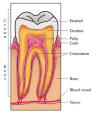 (HealthDay News) -- Periodontitis is a gum disease in which plaque, a bacteria-ridden film that covers the teeth, moves below the gum line. The bacteria cause inflammation of the gums, which ultimately causes damage to dental tissue and the bones supporting the teeth. According to the American Academy of Periodontology, this can lead to permanent damage, including tooth loss.
Regular dental cleanings, brushing, and flossing are the best ways to reduce plaque on your teeth and prevent periodontitis. Some people are genetically predisposed to periodontitis, even with proper dental care. Genetic testing can identify people at greater risk, and early preventive measures can help improve their dental health.
Some lifestyle factors can raise a person's risk of periodontitis, including smoking, stress, diabetes, and improper diet. Teeth grinding and clenching of the teeth may also promote destruction of the gums and surrounding tissues.
Brush Up on Good Dental Care
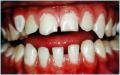 (HealthDay News) -- A brush, a piece of floss, and the right routine: Experts say these are the simple ingredients to a brighter, whiter, healthier smile.
And to mark National Dental Health Month, the U.S. Department of veterans Affairs offers the following dental care tips:
- Brush. Brush teeth at least twice a day with a soft bristle toothbrush. Brushing removes plaque, a sticky film of bacteria that can mix with sugars and starches to produce an acid that can cause cavities. If allowed to build up, plaque can eventually destroy the gums and bones that support teeth.
- Floss. Flossing every day removes tough-to-reach debris from between teeth.
- Cut down on sticky snacks. Reduce the amount of sugars and starches you eat. This may help protect teeth from damaging acid attacks.
- Go for cleanings. Have teeth professionally cleaned by a dental hygienist once every six months or as directed by a dentist.
- Use fluoride toothpastes. Local drinking water should also contain fluoride. Be aware that some bottled drinking water doesn't contain fluoride.
- Take fluoride further. Use a fluoride rinse or a prescription-strength brush-on fluoride if recommended by a dentist.
More information
The American Dental Association has more about oral health.
Health Tip: If You Want Whiter Teeth
 (HealthDay News) -- There are many over-the-counter toothpastes, gels and strips that can help brighten and whiten your teeth. There are also several procedures that your dentist can perform to remove stains and discoloration from your not-so-pearly whites.
Before you invest in any of these solutions, the American Dental Hygienists' Association (ADHA) recommends that you have a complete dental checkup to be sure your dental health is good.
Some tooth whitening methods have side effects, the ADHA says. Some may cause increased sensitivity in teeth or pain or irritation in the gums. Others may be particularly high in acid, which can damage the protective enamel on teeth.
Before you begin any at-home tooth bleaching or whitening system, talk with your dentist, the ADHA advises.
Monday, August 21, 2006
Flint Drills Kept Stone-Age Smiles Bright
(HealthDay News) -- Human teeth from almost 9,000 years ago show evidence of prehistoric -- but highly developed and precise -- dental drilling and filling, anthropologists say.
The find in Pakistan, reported in this week's Nature, pushes the origins of dentistry to long before recorded history, but leaves behind another mystery, since these procedures appear to have died out after 6,500 B.C.
But the precision and placement of the drilled holes -- in teeth with evidence of cavities -- leaves little doubt they were done to treat tooth decay, according to the researchers.
"Something interesting is going on with those teeth, and it looks like it had something to do with dentistry," said David DeGusta, an assistant professor of anthropological sciences at Stanford University in Palo Alto, Calif.
DeGusta, who was not involved in the Pakistani dig, is one of the world's leading experts on "prehistoric dentistry." In the late 1990s, his team discovered a similar, precisely drilled hole in a 1,000-year-old tooth found in a burial site in Colorado. That find remains the first evidence of prehistoric dentistry in the American Southwest, and one of only two such finds in the Americas.
According to the American Dental Association, the first recorded mention of dental health comes from the ancient Sumeria of 5,000 B.C., with a text attributing dental decay to "tooth worms." The first recorded evidence of dentistry, per se, comes from a tomb inscription for Hesy-Re, a doctor-scribe who was lauded as "the greatest of those who deal with teeth and of physicians." His dental office closed up shop in about 2,600 B.C., archaeologists say.
The Pakistani site, a "neolithic cemetery" at Mehrgarh in the southwestern province of Baluchistan, goes further back, to a 1,500-year period between 5,500 B.C. and 7,000 B.C. However, the anthropological team working there said that, despite its antiquity, the site revealed that the early agricultural society they uncovered had "an increasingly rich cultural life with technological sophistication based on diverse raw materials."
The first evidence of dentistry at the burial ground emerged about five years ago, when excavators discovered two molars with tiny perfectly drilled holes.
In this latest report, anthropologists led by Dr. Roberto Macchiarelli, of the University of Poitiers in Poitiers, France, said they have since discovered 11 permanent fillings in molars from both the upper and lower jaws of four females, two males and three individuals of unknown gender.
High-tech electron microscopy revealed precise hole formations that could only have been mechanical in nature, the scientists said, and "smoothing" along the margins of the holes indicates that months or years of chewing occurred after the holes were drilled.
"The teeth of at least one individual reveal that the procedure involved not just the removal of the tooth structure by the drill, but also subsequent micro-tool carving of the cavity wall by either the operator or the patient," the anthropologists wrote in their report.
Because molars lie far back in the mouth, there's no evidence that the holes were drilled for any decorative purpose, the researchers said. Four of the 11 teeth showed definite evidence of nearby decay. According to DeGusta, "When you have people drilling teeth that had cavities, it's not a stretch to suggest that it might have been early dentistry."
The find in Pakistan, reported in this week's Nature, pushes the origins of dentistry to long before recorded history, but leaves behind another mystery, since these procedures appear to have died out after 6,500 B.C.
But the precision and placement of the drilled holes -- in teeth with evidence of cavities -- leaves little doubt they were done to treat tooth decay, according to the researchers.
"Something interesting is going on with those teeth, and it looks like it had something to do with dentistry," said David DeGusta, an assistant professor of anthropological sciences at Stanford University in Palo Alto, Calif.
DeGusta, who was not involved in the Pakistani dig, is one of the world's leading experts on "prehistoric dentistry." In the late 1990s, his team discovered a similar, precisely drilled hole in a 1,000-year-old tooth found in a burial site in Colorado. That find remains the first evidence of prehistoric dentistry in the American Southwest, and one of only two such finds in the Americas.
According to the American Dental Association, the first recorded mention of dental health comes from the ancient Sumeria of 5,000 B.C., with a text attributing dental decay to "tooth worms." The first recorded evidence of dentistry, per se, comes from a tomb inscription for Hesy-Re, a doctor-scribe who was lauded as "the greatest of those who deal with teeth and of physicians." His dental office closed up shop in about 2,600 B.C., archaeologists say.
The Pakistani site, a "neolithic cemetery" at Mehrgarh in the southwestern province of Baluchistan, goes further back, to a 1,500-year period between 5,500 B.C. and 7,000 B.C. However, the anthropological team working there said that, despite its antiquity, the site revealed that the early agricultural society they uncovered had "an increasingly rich cultural life with technological sophistication based on diverse raw materials."
The first evidence of dentistry at the burial ground emerged about five years ago, when excavators discovered two molars with tiny perfectly drilled holes.
In this latest report, anthropologists led by Dr. Roberto Macchiarelli, of the University of Poitiers in Poitiers, France, said they have since discovered 11 permanent fillings in molars from both the upper and lower jaws of four females, two males and three individuals of unknown gender.
High-tech electron microscopy revealed precise hole formations that could only have been mechanical in nature, the scientists said, and "smoothing" along the margins of the holes indicates that months or years of chewing occurred after the holes were drilled.
"The teeth of at least one individual reveal that the procedure involved not just the removal of the tooth structure by the drill, but also subsequent micro-tool carving of the cavity wall by either the operator or the patient," the anthropologists wrote in their report.
Because molars lie far back in the mouth, there's no evidence that the holes were drilled for any decorative purpose, the researchers said. Four of the 11 teeth showed definite evidence of nearby decay. According to DeGusta, "When you have people drilling teeth that had cavities, it's not a stretch to suggest that it might have been early dentistry."
Gum Disease Can Harm Much More Than Your Teeth
(HealthDay News) -- Proper oral hygiene may do a lot more than keep your teeth bright and cavity-free -- it could be a boon to your overall health.
A growing body of research suggests that periodontal disease may exacerbate a variety of health problems as wide-ranging as diabetes, heart disease, respiratory disease -- even premature births, experts say.
For instance, several promising studies have found that blood-sugar levels in diabetics with periodontal disease were reduced to normal when the patients' gum disease was treated. Other research revealed that the incidence of respiratory diseases among nursing-home residents was cut when they were treated for gum disease, said Dr. Robert Genco, distinguished professor of oral biology at the School of Dental Medicine at the State University of New York at Buffalo.
"All of these are pilot studies, and whether [the periodontal disease] is causal, we cannot say, but we can't ignore these associations," Genco said. "Further, from a practical standpoint, there is no harm in treating periodontal disease in these patients."
Gum disease is very common, Genco explained. Approximately 80 percent of Americans have some form of the condition, which is a bacterial infection of the gums surrounding the teeth.
Gingivitis is the mildest and most common form of gum disease, causing inflammation of the tissues around the teeth. More serious is periodontitis, when the inflammation affects the connective tissue supporting the teeth and, eventually, the bone. An estimated 20 percent of Americans have periodontitis, making it the primary cause of tooth loss in adults.
Because periodontal disease is so common, Genco said, treating the condition successfully could have a significant impact on public health, even if it's associated with only a small portion of other ailments.
One reason gum disease could contribute to other ailments, researchers say, may be that oral bacteria get into the bloodstream and cause inflammation of other body tissues. Another possibility is that an oral infection could trigger inflammatory responses from the immune system, adversely affecting the rest of the body.
Dr. Steven Offenbacher, distinguished professor at the Department of Periodontics at the University of North Carolina School of Dentistry, is studying the link between periodontal disease and preterm birth, and thinks inflammation could play an important part in the connection.
"Organisms are capable of invading the bloodstream and challenging the fetus by inflammation of the fetal and placenta unit, thus promoting premature birth," he said.
In monitoring the dental health of 1,020 pregnant women, Offenbacher and his colleagues found that those who suffered moderate-to-serious periodontal disease (14 percent of the women) were twice as likely to give birth to premature babies, than women with healthy gums. This difference held up even when the results were adjusted to reflect factors such age of the mother, prior preterm births and socioeconomic differences.
Offenbacher is now the lead investigator of a five-year, multi-center study that's enrolling 1,800 pregnant women and treating their periodontal disease, to see if the treatment reduces the risk of premature delivery. Within three years, he said, there will be good data showing whether or not treating gum disease can reduce preterm birth risk.
"We have not yet proven [a link] but the data suggests that treating the mother is safe and can improve dental health," he said.
Meanwhile, growing interest in the possible links between periodontal disease and other illnesses has prompted study into more aggressive treatment of gum disease.
"Periodontal disease is a silent disease. The signs are not that obvious, and people really don't know they have problem," Genco said.
Doctors with patients with diabetes, respiratory illnesses, heart disease as well as pregnant women would all benefit from awareness of the possible effects of periodontal disease on the conditions they're treating, he said.
To help them and their patients recognize the signs of periodontal disease, Genco is one of several health professionals working with the U.S. Centers for Disease Control and Prevention. The goal: To develop a simple questionnaire for doctors to give their patients that would suggest when a patient should be seen by a dentist.
Answering "yes" to questions like whether their gums bleed or if their teeth look different could indicate which patients might have gum disease and should be referred to a dentist.
"People know when their gums recede -- there can be discoloration. Or if there is a difference in the spacing of their teeth or if their teeth look different," he said.
More information
To learn more about periodontal disease, visit the American Dental Association.
A growing body of research suggests that periodontal disease may exacerbate a variety of health problems as wide-ranging as diabetes, heart disease, respiratory disease -- even premature births, experts say.
For instance, several promising studies have found that blood-sugar levels in diabetics with periodontal disease were reduced to normal when the patients' gum disease was treated. Other research revealed that the incidence of respiratory diseases among nursing-home residents was cut when they were treated for gum disease, said Dr. Robert Genco, distinguished professor of oral biology at the School of Dental Medicine at the State University of New York at Buffalo.
"All of these are pilot studies, and whether [the periodontal disease] is causal, we cannot say, but we can't ignore these associations," Genco said. "Further, from a practical standpoint, there is no harm in treating periodontal disease in these patients."
Gum disease is very common, Genco explained. Approximately 80 percent of Americans have some form of the condition, which is a bacterial infection of the gums surrounding the teeth.
Gingivitis is the mildest and most common form of gum disease, causing inflammation of the tissues around the teeth. More serious is periodontitis, when the inflammation affects the connective tissue supporting the teeth and, eventually, the bone. An estimated 20 percent of Americans have periodontitis, making it the primary cause of tooth loss in adults.
Because periodontal disease is so common, Genco said, treating the condition successfully could have a significant impact on public health, even if it's associated with only a small portion of other ailments.
One reason gum disease could contribute to other ailments, researchers say, may be that oral bacteria get into the bloodstream and cause inflammation of other body tissues. Another possibility is that an oral infection could trigger inflammatory responses from the immune system, adversely affecting the rest of the body.
Dr. Steven Offenbacher, distinguished professor at the Department of Periodontics at the University of North Carolina School of Dentistry, is studying the link between periodontal disease and preterm birth, and thinks inflammation could play an important part in the connection.
"Organisms are capable of invading the bloodstream and challenging the fetus by inflammation of the fetal and placenta unit, thus promoting premature birth," he said.
In monitoring the dental health of 1,020 pregnant women, Offenbacher and his colleagues found that those who suffered moderate-to-serious periodontal disease (14 percent of the women) were twice as likely to give birth to premature babies, than women with healthy gums. This difference held up even when the results were adjusted to reflect factors such age of the mother, prior preterm births and socioeconomic differences.
Offenbacher is now the lead investigator of a five-year, multi-center study that's enrolling 1,800 pregnant women and treating their periodontal disease, to see if the treatment reduces the risk of premature delivery. Within three years, he said, there will be good data showing whether or not treating gum disease can reduce preterm birth risk.
"We have not yet proven [a link] but the data suggests that treating the mother is safe and can improve dental health," he said.
Meanwhile, growing interest in the possible links between periodontal disease and other illnesses has prompted study into more aggressive treatment of gum disease.
"Periodontal disease is a silent disease. The signs are not that obvious, and people really don't know they have problem," Genco said.
Doctors with patients with diabetes, respiratory illnesses, heart disease as well as pregnant women would all benefit from awareness of the possible effects of periodontal disease on the conditions they're treating, he said.
To help them and their patients recognize the signs of periodontal disease, Genco is one of several health professionals working with the U.S. Centers for Disease Control and Prevention. The goal: To develop a simple questionnaire for doctors to give their patients that would suggest when a patient should be seen by a dentist.
Answering "yes" to questions like whether their gums bleed or if their teeth look different could indicate which patients might have gum disease and should be referred to a dentist.
"People know when their gums recede -- there can be discoloration. Or if there is a difference in the spacing of their teeth or if their teeth look different," he said.
More information
To learn more about periodontal disease, visit the American Dental Association.
Smokers Less Likely to Visit Dentist
 (HealthDay News) -- Smokers are less likely to seek dental care than nonsmokers, even though they are more susceptible to oral disease, new research shows.
Researchers drew their conclusions from data gathered in a 2000 government health care survey of more than 15,000 Americans.
"We found that 33 percent of current smokers reported having at least one dental visit that year compared to 45 percent of nonsmokers," said lead author Susan K. Drilea, whose study was sponsored by the National Institutes of Health and the U.S. Centers for Disease Control and Prevention.
This occurs even though smokers face increased risk of gum disease, tooth loss and oral cancers, she said.
Future research should determine why smokers don't visit the dentist more often, Drilea said.
"Determining whether this is a matter of personal choice, a lack of awareness, a financial issue, or whether there are obstacles as part of the dental visit itself" could be helpful, she said.
The findings appear in the current issue of the American Journal of Health Behavior.
More information
The American Dental Association has more about smoking and dental care.

Poor Gums Take Big Bite Out of Health
(HealthDay News) -- Problem gums are nothing to smile about.
In fact, experts gathered at a periodontal disease conference Thursday said chronic gum infection can pose risks for diabetes, heart disease, and even premature delivery.
"There is increasing evidence that disease in the mouth has implications elsewhere in the body," said Samantha Cramoy, a member of the Board of Trustees of the American Medical Association, and a pediatric resident at Children's Hospital in Boston, Mass.
Cramoy was the first speaker at the New York City conference, sponsored by the American Dental Association and the American Medical Association and underwritten by the Colgate Palmolive Company.
Cramoy and other doctors reporting on recent research emphasized that scientists haven't yet found definitive proof that gum disease ups risks for more serious illness. But the evidence is mounting.
"The evidence is increasingly strong and deserves the attention of both the medical and dental professions," added Robert Genco, a distinguished professor of oral biology at the School of Dental Medicine at SUNY Buffalo. Genco has researched the origins of oral disease for more than 30 years.
What's unfortuunate is that periodontal disease is treatable and "represents a modifiable risk factor to moderate or reduce other illnesses," Genco said. "Also, periodontal disease is so common that even if it accounts for a small portion of conditions, the public health consequences would be great."
Genco noted that about 80 percent of Americans have some form of periodontal disease, a bacterial infection of the gums surrounding the teeth. Gingivitis is the most common and mildest form of periodontal disease, causing an inflammation of the tissues around the teeth. More serious is periodontitis, when the inflammation affects connective tissue supporting the teeth and underlying bone. Approximately 10 percent of the general population suffers from well-established periodontal disease, Genco said, with people over 65 having a 30 percent prevalence of the disease.
Chronic gum disease may affect other health conditions for several reasons, the experts said. Oral bacteria can make their way into the bloodstream, causing inflammation of other body tissues. Oral infections may also trigger inflammatory immune responses, adversely affecting the rest of the body.
Researchers are also beginning to study how periodontal disease interacts with other illnesses, noted conference moderator Michael Glick, editor of the Journal of the American Dental Association and chairman of the department of diagnostic sciences at the University of Medicine and Dentistry of New Jersey.
"Does periodontal disease initiate other illnesses, or exacerbate them?" he asked. And, if it does impact on other illnesses, he added, "does [gum disease] treatment improve systemic health?"
Among the most provocative research at the conference was the finding that poor oral health was associated with premature delivery.
A team led by Dr. Steven Offenbacher, distinguished professor of periodontics at the University of North Carolina School of Dentistry in Chapel Hill, monitored the dental health of more than a thousand pregnant women. Each of the women received dental examinations early in their pregnancies and then once again after giving birth.
Fourteen percent of the women were found to have moderate to serious periodontal disease. According to Offenbacher, this group was twice as likely to deliver early (before 37 weeks of gestation) compared to women with healthy gums. This difference held even when the researchers controlled for factors such as maternal age, prior preterm birth and socioeconomic differences.
Women whose gum disease worsened over the course of their pregnancy were almost 2.5 times more likely to deliver very early -- before 32 weeks of gestation. Babies born this early are at high risk of serious disability and even death, Offenbacher noted.
Two large, multi-centered trials are now underway to examine whether treating a mom-to-be's gums during pregnancy can reduce the risk for premature births, Offenbach said. In the meantime, these preliminary findings should encourage women to practice good dental hygiene during pregnancy, he said.
"Good dental care doesn't appear to be a threat [to a woman's pregnancy] and is an effective way to improve the mother's health," he added.
Research suggests poor gum health raises risks for other problems, too.
Diabetics may need take special care of their smile, noted Dr. Louis Rose, professor of surgery at Drexel University School of Medicine and clinical professor of periodontics at the University of Pennsylvania School of Dental Medicine. That's because untreated periodontal disease seems to exacerbate diabetes and vice-versa. It may even speed periodontal bone loss in diabetics, he said.
Healthy gums do a heart good, too, added Moise Desvarieux, an infectious disease epidemiologist at Columbia University's Mailman School of Public Health in New York City. He said the evidence for a solid link between heart disease and problem gums is growing. "We should know within five years the relationship between cardiovascular and periodontal disease," he said.
It is important, said Genco, that physicians recognize gum disease as a potentially potent contributor to poor health generally. To that end, he's one of a group of health professionals working with the U.S. Centers for Disease Control (CDC) to develop a simple questionnaire that doctors can hand out to patients to identify those with periodontal disease.
More information
For more on periodontal disease, head to the American Dental Association.
In fact, experts gathered at a periodontal disease conference Thursday said chronic gum infection can pose risks for diabetes, heart disease, and even premature delivery.
"There is increasing evidence that disease in the mouth has implications elsewhere in the body," said Samantha Cramoy, a member of the Board of Trustees of the American Medical Association, and a pediatric resident at Children's Hospital in Boston, Mass.
Cramoy was the first speaker at the New York City conference, sponsored by the American Dental Association and the American Medical Association and underwritten by the Colgate Palmolive Company.
Cramoy and other doctors reporting on recent research emphasized that scientists haven't yet found definitive proof that gum disease ups risks for more serious illness. But the evidence is mounting.
"The evidence is increasingly strong and deserves the attention of both the medical and dental professions," added Robert Genco, a distinguished professor of oral biology at the School of Dental Medicine at SUNY Buffalo. Genco has researched the origins of oral disease for more than 30 years.
What's unfortuunate is that periodontal disease is treatable and "represents a modifiable risk factor to moderate or reduce other illnesses," Genco said. "Also, periodontal disease is so common that even if it accounts for a small portion of conditions, the public health consequences would be great."
Genco noted that about 80 percent of Americans have some form of periodontal disease, a bacterial infection of the gums surrounding the teeth. Gingivitis is the most common and mildest form of periodontal disease, causing an inflammation of the tissues around the teeth. More serious is periodontitis, when the inflammation affects connective tissue supporting the teeth and underlying bone. Approximately 10 percent of the general population suffers from well-established periodontal disease, Genco said, with people over 65 having a 30 percent prevalence of the disease.
Chronic gum disease may affect other health conditions for several reasons, the experts said. Oral bacteria can make their way into the bloodstream, causing inflammation of other body tissues. Oral infections may also trigger inflammatory immune responses, adversely affecting the rest of the body.
Researchers are also beginning to study how periodontal disease interacts with other illnesses, noted conference moderator Michael Glick, editor of the Journal of the American Dental Association and chairman of the department of diagnostic sciences at the University of Medicine and Dentistry of New Jersey.
"Does periodontal disease initiate other illnesses, or exacerbate them?" he asked. And, if it does impact on other illnesses, he added, "does [gum disease] treatment improve systemic health?"
Among the most provocative research at the conference was the finding that poor oral health was associated with premature delivery.
A team led by Dr. Steven Offenbacher, distinguished professor of periodontics at the University of North Carolina School of Dentistry in Chapel Hill, monitored the dental health of more than a thousand pregnant women. Each of the women received dental examinations early in their pregnancies and then once again after giving birth.
Fourteen percent of the women were found to have moderate to serious periodontal disease. According to Offenbacher, this group was twice as likely to deliver early (before 37 weeks of gestation) compared to women with healthy gums. This difference held even when the researchers controlled for factors such as maternal age, prior preterm birth and socioeconomic differences.
Women whose gum disease worsened over the course of their pregnancy were almost 2.5 times more likely to deliver very early -- before 32 weeks of gestation. Babies born this early are at high risk of serious disability and even death, Offenbacher noted.
Two large, multi-centered trials are now underway to examine whether treating a mom-to-be's gums during pregnancy can reduce the risk for premature births, Offenbach said. In the meantime, these preliminary findings should encourage women to practice good dental hygiene during pregnancy, he said.
"Good dental care doesn't appear to be a threat [to a woman's pregnancy] and is an effective way to improve the mother's health," he added.
Research suggests poor gum health raises risks for other problems, too.
Diabetics may need take special care of their smile, noted Dr. Louis Rose, professor of surgery at Drexel University School of Medicine and clinical professor of periodontics at the University of Pennsylvania School of Dental Medicine. That's because untreated periodontal disease seems to exacerbate diabetes and vice-versa. It may even speed periodontal bone loss in diabetics, he said.
Healthy gums do a heart good, too, added Moise Desvarieux, an infectious disease epidemiologist at Columbia University's Mailman School of Public Health in New York City. He said the evidence for a solid link between heart disease and problem gums is growing. "We should know within five years the relationship between cardiovascular and periodontal disease," he said.
It is important, said Genco, that physicians recognize gum disease as a potentially potent contributor to poor health generally. To that end, he's one of a group of health professionals working with the U.S. Centers for Disease Control (CDC) to develop a simple questionnaire that doctors can hand out to patients to identify those with periodontal disease.
More information
For more on periodontal disease, head to the American Dental Association.
Tuesday, August 15, 2006
Sports Drink Can Be Tough on Teeth
FRIDAY, May 12 (HealthDay News) -- Sports and energy drinks can be wonderful potions that hydrate top-tier athletes and weekend warriors alike.
But here's some advice about their use, not from your trainer or your coach, but from a dental school professor: If you choose to use them, chug them. Don't sip or savor them all day.
That's what J. Anthony von Fraunhofer, director of biomaterials research at the University of Maryland Dental School in Baltimore suggests. Otherwise, the drinks could be eating away your enamel, setting you up for tooth decay and other dental problems.
Energy drinks and citrus-flavored beverages -- like many sports drinks -- are more abrasive on tooth enamel than tea or even cola drinks, von Fraunhofer reported in a recent issue of the journal General Dentistry.
In the study, he exposed enamel from teeth that had been extracted due to cavities or other problems to a variety of beverages, including energy drinks, fitness water and sports drinks, lemonade and ice tea. He simulated 13 years of exposure during normal beverage consumption, while weighing the teeth before and after exposure to calculate enamel dissolution.
While all the drinks produced some enamel damage, von Fraunhofer found the most wear occurred, in descending order, from -- lemonade, energy drinks, sports drinks, fitness water (often with citrus flavors), ice tea and cola.
Von Fraunhofer said most cola drinks contain acids, but energy and sport drinks also contain other organic acids that can speed up damage to the enamel.
"Anything that contained citrus flavoring did a number on the teeth," he said.
The Academy of General Dentistry, which publishes the journal, does not have an official stand on specific beverages and their potential for damaging enamel, said spokeswoman Susan Urbanczyk.
But the sports-drink industry says there's no link between the beverages and dental problems.
"The study from Maryland uses an experimental approach that takes the tooth out of the mouth and uses a non-real-world situation to see if beverages have an impact on tooth weight," Craig Horswill, senior research fellow at the Gatorade Sports Science Institute, said in a prepared statement. He pointed to another study, published in the European journal Caries Research in 2002, that found no relationship between sports-drink consumption and dental erosion in more than 300 athletes.
Still, dentists like Dr. Craig W. Valentine of Lakeland, Fla., urge caution, adding that with summer approaching, kids and adults should limit their intake of the sports and energy drinks to minimize tooth harm.
No one's saying avoid the drinks, but people tend to sip them continuously, Valentine said. "Out playing tennis, for instance, every time you change sides, you may swig. It's that constant acid attack that is causing the problem," he said.
Valentine's advice: "If you are going to drink sports drinks or colas, drink them quickly and then try to rinse your mouth."
"Or use a straw," he added. "It gets it past your teeth."
Van Fraunhofer said: "The integrity of the tooth is dependent on having the enamel there. Once the enamel is gone, it is gone."
And resist the urge to grab your toothbrush after consuming sports drinks, he said, adding, "Toothpaste is a bit abrasive. It will work it [the acids] in."
More information
To learn more about dental health, visit the Academy of General Dentistry.
But here's some advice about their use, not from your trainer or your coach, but from a dental school professor: If you choose to use them, chug them. Don't sip or savor them all day.
That's what J. Anthony von Fraunhofer, director of biomaterials research at the University of Maryland Dental School in Baltimore suggests. Otherwise, the drinks could be eating away your enamel, setting you up for tooth decay and other dental problems.
Energy drinks and citrus-flavored beverages -- like many sports drinks -- are more abrasive on tooth enamel than tea or even cola drinks, von Fraunhofer reported in a recent issue of the journal General Dentistry.
In the study, he exposed enamel from teeth that had been extracted due to cavities or other problems to a variety of beverages, including energy drinks, fitness water and sports drinks, lemonade and ice tea. He simulated 13 years of exposure during normal beverage consumption, while weighing the teeth before and after exposure to calculate enamel dissolution.
While all the drinks produced some enamel damage, von Fraunhofer found the most wear occurred, in descending order, from -- lemonade, energy drinks, sports drinks, fitness water (often with citrus flavors), ice tea and cola.
Von Fraunhofer said most cola drinks contain acids, but energy and sport drinks also contain other organic acids that can speed up damage to the enamel.
"Anything that contained citrus flavoring did a number on the teeth," he said.
The Academy of General Dentistry, which publishes the journal, does not have an official stand on specific beverages and their potential for damaging enamel, said spokeswoman Susan Urbanczyk.
But the sports-drink industry says there's no link between the beverages and dental problems.
"The study from Maryland uses an experimental approach that takes the tooth out of the mouth and uses a non-real-world situation to see if beverages have an impact on tooth weight," Craig Horswill, senior research fellow at the Gatorade Sports Science Institute, said in a prepared statement. He pointed to another study, published in the European journal Caries Research in 2002, that found no relationship between sports-drink consumption and dental erosion in more than 300 athletes.
Still, dentists like Dr. Craig W. Valentine of Lakeland, Fla., urge caution, adding that with summer approaching, kids and adults should limit their intake of the sports and energy drinks to minimize tooth harm.
No one's saying avoid the drinks, but people tend to sip them continuously, Valentine said. "Out playing tennis, for instance, every time you change sides, you may swig. It's that constant acid attack that is causing the problem," he said.
Valentine's advice: "If you are going to drink sports drinks or colas, drink them quickly and then try to rinse your mouth."
"Or use a straw," he added. "It gets it past your teeth."
Van Fraunhofer said: "The integrity of the tooth is dependent on having the enamel there. Once the enamel is gone, it is gone."
And resist the urge to grab your toothbrush after consuming sports drinks, he said, adding, "Toothpaste is a bit abrasive. It will work it [the acids] in."
More information
To learn more about dental health, visit the Academy of General Dentistry.
Protein Holds Promise as Tooth Regenerator
THURSDAY, June 29 (HealthDay News) -- Dental researchers say a specific protein may help a component of cavity-ridden teeth grow back, potentially preventing the need for root canals.
The findings are preliminary, and the synthetic protein, known as Dentonin, hasn't reached the required third level of testing, so it may be years before it gets approval to reach the market.
Still, Dentonin seems to have possibilities, said David Rosen, vice president of research and development at Acologix, the Hayward, Calif., company developing the product. "It's such a novel approach," he said. "There really isn't anything like it."
Dentonin is designed to help the teeth rebuild dentin, a bone-like hard tissue that forms between the outer enamel and the inner pulp, Rosen said.
When someone has a deep cavity, a dentist will drill through the enamel and dentin, Rosen said. In some cases, this causes sensitivity to hot and cold, and a root canal may be necessary because the nerve is exposed. Over time, the tooth dies and a dental implant may need to be inserted, he said.
In the new study, researchers from Acologix, the University of California, San Francisco and the University of Connecticut studied 35 patients scheduled to undergo at least two extractions of third molars. The researchers placed Dentonin on some of the soon-to-be-extracted teeth and a placebo compound on the others.
An analysis of the extracted teeth showed that Dentonin appeared to stimulate formation of new dentin. No side effects were reported. Apparently, the treatment stimulates cells in the pulp, which then produce dentin, Rosen said.
The researchers were to report their findings Thursday at the 84th general session of the International Association for Dental Research, in Brisbane, Australia.
"We're hoping we could use it in a situation when a dentist sees a cavity of any kind," said Rosen, adding that the protein may be most effective when someone has a deep cavity that threatens to expose the nerve.
However, the researchers still have to launch a larger phase III study to confirm that the treatment works. And Rosen cautioned that the new study doesn't prove that Dentonin could prevent root canals, although researchers hope it could at least prevent tooth sensitivity.
Dr. Dan Meyer, an associate executive director at the American Dental Association who's familiar with the study findings, said Dentonin "shows promise" as a way to regenerate dentin in a "healthier way."
"There's a long way to go yet, but hopefully this will pan out to be a very good product," he said.
Other dental products aim to help regenerate teeth that have been damaged by decay, he added.
More information
Learn more about tooth decay from the American Dental Association.
The findings are preliminary, and the synthetic protein, known as Dentonin, hasn't reached the required third level of testing, so it may be years before it gets approval to reach the market.
Still, Dentonin seems to have possibilities, said David Rosen, vice president of research and development at Acologix, the Hayward, Calif., company developing the product. "It's such a novel approach," he said. "There really isn't anything like it."
Dentonin is designed to help the teeth rebuild dentin, a bone-like hard tissue that forms between the outer enamel and the inner pulp, Rosen said.
When someone has a deep cavity, a dentist will drill through the enamel and dentin, Rosen said. In some cases, this causes sensitivity to hot and cold, and a root canal may be necessary because the nerve is exposed. Over time, the tooth dies and a dental implant may need to be inserted, he said.
In the new study, researchers from Acologix, the University of California, San Francisco and the University of Connecticut studied 35 patients scheduled to undergo at least two extractions of third molars. The researchers placed Dentonin on some of the soon-to-be-extracted teeth and a placebo compound on the others.
An analysis of the extracted teeth showed that Dentonin appeared to stimulate formation of new dentin. No side effects were reported. Apparently, the treatment stimulates cells in the pulp, which then produce dentin, Rosen said.
The researchers were to report their findings Thursday at the 84th general session of the International Association for Dental Research, in Brisbane, Australia.
"We're hoping we could use it in a situation when a dentist sees a cavity of any kind," said Rosen, adding that the protein may be most effective when someone has a deep cavity that threatens to expose the nerve.
However, the researchers still have to launch a larger phase III study to confirm that the treatment works. And Rosen cautioned that the new study doesn't prove that Dentonin could prevent root canals, although researchers hope it could at least prevent tooth sensitivity.
Dr. Dan Meyer, an associate executive director at the American Dental Association who's familiar with the study findings, said Dentonin "shows promise" as a way to regenerate dentin in a "healthier way."
"There's a long way to go yet, but hopefully this will pan out to be a very good product," he said.
Other dental products aim to help regenerate teeth that have been damaged by decay, he added.
More information
Learn more about tooth decay from the American Dental Association.
Mercury in Dental Fillings Safe for School-Age Children
THURSDAY, June 29 (Health Day News) -- Traditional amalgam dental fillings containing mercury are safe for school-age children, two new studies find.
The safety of such materials has long been debated, and the two studies are significant because they are the first-ever randomized clinical trials to evaluate the fillings' safety in a head-to-head comparison with resin (tooth-colored) fillings, which do not contain mercury. They were to be presented at the International Association for Dental Research's annual meeting, which opened Wednesday in Brisbane, Australia.
One study, first published earlier this year in the Journal of the American Medical Association, was conducted in the United States and the other in Europe. Both reached the same conclusion: Amalgam fillings, which contain mercury, are not associated with neurological or kidney problems as children age.
But the studies still leave unanswered the safety of dental fillings in children younger than age 6, because those studied were all age 6 years or older when the follow-up began, said the experts.
Still, the findings are as solid an answer as parents are likely to get for a while, said one researcher.
"I would say to include amalgam as one of the materials to consider for restoring large cavities in molars," said Tim DeRouen, director of the Comprehensive Center for Oral Health Research at the University of Washington, Seattle, and the lead author of the Portugal-based study. "Unless you have reason to believe that you have an unusual reaction to mercury, you should not have to worry about health risks from the small amount of mercury exposure from dental amalgam," he said.
The U.S.-based study was led by David C. Bellinger, a professor of neurology at Harvard Medical School in Boston. His team followed the health of 534 children, ages 6 to 10 years at the start of the study. Half of the children got an amalgam filling, and the other half received resin composite fillings. The researchers tracked five-year changes in full-scale IQ scores as the primary outcome of the study. The children had a mean of 15 tooth surfaces restored during the five-year follow-up.
In the Portugal study, conducted for seven years in Lisbon, the researchers tracked 507 children, aged 8 to 10 years at the beginning of the trial. Again, the researchers assigned half to the amalgam and half to the resin composite filling group. They focused on tests of memory, concentration, coordination and attention. The children had a mean of 18.7 tooth surfaces restored in the amalgam group and 21.3 in the composite group.
In both studies, researchers found no significant differences between the amalgam and resin groups in terms of detectable loss of intelligence, memory, coordination or concentration. The U.S. trial also compared kidney function between the two groups and found no differences.
DeRouen said the new data "represents the only evidence about the issue to come from randomized clinical trials, the highest-quality research design that can be used to address the issue. They are expensive and take years to complete, so it isn't like there will be more [of the same type of studies] in the foreseeable future."
DeRouen said that fillings that contain mercury could pose a problem for people allergic to mercury. However, according to the American Dental Association (ADA), fewer than 100 cases of such allergies have ever been reported.
Bellinger acknowledged that the two studies don't include children under 6 years of age. "As far as I am aware, there are not studies of the effects of dental amalgam in children younger than six," he said.
"These are both important, controlled trials," said Dr. James Crall, chairman of pediatric dentistry at the University of California, Los Angeles, School of Dentistry. "The results are consistent across both studies. They both showed some slight elevation in mercury levels [in the urine of the amalgram groups] over the seven years of the study but no significant differences in outcome measurements that related to neuropsychological outcomes [such as memory, concentration and other skills]."
While he, too, is not aware of any published studies of amalgam fillings in children under age six, in baby teeth, he said the exposure is short term by definition, as the baby teeth drop out by age 8 or 9.
The DeRouen study was first published in JAMA in April, along with another trial that found no kidney problems in children who received amalgam fillings.
At the time, the ADA issued a statement to consumers, saying, "Dental amalgam remains among several safe, effective options for treating dental decay." The ADA also noted that the best option is to prevent dental decay and other disease by conscientious brushing, flossing and dental visits for examinations.
More information
For more on good dental care, head to the American Dental Association.
The safety of such materials has long been debated, and the two studies are significant because they are the first-ever randomized clinical trials to evaluate the fillings' safety in a head-to-head comparison with resin (tooth-colored) fillings, which do not contain mercury. They were to be presented at the International Association for Dental Research's annual meeting, which opened Wednesday in Brisbane, Australia.
One study, first published earlier this year in the Journal of the American Medical Association, was conducted in the United States and the other in Europe. Both reached the same conclusion: Amalgam fillings, which contain mercury, are not associated with neurological or kidney problems as children age.
But the studies still leave unanswered the safety of dental fillings in children younger than age 6, because those studied were all age 6 years or older when the follow-up began, said the experts.
Still, the findings are as solid an answer as parents are likely to get for a while, said one researcher.
"I would say to include amalgam as one of the materials to consider for restoring large cavities in molars," said Tim DeRouen, director of the Comprehensive Center for Oral Health Research at the University of Washington, Seattle, and the lead author of the Portugal-based study. "Unless you have reason to believe that you have an unusual reaction to mercury, you should not have to worry about health risks from the small amount of mercury exposure from dental amalgam," he said.
The U.S.-based study was led by David C. Bellinger, a professor of neurology at Harvard Medical School in Boston. His team followed the health of 534 children, ages 6 to 10 years at the start of the study. Half of the children got an amalgam filling, and the other half received resin composite fillings. The researchers tracked five-year changes in full-scale IQ scores as the primary outcome of the study. The children had a mean of 15 tooth surfaces restored during the five-year follow-up.
In the Portugal study, conducted for seven years in Lisbon, the researchers tracked 507 children, aged 8 to 10 years at the beginning of the trial. Again, the researchers assigned half to the amalgam and half to the resin composite filling group. They focused on tests of memory, concentration, coordination and attention. The children had a mean of 18.7 tooth surfaces restored in the amalgam group and 21.3 in the composite group.
In both studies, researchers found no significant differences between the amalgam and resin groups in terms of detectable loss of intelligence, memory, coordination or concentration. The U.S. trial also compared kidney function between the two groups and found no differences.
DeRouen said the new data "represents the only evidence about the issue to come from randomized clinical trials, the highest-quality research design that can be used to address the issue. They are expensive and take years to complete, so it isn't like there will be more [of the same type of studies] in the foreseeable future."
DeRouen said that fillings that contain mercury could pose a problem for people allergic to mercury. However, according to the American Dental Association (ADA), fewer than 100 cases of such allergies have ever been reported.
Bellinger acknowledged that the two studies don't include children under 6 years of age. "As far as I am aware, there are not studies of the effects of dental amalgam in children younger than six," he said.
"These are both important, controlled trials," said Dr. James Crall, chairman of pediatric dentistry at the University of California, Los Angeles, School of Dentistry. "The results are consistent across both studies. They both showed some slight elevation in mercury levels [in the urine of the amalgram groups] over the seven years of the study but no significant differences in outcome measurements that related to neuropsychological outcomes [such as memory, concentration and other skills]."
While he, too, is not aware of any published studies of amalgam fillings in children under age six, in baby teeth, he said the exposure is short term by definition, as the baby teeth drop out by age 8 or 9.
The DeRouen study was first published in JAMA in April, along with another trial that found no kidney problems in children who received amalgam fillings.
At the time, the ADA issued a statement to consumers, saying, "Dental amalgam remains among several safe, effective options for treating dental decay." The ADA also noted that the best option is to prevent dental decay and other disease by conscientious brushing, flossing and dental visits for examinations.
More information
For more on good dental care, head to the American Dental Association.
'SmileLine' Call-In to Field Oral Health Questions
THURSDAY, Aug. 3 (HealthDay News) -- Americans will be able to phone in and receive free dental advice and get answers to questions about oral health this Friday, Aug. 4, during the 15th annual SmileLine.
More than 100 dental experts will take part in the nonprofit, toll-free national dental health hotline, offered by the Academy of General Dentistry (AGD). SmileLine takes place on Dental Awareness Day.
Callers can dial 1-800-764-5333 from 8 a.m. to 8 p.m. EDT to speak one-on-one with a dental expert.
"Each year, a network of our members volunteer their medical expertise to field questions about dental health at all stages of life, and the AGD's SmileLine has fielded questions from more than 16,500 consumers to date," Julie Ann Barna, AGD Foundation president, said in a prepared statement.
Here are some examples of questions asked in previous years:
Does kissing cause or spread gum disease?
I wear dentures. Do I need to see the dentist if nothing bothers me?
Is it safe to receive dental X-rays if I'm pregnant?
My tongue turned black after I drank pink medication. Why?
Could cold medicine cause cavities in my four-year-old?
I had my tongue pierced and now it looks like I have a second tongue. Why?
More information
If you miss the Aug. 4 phone-in SmileLine, you can go to the AGD's SmileLine Online, where you can post dental health questions and have them answered by an AGD member dentist.
Last reviewed: 08/03/2006 Last updated: 08/03/2006
More than 100 dental experts will take part in the nonprofit, toll-free national dental health hotline, offered by the Academy of General Dentistry (AGD). SmileLine takes place on Dental Awareness Day.
Callers can dial 1-800-764-5333 from 8 a.m. to 8 p.m. EDT to speak one-on-one with a dental expert.
"Each year, a network of our members volunteer their medical expertise to field questions about dental health at all stages of life, and the AGD's SmileLine has fielded questions from more than 16,500 consumers to date," Julie Ann Barna, AGD Foundation president, said in a prepared statement.
Here are some examples of questions asked in previous years:
Does kissing cause or spread gum disease?
I wear dentures. Do I need to see the dentist if nothing bothers me?
Is it safe to receive dental X-rays if I'm pregnant?
My tongue turned black after I drank pink medication. Why?
Could cold medicine cause cavities in my four-year-old?
I had my tongue pierced and now it looks like I have a second tongue. Why?
More information
If you miss the Aug. 4 phone-in SmileLine, you can go to the AGD's SmileLine Online, where you can post dental health questions and have them answered by an AGD member dentist.
Last reviewed: 08/03/2006 Last updated: 08/03/2006
Thursday, August 10, 2006
Broken / Chipped Tooth
 If you have a broken or chipped tooth that is not the result of a recent trauma, Your dentist can evaluate the tooth for possible treatment. It is still important to have the tooth evaluated right away, because in some situations a minor procedure now can save you from a more significant procedure in the near future!
A very small chip may be corrected by enamel shaping. If the chip is a little larger, the best options may be bonding or a veneer. If the chip is on a molar, an onlay may be appropriate. Large chips and fractured teeth generally require a crown. If the fracture involves the nerve, Root Canal Therapy may be necessary before the tooth is crowned. It is important to have a broken tooth crowned before it becomes infected or abscessed!
In extreme cases, a broken tooth cannot be saved. In this case, an extraction is needed. The missing tooth can be replaced with a bridge or an implant.
Each case is unique. Only your dentist can properly diagnose the best course of treatment for your tooth.
Wednesday, August 02, 2006
Root canal-treated teeth and dead teeth are associated with a wide range of serious diseases,
At the Paracelsus Clinic in Switzerland, Dr. Rau has found that root canal-treated teeth and dead teeth are associated with a wide range of serious diseases, including cancer. Of the 100 breast cancer patients Dr. Rau has treated, 98 have had a root canal treated tooth in a premolar or molar tooth, teeth that are on the same vital energy meridian system that travels through the breasts.
Impacted wisdom teeth are also associated with chronic conditions, including small intestine impairment, migraines, heart problems, and emotional disturbances such as depression. Impacted wisdom teeth are almost always considered “foci” and are therefore recommended for removal, even if no particular disease appears to be present.
Finally, dental cavitations, areas of improperly healed bone from tooth extractions, are also common dental foci. Mainly these are caused by leaving in place the periodontal ligament, the hammock-like structure that unites bone and tooth and that contains the toxic material from the dead or dying tooth. Leaving this ligament in the socket means that the bone cannot heal properly and that the toxic material is sealed in place, chronically seeping into the body.
Cavitations remain dental foci unless they can be cleaned out with a special dental “burr,” a process that allows the bone finally to heal and the toxic material to be suctioned away. The bone may also be injected with homeopathic and isopathic remedies to promote healing.
Many other dental problems can affect a person’s health. By incorporating biological dentistry into its overall treatment regime, biological medicine is making a truly holistic commitment to a person’s health. No longer is the mouth divorced from the medical arena. All parts of the body remain integral to the whole body as one biological system, energetically connected and dynamically regulated to adapt, react, and respond, and to make exchanges with the living
Impacted wisdom teeth are also associated with chronic conditions, including small intestine impairment, migraines, heart problems, and emotional disturbances such as depression. Impacted wisdom teeth are almost always considered “foci” and are therefore recommended for removal, even if no particular disease appears to be present.
Finally, dental cavitations, areas of improperly healed bone from tooth extractions, are also common dental foci. Mainly these are caused by leaving in place the periodontal ligament, the hammock-like structure that unites bone and tooth and that contains the toxic material from the dead or dying tooth. Leaving this ligament in the socket means that the bone cannot heal properly and that the toxic material is sealed in place, chronically seeping into the body.
Cavitations remain dental foci unless they can be cleaned out with a special dental “burr,” a process that allows the bone finally to heal and the toxic material to be suctioned away. The bone may also be injected with homeopathic and isopathic remedies to promote healing.
Many other dental problems can affect a person’s health. By incorporating biological dentistry into its overall treatment regime, biological medicine is making a truly holistic commitment to a person’s health. No longer is the mouth divorced from the medical arena. All parts of the body remain integral to the whole body as one biological system, energetically connected and dynamically regulated to adapt, react, and respond, and to make exchanges with the living
Root canal-treated teeth present another common dental problem.
Root canal-treated teeth present another common dental problem. Studies done in the 1930s by Dr. Weston Price, a well-known dental research scientist, showed that root canal-treated teeth are always infected, even if the infection is sub symptomatic.
He did a series of experiments in which he placed the root canal-treated teeth of his patients who had degenerative diseases, under the skin of laboratory animals, usually rabbits. In almost every case the animal came down with the very same disease as the patient. He would then place a healthy, non-root canal-treated tooth under the skin and the animal remained healthy. His studies revealed that very toxic bacterial forms are associated with root canal-treated teeth.
Furthermore, these bacterial proteins targeted organs or areas of the body that were already compromised or weak. Once the tooth was removed and the infection cleared up, those areas tended to recover fairly quickly. Dr. Price noticed that around 30 percent of his patients had immune systems strong enough to handle their root canal-treated teeth. That is, they did not show symptoms of illness until their “disease barrel” received some additional load – a trauma, a case of the flu, or some mental stress that overwhelmed their system and allowed the root canal-treated tooth bacteria to compromise the immunity and initiate a serious degenerative disease.
Dead and infected teeth begin with dental decay and may progress to bone infection. Dr. Price’s research showed that dental decay was a systemic problem, not just a tooth and mouth problem. He related decay and gum disease to more acidic saliva and to lowered ionic calcium levels in the blood and saliva of his patients.
He did a series of experiments in which he placed the root canal-treated teeth of his patients who had degenerative diseases, under the skin of laboratory animals, usually rabbits. In almost every case the animal came down with the very same disease as the patient. He would then place a healthy, non-root canal-treated tooth under the skin and the animal remained healthy. His studies revealed that very toxic bacterial forms are associated with root canal-treated teeth.
Furthermore, these bacterial proteins targeted organs or areas of the body that were already compromised or weak. Once the tooth was removed and the infection cleared up, those areas tended to recover fairly quickly. Dr. Price noticed that around 30 percent of his patients had immune systems strong enough to handle their root canal-treated teeth. That is, they did not show symptoms of illness until their “disease barrel” received some additional load – a trauma, a case of the flu, or some mental stress that overwhelmed their system and allowed the root canal-treated tooth bacteria to compromise the immunity and initiate a serious degenerative disease.
Dead and infected teeth begin with dental decay and may progress to bone infection. Dr. Price’s research showed that dental decay was a systemic problem, not just a tooth and mouth problem. He related decay and gum disease to more acidic saliva and to lowered ionic calcium levels in the blood and saliva of his patients.
t’s All in Your Head, Dr. Hal Huggins lists five categories of medical problems associated with mercury toxicity from amalgams.
In his book, It’s All in Your Head, Dr. Hal Huggins lists five categories of medical problems associated with mercury toxicity from amalgams: neurological disorders, including tremors, seizures, MS, ALS (Lou Gehrig’s disease), Parkinson’s disease, and Alzheimer’s; emotional disturbances, including depression and anxiety; immunological diseases, including systemic lupus, scleroderma, and rheumatoid arthritis; cardiovascular problems, including unexplained heart pain, high and low blood pressure, tachycardia, and irregular heart beat; connective tissue disorders, including osteroarthritis and collagen disease.
Numerous other miscellaneous disorders may also occur, including chronic fatigue, mental confusion, and digestive problems.
One reason why so many disparate conditions are associated with mercury is that it acts as a systemic poison, and its particular detrimental effects depend on where the poison has accumulated in the tissues and organ systems.
Certain people may be more susceptible neurologically, while others may be affected through a dysfunction in their digestive systems.
Still, anyone with amalgam fillings is likely to be suffering from mercury toxicity and practitioners of biological medicine strongly recommend replacing those fillings with biocompatible materials.
Safer biocompatable materials are made from natural resins, composite material, or porcelain. Gold fillings can be toxic too, usually through their contamination with palladium, another toxic heavy metal.
Numerous other miscellaneous disorders may also occur, including chronic fatigue, mental confusion, and digestive problems.
One reason why so many disparate conditions are associated with mercury is that it acts as a systemic poison, and its particular detrimental effects depend on where the poison has accumulated in the tissues and organ systems.
Certain people may be more susceptible neurologically, while others may be affected through a dysfunction in their digestive systems.
Still, anyone with amalgam fillings is likely to be suffering from mercury toxicity and practitioners of biological medicine strongly recommend replacing those fillings with biocompatible materials.
Safer biocompatable materials are made from natural resins, composite material, or porcelain. Gold fillings can be toxic too, usually through their contamination with palladium, another toxic heavy metal.
Biological Dentistry
Dentistry is a critical component of biological medicine’s overall approach. Every complete workup includes a full oral exam and panoramic x-ray, usually as part of the preliminary diagnostic evaluation. As mentioned previously, tooth problems are at the root of a wide variety of acute and chronic health conditions and dental foci account for a large proportion of regulatory blockages. Teeth lie on the meridian lines of the body and problem teeth can create havoc further up or down the line.
Probably the most common problem found on dental exams is a mouth full of amalgam fillings. Amalgam literally means “mixed with mercury,” and mercury accounts for 50 percent of dental-filling material. Excepting plutonium, mercury is probably the most toxic element known, and while it has been used in dental fillings for more than 160 years, its use has always been controversial. Beginning in the 1830s, when it was first introduced, then again in the 1920s, and most recently in the 1970s, many dentists, doctors, and scientists have argued that mercury leaches out of the filling material and accumulates in body tissue.
The most common sites of detrimental influence are the nervous system, brain, and kidneys. Many research studies now confirm amalgam-filling leaching. It occurs in part through masticating and drinking hot liquids but also through the electrical currents that are produced by metal fillings and other metal appliances in the conductive saline environment of the mouth. The mercury vapor and particles change into methyl mercury, a very poisonous chemical that can travel anywhere in the body.
While the American Dental Association argues that the amounts of mercury released into the body are insignificant, it’s becoming increasingly clear that even a very small amount, perhaps as little as a few micrograms, can severely disturb cellular function. Yet recent research shows that the average mouthful of amalgam fillings releases up to 150 micrograms per day. This means ongoing, severe poisoning, especially for those individuals who are particularly sensitive or allergic to mercury.
Probably the most common problem found on dental exams is a mouth full of amalgam fillings. Amalgam literally means “mixed with mercury,” and mercury accounts for 50 percent of dental-filling material. Excepting plutonium, mercury is probably the most toxic element known, and while it has been used in dental fillings for more than 160 years, its use has always been controversial. Beginning in the 1830s, when it was first introduced, then again in the 1920s, and most recently in the 1970s, many dentists, doctors, and scientists have argued that mercury leaches out of the filling material and accumulates in body tissue.
The most common sites of detrimental influence are the nervous system, brain, and kidneys. Many research studies now confirm amalgam-filling leaching. It occurs in part through masticating and drinking hot liquids but also through the electrical currents that are produced by metal fillings and other metal appliances in the conductive saline environment of the mouth. The mercury vapor and particles change into methyl mercury, a very poisonous chemical that can travel anywhere in the body.
While the American Dental Association argues that the amounts of mercury released into the body are insignificant, it’s becoming increasingly clear that even a very small amount, perhaps as little as a few micrograms, can severely disturb cellular function. Yet recent research shows that the average mouthful of amalgam fillings releases up to 150 micrograms per day. This means ongoing, severe poisoning, especially for those individuals who are particularly sensitive or allergic to mercury.
Subscribe to:
Posts (Atom)
Dr. Group's Secret to Health Kit$39.94  Dr. Group's Secret to Health Kit offers simple at-home solutions for cleansing internally and externally thereby reducing toxins, restoring the body's natural healing process, and helping you achieve true health and happiness. |
Advanced Body Cleansing Kit$147.75 Advanced Body Cleansing Kit with Livatrex™, Oxy-Powder®, Latero-Flora™ and two bottles of ParaTrex®. |